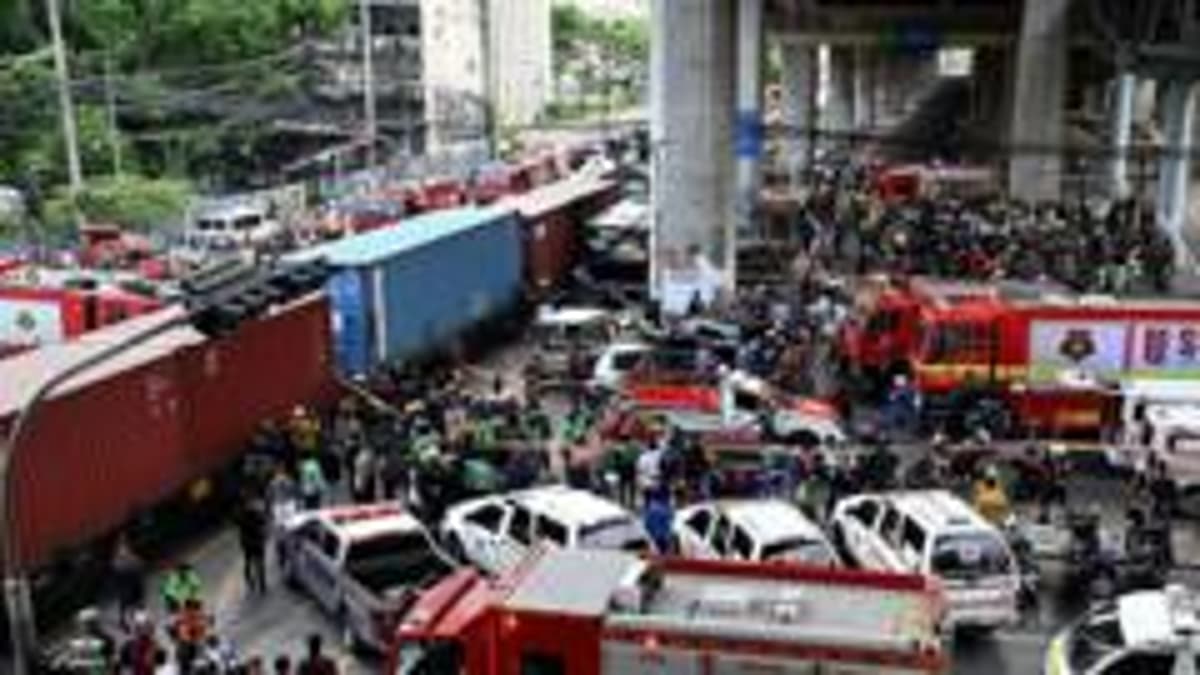
Driver of Crashed Train Tested Positive for Drugs, Thai Police Say
Why It Matters
The incident highlights critical safety gaps at high‑traffic level crossings and underscores the need for stricter operator screening, prompting regulatory action that could reshape rail safety standards across Thailand.
Key Takeaways
- •Train driver tested positive for drugs, charged reckless driving
- •Bus driver and barrier guard also charged after crash
- •Black box recorded emergency brakes applied only 100 m before impact
- •Crossing sees over 100,000 vehicles daily, above safety limits
- •Rail authority now requires pre‑shift drug/alcohol testing for staff
Pulse Analysis
The Asoke‑Din Daeng crossing, one of Bangkok’s busiest intersections, became the site of a tragic collision that claimed eight lives and left many more injured. The freight train, operating under manual barrier control, struck a public bus that had stalled on the tracks amid heavy traffic. While investigators have not disclosed the specific substances found, the driver’s positive drug test and reckless‑driving charge have intensified scrutiny on railway personnel practices and the adequacy of existing safety protocols.
Beyond the immediate cause, the crash exposes systemic vulnerabilities in Thailand’s rail‑road interface. Over 100,000 vehicles traverse the crossing daily—far exceeding the safety threshold identified by local engineers—yet the barrier system remains manually operated, relying on human vigilance in a congested urban environment. This creates a fertile ground for “risk normalisation,” where repeated near‑misses breed complacency among drivers and pedestrians alike. The incident also underscores the broader challenge of integrating legacy rail infrastructure within rapidly expanding cityscapes, where traffic pressures often force risky maneuvers such as motorcyclists weaving through barriers.
In response, the Department of Rail Transport has ordered mandatory drug and alcohol testing for all train crews before each shift, a move aimed at restoring public confidence and preventing future tragedies. The policy shift signals a more proactive regulatory stance, potentially prompting other Southeast Asian rail operators to adopt similar screening measures. Coupled with calls for automated barrier systems and improved traffic management at high‑risk crossings, the crash may serve as a catalyst for comprehensive reforms that align Thailand’s rail safety standards with international best practices.
Driver of crashed train tested positive for drugs, Thai police say
Comments
Want to join the conversation?
Loading comments...