Drones Shift From Pilot Projects to Operational Goals
Why It Matters
The shift signals a transition from experimental tech to revenue‑generating operations, reshaping logistics, farming and infrastructure maintenance while exposing regulatory and integration challenges.
Key Takeaways
- •Commercial drone shipments projected >9 million units annually by 2036
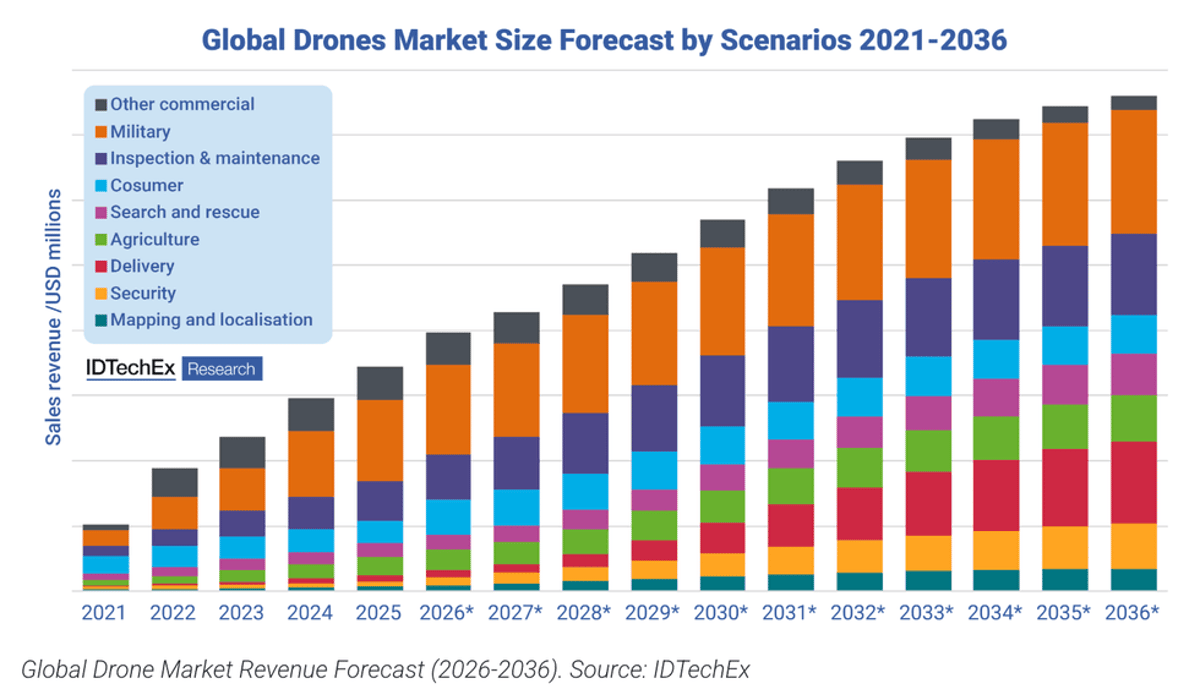
- •Delivery drone revenue expected to rise from $2.2 bn (2026) to $25.3 bn (2036)
- •Early delivery growth will focus on medical, emergency, and remote‑area logistics
- •Agricultural and inspection drones deliver strong ROI by cutting labor, safety costs
Pulse Analysis
The commercial drone market is entering a maturation phase, moving beyond proof‑of‑concept trials toward scalable business models. IDTechEx’s forecast of more than 9 million units shipped annually by 2036 underscores the sector’s rapid adoption, fueled by clear labor shortages and the need for higher‑precision data in agriculture, infrastructure inspection, and logistics. This volume growth is not merely a product of cheaper hardware; it reflects a broader ecosystem of software, fleet management, and regulatory frameworks that enable repeatable, value‑adding missions.
Delivery applications are poised to become the headline driver of revenue, with projected earnings climbing from $2.2 billion in 2026 to $25.3 billion a decade later. The most compelling use cases involve high‑value, time‑sensitive shipments such as medical supplies, emergency response kits, and deliveries to remote communities where road access is limited. However, scaling these services hinges on securing beyond‑visual‑line‑of‑sight (BVLOS) approvals, building automated loading and drop‑off infrastructure, and integrating drones into existing logistics networks. Early deployments will likely concentrate in defined corridors and suburban zones where regulatory and economic barriers are lower.
Agricultural and inspection drones present the strongest return on investment, offering tangible cost reductions and safety improvements. In farming, drones enable precision spraying, lower chemical consumption, and frequent field monitoring, directly addressing labor constraints. Inspection drones reduce downtime for critical assets like wind turbines, power lines, and pipelines while minimizing human exposure to hazardous environments. As these verticals demonstrate clear ROI, they will accelerate broader acceptance and investment, positioning drones as an essential tool across multiple industries.
Drones shift from pilot projects to operational goals
Comments
Want to join the conversation?
Loading comments...