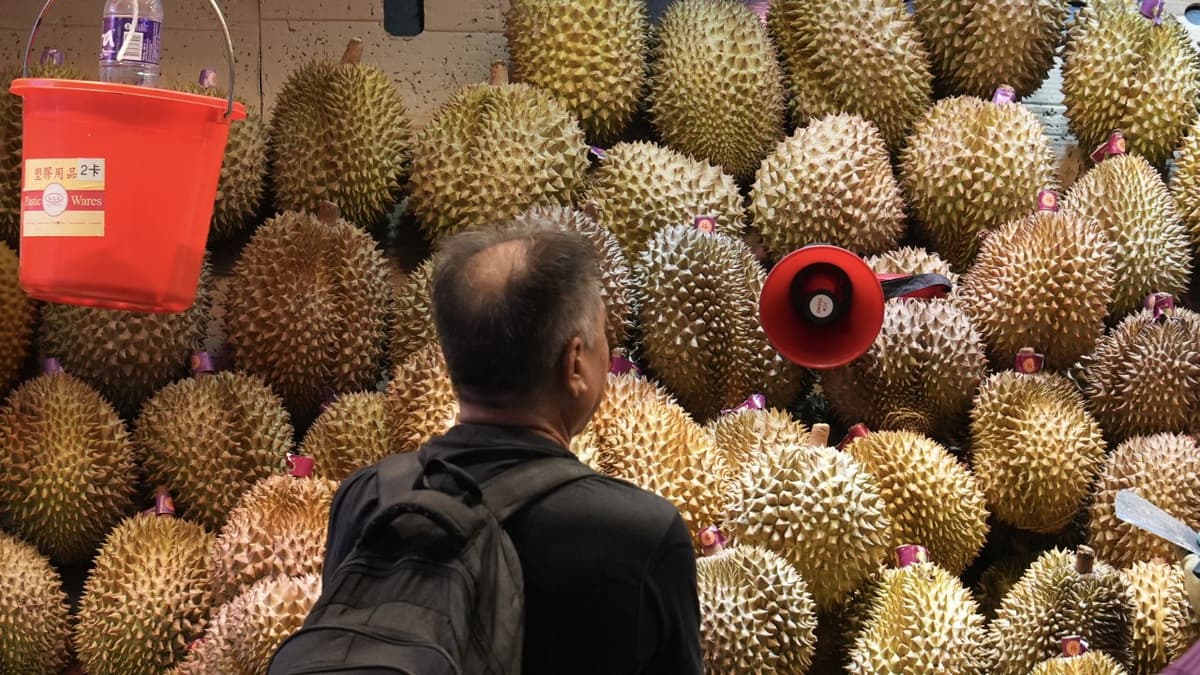
Durian Express? New Southeast Asia Rail Service Cuts Fruit Prices in China
Why It Matters
By slashing durian prices, the rail link expands market access for Southeast Asian growers and boosts Chinese consumer choice, while strengthening regional trade infrastructure under China’s Belt‑and‑Road initiative.
Key Takeaways
- •Cold‑storage rail cuts durian transit to under 48 hours.
- •China retail price fell ~30%, from ¥200 to ¥140.
- •Joint venture includes Thailand State Railway and Laos Transport Ministry.
- •Capacity 1,200 tons monthly, scalable to other perishable produce.
- •Shows Belt‑and‑Road pivot to temperature‑sensitive cargo.
Pulse Analysis
The surge in durian popularity across China has long outpaced traditional supply chains, which relied on slow truck routes or expensive air freight. The newly inaugurated cold‑storage rail corridor, spanning Thailand, Laos and Yunnan, leverages insulated containers and dedicated freight slots to keep the fruit at optimal temperatures throughout the journey. By compressing the shipping window to under 48 hours, the line eliminates the need for costly refrigeration hubs and reduces spoilage, creating a more reliable pipeline for growers eager to tap into China’s $10‑plus‑billion fruit market.
From a financial perspective, the rail service has already translated into a tangible price correction for Chinese consumers. Retailers report a 30 percent drop in durian prices, moving from roughly ¥200 (about $28) per kilogram to ¥140 (about $20). This price compression widens the consumer base beyond affluent niche buyers, encouraging higher volume sales and boosting revenue for Southeast Asian farms. For growers, the lower logistics cost improves margins and reduces dependence on volatile air‑cargo rates, while the joint venture structure—featuring Thailand’s State Railway and Laos’ Ministry of Transport—ensures shared risk and regional cooperation under the Belt‑and‑Road framework.
Looking ahead, the rail corridor could become a blueprint for exporting other perishable commodities such as mangoes, lychees and tropical vegetables. Its success challenges the dominance of air freight for high‑value produce, offering a greener, cost‑effective alternative that aligns with sustainability goals. As capacity scales toward 1,200 metric tons per month, the line may stimulate ancillary investments in cold‑chain infrastructure at both origin and destination points, further integrating Southeast Asia’s agricultural sector into China’s consumer supply chain.
Durian Express? New Southeast Asia rail service cuts fruit prices in China
Comments
Want to join the conversation?
Loading comments...