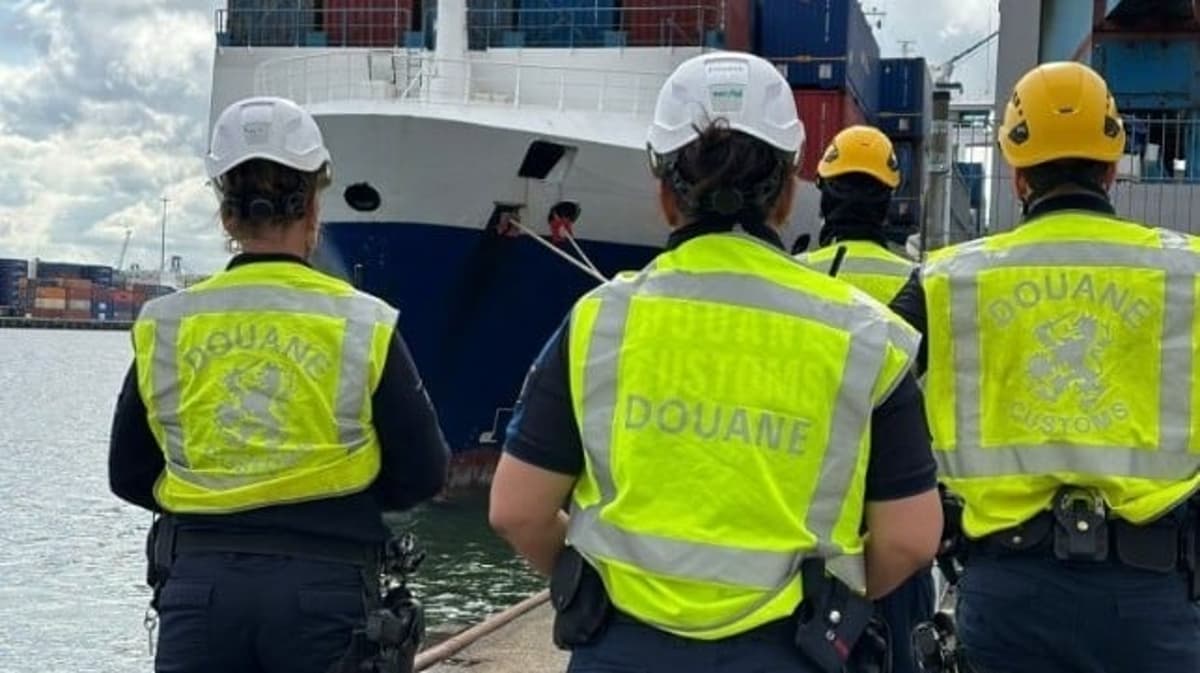
Dutch Arrest Captain and Stop Containers Violating Russian Sanctions
Why It Matters
The arrests signal stricter enforcement of EU sanctions, threatening illegal supply chains that could fuel Russia’s war effort. Shipping companies must tighten compliance to avoid legal and reputational risks.
Key Takeaways
- •Captain arrested June 5 for suspected sanctions violations.
- •92% of illicit goods originate in EU, then transshipped to Russia.
- •Containers held contained motor oil, windshields, car doors, air‑filter system.
- •Dutch Customs collaborated with Europol and Rotterdam Port Police.
- •Investigation targets two Dutch firms and a regular Rotterdam‑St Petersburg route.
Pulse Analysis
The European Union has tightened its sanctions regime since Russia’s invasion of Ukraine, targeting not only direct exports but also transshipment routes that funnel prohibited items through third‑party ports. Rotterdam, Europe’s busiest container hub, has become a focal point for authorities seeking to choke off illicit supply lines. By arresting a ship’s captain and seizing suspect cargo, Dutch Customs demonstrates a willingness to pursue high‑profile enforcement actions that go beyond routine inspections.
The operation uncovered a sophisticated scheme to disguise military‑grade goods as civilian cargo. Investigators found motor oil, windshields, car doors and a complete air‑filter system concealed in containers whose labels had been altered or removed. Such items can be repurposed for military vehicles or aircraft, directly contravening the EU’s transit ban. Collaboration with Europol and the Rotterdam Port Police enabled rapid identification of the vessels and firms involved, highlighting the growing coordination among law‑enforcement agencies across the continent.
For the global shipping industry, the crackdown serves as a stark reminder that compliance cannot be an afterthought. Companies must implement rigorous due‑diligence protocols, verify end‑users, and monitor documentation for signs of tampering. Failure to do so could result in vessel detentions, hefty fines, and damage to corporate reputation. As enforcement intensifies, shippers may see a shift toward more transparent routing and increased scrutiny of cargo destined for high‑risk markets, reshaping trade flows in the Eurasian corridor.
Dutch Arrest Captain and Stop Containers Violating Russian Sanctions
Comments
Want to join the conversation?
Loading comments...