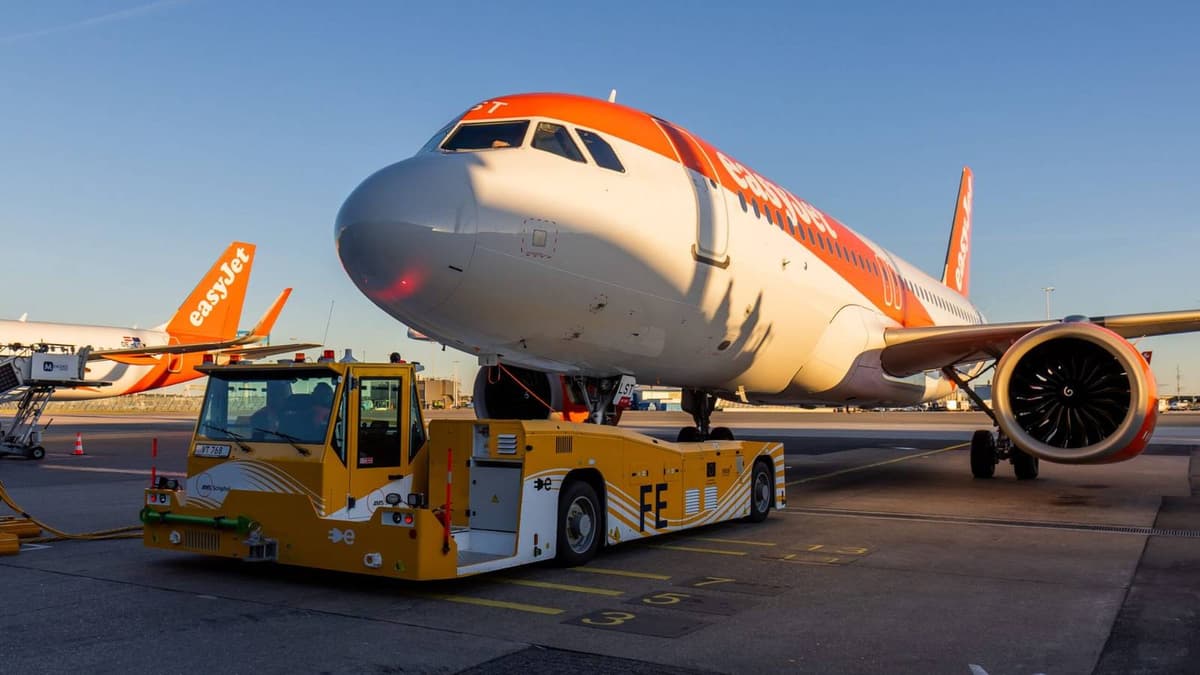
EasyJet Launches Autonomous Aircraft Taxiing At Amsterdam Schiphol
Companies Mentioned
Why It Matters
By cutting fuel use and emissions on the ground, TaxiBot directly advances airlines’ carbon‑reduction targets while easing noise‑related community pressures, offering a near‑term sustainability lever before next‑generation aircraft arrive.
Key Takeaways
- •easyJet's first TaxiBot flight launched April 30 at Schiphol.
- •TaxiBot pulls aircraft using APU, cutting taxi fuel burn.
- •Emissions and noise reductions expected for short‑haul flights.
- •Airbus, Menzies, and SESAR HERON co‑developed the system.
- •Successful rollout could make semi‑automated taxiing industry standard.
Pulse Analysis
Ground operations have long been an overlooked source of aviation emissions, especially at congested hubs where aircraft spend valuable minutes taxiing with thrust‑hungry engines. TaxiBot addresses this gap by attaching to an aircraft’s nose wheel and providing electric propulsion while pilots retain full steering control. The result is a substantial drop in fuel consumption per movement, translating into lower carbon dioxide and nitrogen‑oxide outputs and quieter airport environs—benefits that resonate with regulators, passengers, and nearby residents alike.
The Schiphol deployment showcases a collaborative ecosystem: Airbus supplied aircraft compatibility, Menzies Aviation handled integration, and the European SESAR HERON program supplied the research framework. By leveraging existing fleet types, the system avoids costly retrofits and can be rolled out across compatible narrow‑body jets such as the A320 family. Early data suggest fuel savings of up to 5‑7 percent per taxi, which compounds into significant cost reductions over high‑frequency routes. Moreover, reduced engine wear promises lower maintenance expenses, reinforcing the business case for airlines like easyJet.
If the pilot proves reliable at scale, the ripple effect could reshape airport ground handling worldwide. Operators may adopt similar electric tow solutions, prompting manufacturers to embed TaxiBot‑ready interfaces in new aircraft designs. While sustainable aviation fuels and hydrogen propulsion dominate long‑term discourse, technologies that retrofit current fleets provide immediate climate action. The success of easyJet’s initiative could set a benchmark, encouraging policy incentives and accelerating the transition toward greener, quieter skies.
easyJet Launches Autonomous Aircraft Taxiing At Amsterdam Schiphol
Comments
Want to join the conversation?
Loading comments...