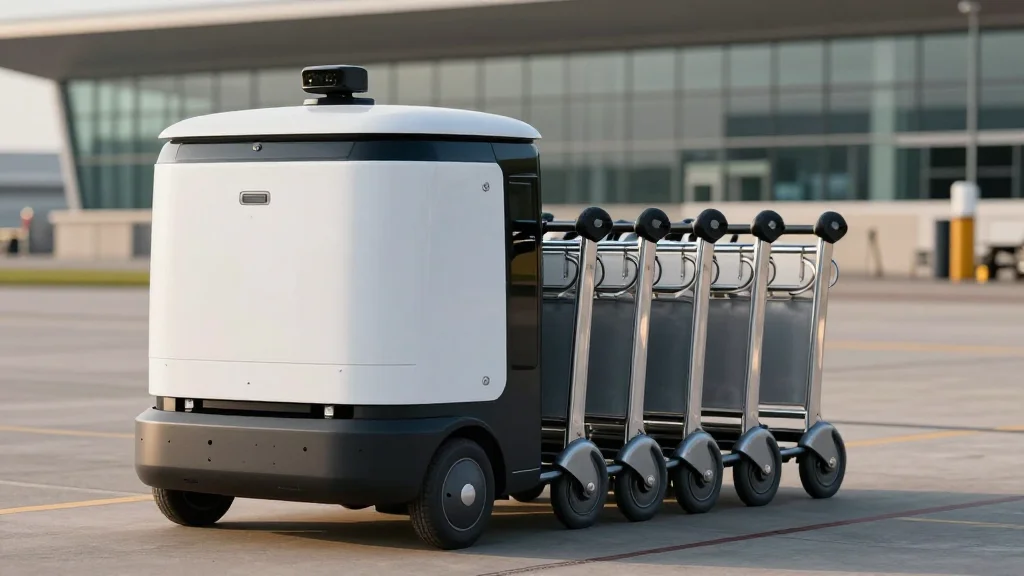
Efficiency Driver
Why It Matters
The deployment proves large‑scale Level 4 autonomy can cut labor costs, boost safety, and create new revenue streams in aviation, while paving the way for passenger‑facing driverless transport at airports.
Key Takeaways
- •Over 70 driverless vehicles operate across Hong Kong airport, all Level 4
- •56 autonomous electric tractors have saved the equivalent of 200 driver jobs
- •Fleet has logged more than 3 million km, circling Earth 76 times
- •Autonomous shuttles will initially move 500 passengers hourly, scaling to 2,000
- •AAHK rents the autonomous fleet to partners, creating a new revenue model
Pulse Analysis
Hong Kong International Airport’s autonomous fleet marks a watershed moment for airport operations worldwide. By integrating more than 70 Level 4 vehicles—ranging from electric tractors that handle baggage to patrol cars monitoring perimeters—the airport has demonstrated that fully driverless systems can function reliably in a complex, high‑traffic environment. The three‑million‑kilometre mileage logged to date underscores both the durability of the hardware and the robustness of the underlying AI, positioning HKG ahead of peers that are still testing Level 3 or limited‑scope solutions.
Beyond the technology showcase, the autonomous rollout delivers tangible business value. Each electric tractor replaces roughly four human drivers, translating into cost savings equivalent to over 200 full‑time positions. AAHK’s decision to own the platform and lease it to airlines and ground handlers creates a recurring revenue stream while lowering partners’ capital expenditures. The model also reduces human error, standardises service delivery, and frees staff for higher‑skill roles in control centres and software development, reshaping the airport labour landscape.
Looking forward, the extension of driverless buses to public roads signals a broader shift toward passenger‑centric autonomy. Initial capacity of 500 passengers per hour—rising to 2,000—will link Terminal 2 with the Hong Kong‑Zhuhai‑Macao Bridge, integrating airport mobility with regional transit. If successful, this could inspire other hubs to adopt similar landside solutions, accelerating the industry’s move toward seamless, zero‑emission, and fully automated passenger transport. The initiative thus not only boosts HKG’s operational efficiency but also sets a template for the next generation of smart airports.
Efficiency driver
Comments
Want to join the conversation?
Loading comments...