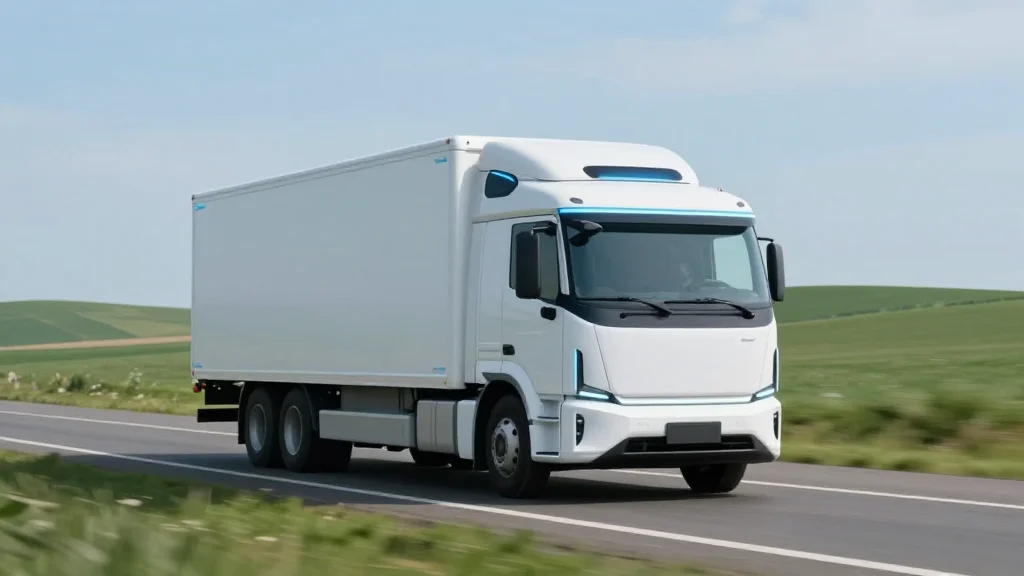
Einride and EASE Logistics Deploy Autonomous Electric Trucks on Ohio Highways

Companies Mentioned
Why It Matters
The Ohio deployment demonstrates that autonomous electric freight can move beyond isolated pilots into everyday logistics, offering a tangible path to decarbonizing the trucking industry. By proving safety and efficiency on public roads, the project addresses two of the biggest barriers—regulatory acceptance and public trust—paving the way for broader adoption across the United States. If the data confirms lower incident rates and operational cost savings, shippers may accelerate investments in similar technology, prompting manufacturers to scale electric powertrains and prompting policymakers to craft supportive frameworks. The ripple effect could reshape freight economics, reduce reliance on driver labor, and contribute significantly to national emissions reduction targets.
Key Takeaways
- •Einride and EASE Logistics launched SAE Level 4 autonomous electric trucks on Ohio public roads.
- •Deployment is part of the Truck Automation Corridor Project involving ODOT, DriveOhio, and INDOT.
- •Remote operator monitors trucks in real time, ensuring safety and regulatory compliance.
- •EASE Logistics' third collaboration with DriveOhio, highlighting its leadership in autonomous freight trials.
- •Successful rollout could accelerate nationwide adoption of zero‑emission autonomous trucking.
Pulse Analysis
The Ohio rollout is a watershed moment for both autonomous driving and electric freight, merging two disruptive trends that have largely progressed on separate tracks. Historically, electric trucks have struggled with range and payload constraints, while autonomous systems have been confined to controlled environments. By pairing Level 4 autonomy with a battery‑electric powertrain, Einride and EASE are effectively testing a combined solution that could resolve the cost‑of‑ownership equation for carriers. If the remote‑operator model proves reliable, it may also sidestep the labor shortage that has plagued the trucking industry, offering a scalable alternative that does not depend on a dwindling driver pool.
From a competitive standpoint, the deployment puts the United States ahead of Europe and Asia, where most autonomous freight pilots remain tethered to test tracks. The partnership leverages public‑private collaboration, a model that could become the industry standard as regulators seek data‑driven policies. However, the success of the project hinges on the quality of the data collected; any safety incident could trigger a regulatory backlash that stalls momentum. Stakeholders should monitor the forthcoming performance reports, which will likely become the benchmark for future autonomous freight contracts.
Looking forward, the next logical step is expanding the corridor to include interstate routes and integrating the autonomous fleet with existing logistics management systems. As battery technology improves and charging infrastructure scales, the economics of electric autonomous trucks will become increasingly favorable. For investors, the Ohio deployment signals a de‑risking of the technology stack, potentially unlocking new capital for scaling efforts across the sector.
Einride and EASE Logistics Deploy Autonomous Electric Trucks on Ohio Highways
Comments
Want to join the conversation?
Loading comments...