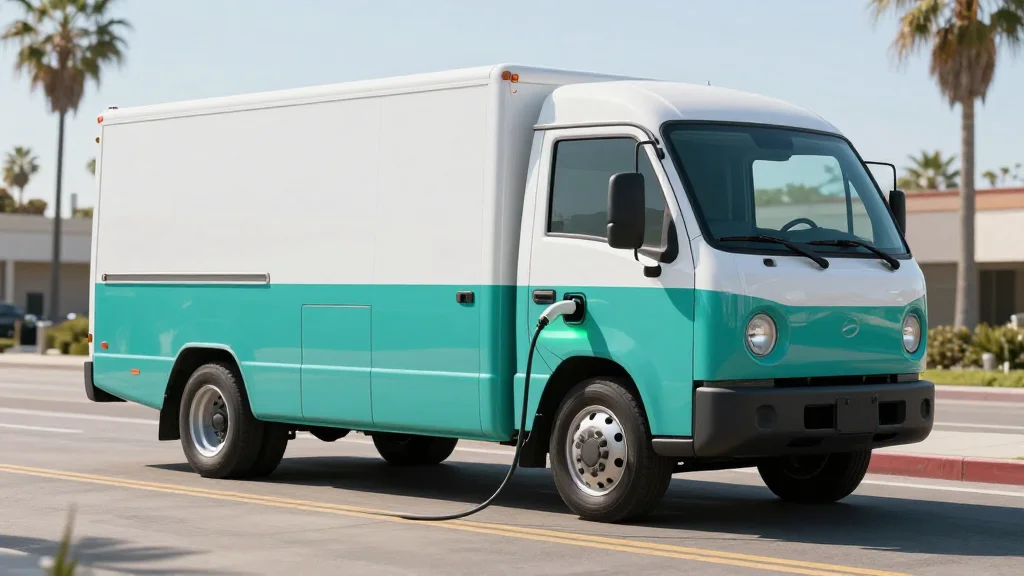
Electric Trucks Are Selling Like Hotcakes
Companies Mentioned

Why It Matters
Harbinger’s surge proves medium‑duty electric trucks can thrive without tax incentives, signaling a turning point for fleet electrification and reshaping competitive dynamics in a fragmented market.
Key Takeaways
- •Harbinger Q4 sales doubled Q3, reaching 733 trucks
- •$87 M in vehicle sales includes FedEx order of 53 units
- •FedEx co‑led $160 M Series C, boosting Harbinger’s growth
- •Medium‑duty EV market fragmented; Harbinger outsold all competitors combined in 2025
- •Fuel savings of $14k per year per truck versus diesel
Pulse Analysis
The abrupt termination of the $7,500 federal EV tax credit in September 2025 sent shockwaves through the auto industry, yet Harbinger’s medium‑duty electric trucks bucked the trend. By leveraging a customizable stripped‑chassis platform and early backing from THOR Industries, the startup accelerated production in April 2024 and captured a niche in Class 4‑6 trucks—segments traditionally dominated by diesel retrofits. Its Q4 performance, nearly double the prior quarter, underscores a latent demand that persists even when fiscal incentives disappear, suggesting that operational economics are becoming the primary purchase driver for commercial fleets.
A pivotal catalyst for Harbinger’s momentum is its deepening partnership with FedEx. The logistics giant not only placed an order for 53 Class 5‑6 units but also co‑led a $160 million Series C financing round, signaling confidence in the startup’s technology and cost structure. This infusion of capital enables scaling of production, expansion of service networks, and further R&D on battery durability. In a market where no single automaker commands a majority share of medium‑duty EVs, Harbinger’s claim of outselling all rivals combined in 2025 positions it as a de‑facto market leader, potentially prompting larger OEMs to accelerate their own medium‑duty offerings.
Beyond headline sales, the economics of electrifying medium‑duty trucks are compelling. Harbinger’s calculations show a typical 60‑mile daily route can save roughly $14,200 in fuel per year, even in high‑cost California electricity markets. When extrapolated across fleets, these savings translate into multi‑million‑dollar operational efficiencies, dwarfing the $40,000 commercial‑vehicle tax credit that was also eliminated. As fuel prices climb and sustainability mandates tighten, the cost‑benefit narrative strengthens, making electric trucks an increasingly attractive proposition for carriers, municipalities, and last‑mile delivery services looking to future‑proof their operations.
Electric Trucks Are Selling Like Hotcakes
Comments
Want to join the conversation?
Loading comments...