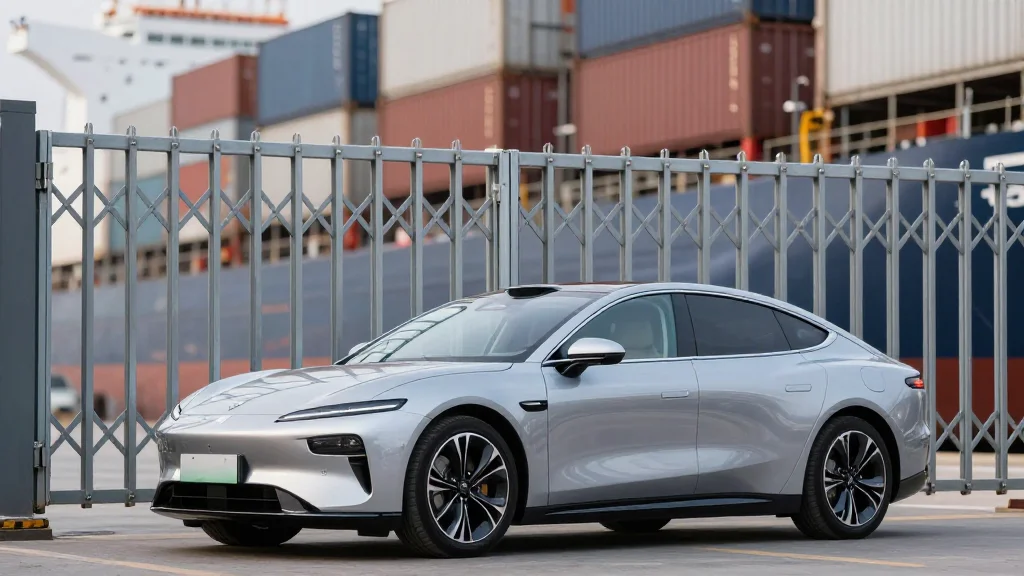
Electric Vehicle Outlook Sinks After U.S. Withdraws Policy Support
Companies Mentioned
Why It Matters
The policy retreat sharply curtails U.S. EV adoption, eroding growth prospects for manufacturers and reshaping the global market balance toward China. Investors and policymakers must reassess strategies as the United States loses its competitive edge in the fast‑growing clean‑transport sector.
Key Takeaways
- •BloombergNEF forecasts EVs 17% of U.S. sales by 2030.
- •U.S. EV share drops 10 points from previous forecast.
- •Federal tax credit and fuel‑efficiency standards eliminated.
- •Automakers report $64 billion EV‑related losses.
- •Global EV sales projected 35.6 million, 3.4 million below prior outlook.
Pulse Analysis
The United States’ recent policy reversal has sent a clear signal to the auto industry: federal support for electric vehicles is no longer a given. By eliminating the $7,500 tax credit and loosening fuel‑efficiency mandates, lawmakers have removed two of the most powerful levers that previously drove consumer demand. This shift not only reduces the price advantage of EVs over internal‑combustion models but also undermines the financial case for manufacturers to invest heavily in battery‑powered line‑ups, prompting a re‑evaluation of long‑term product roadmaps.
Automakers have responded swiftly to the new environment. Companies that had pledged billions toward EV development are now reporting a combined $64 billion in related losses, prompting them to cancel or delay at least 27 planned models. The removal of tariff protections under the Trump administration further erodes price competitiveness, especially for foreign‑sourced battery components. As a result, firms are scaling back production targets, shifting resources back to conventional vehicles, and seeking cost‑saving measures that could delay the broader transition to zero‑emission fleets.
Globally, the U.S. slowdown reverberates through the entire EV supply chain. While China continues to dominate with roughly 62% of worldwide sales, its growth rate is also tempering as subsidy programs wane. The revised BloombergNEF forecast of 35.6 million EVs sold by 2030—down 3.4 million from the prior outlook—highlights the cascading effect of U.S. policy on global adoption curves. Investors and policymakers must watch for potential corrective actions, such as renewed incentives or stricter emissions standards, that could restore the United States’ role as a key driver of the electric‑vehicle revolution.
Electric vehicle outlook sinks after U.S. withdraws policy support
Comments
Want to join the conversation?
Loading comments...