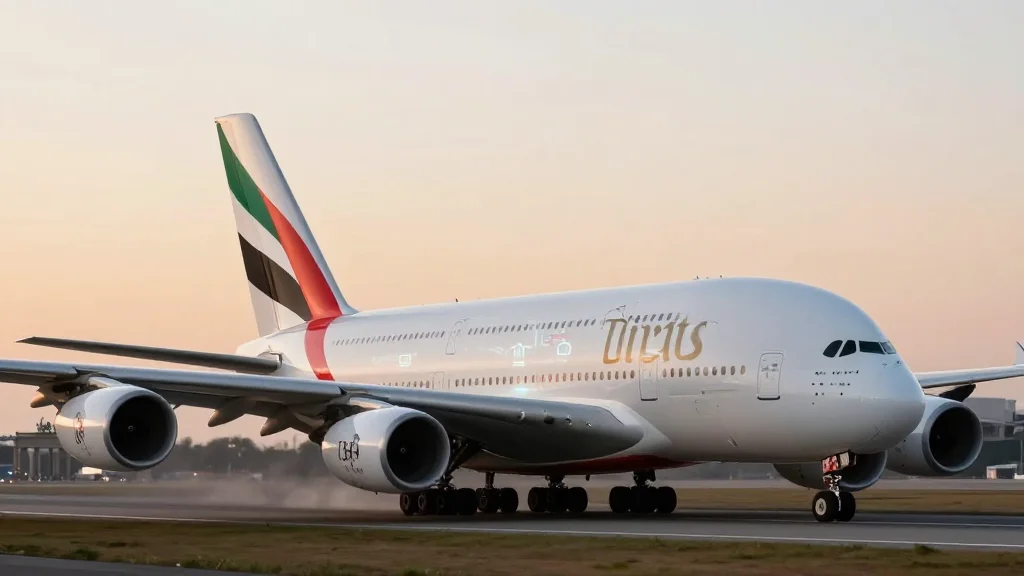
Emirates President Sir Tim Clark on Resilience, Innovation, and the Future of Aviation
Companies Mentioned
Why It Matters
The swift restoration showcases Emirates’ crisis‑resilience model, setting a benchmark for global carriers and reinforcing Dubai’s role as a strategic aviation hub. Its innovation agenda and market influence shape industry standards and competitive dynamics, especially for European airlines facing regulatory and network challenges.
Key Takeaways
- •Emirates restored 87% of routes within four days of Gulf conflict
- •Integrated Dubai aviation ecosystem enables rapid crisis response
- •AI personalization coexists with human‑centric service across 110 nationalities
- •New first‑class en‑suite bathrooms and economy upgrades signal product renewal
- •Emirates’ hub model pressures European carriers to diversify beyond North Atlantic
Pulse Analysis
Emirates’ ability to resume 87% of its schedule in just four days underscores a resilience built on deep operational discipline and a uniquely integrated aviation ecosystem in Dubai. The airline leverages close coordination among civil aviation authorities, airport operators, and even the military, allowing swift decision‑making and resource allocation during geopolitical shocks. This structural advantage not only protects revenue streams but also reinforces Dubai’s reputation as a reliable global hub, attracting travelers and cargo alike.
Innovation at Emirates balances cutting‑edge AI personalization with a steadfast commitment to human service. While sophisticated algorithms tailor offers and streamline retail experiences, Sir Tim Clark stresses that empathy and cultural awareness remain essential for serving passengers from over 110 nationalities. The carrier’s product roadmap reflects this duality: first‑class suites are being reimagined with private en‑suite bathrooms, while the economy cabin undergoes a comprehensive redesign despite supply‑chain headwinds. These upgrades aim to keep the brand fresh, preventing the stagnation that can erode premium positioning.
Beyond its own network, Emirates exerts a sizable economic ripple effect. Massive aircraft orders from Airbus and partnerships with propulsion firms sustain thousands of jobs and influence global production scales. The airline’s hub‑and‑spoke model, which connects underserved regions, challenges European carriers that remain overly focused on North Atlantic routes. As regulators debate market‑access rules for Gulf airlines, Emirates’ scale, profitability, and integrated operations provide a compelling case for broader liberalization, reshaping competitive dynamics across the aviation landscape.
Emirates President Sir Tim Clark on Resilience, Innovation, and the Future of Aviation
Comments
Want to join the conversation?
Loading comments...