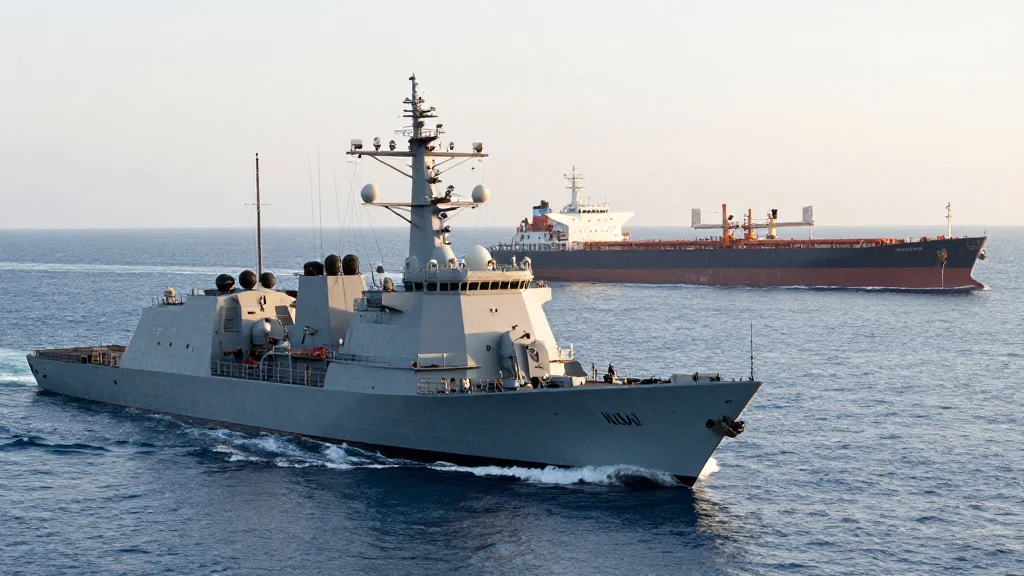
Empty Tankers Are Extending Iran's Ability to Wait Out the U.S. Blockade
Companies Mentioned
Why It Matters
Extended floating storage delays Iran’s oil‑revenue loss, influencing both Tehran’s negotiating leverage and global oil markets.
Key Takeaways
- •Empty ballast tankers extend Iran's export window to mid‑June
- •Floating storage delays Iran's oil‑storage depletion beyond early May
- •U.S. blockade pressures Iran toward rail shipments and junk tank use
- •Brent crude hovers near $120, reflecting dual blockade risk
- •Extended carrier redeployment signals U.S. focus on blockade continuity
Pulse Analysis
The United States’ naval cordon in the Red Sea has effectively halted full‑load Iranian tankers, but a modest fleet of empty vessels in ballast is slipping through the perimeter. By converting these ships into floating storage, Iran can temporarily park crude offshore, buying an estimated four to six weeks of additional loading capacity. This strategy pushes the projected storage exhaustion date from early May to mid‑June, according to TankerTrackers.com, and creates a buffer that could forestall costly well shut‑ins.
Economically, the extended timeline preserves a critical stream of oil‑sale revenue for the National Iranian Oil Company, which underpins a significant portion of Tehran’s fiscal budget. However, the reliance on aging VLCCs and improvised rail shipments signals mounting logistical strain. U.S. policymakers, including the White House, appear inclined to sustain the blockade, using carrier redeployments—such as recalling the USS Gerald R. Ford—to prioritize pressure over high‑end combat readiness. Should storage fill, Iran may be forced to curtail production, risking damage to wells and a potential bargaining chip in any future diplomatic settlement.
On the market side, the twin blockades are already nudging Brent crude toward the $120 per barrel mark, a level that filters down to U.S. gasoline and diesel prices, which are up $1‑$2 per gallon year‑over‑year. The uncertainty surrounding Iran’s storage capacity adds a volatility premium to oil futures, prompting traders to hedge against supply disruptions. As the blockade persists, analysts will watch for signs of Iran’s shift to alternative export routes or a strategic concession, both of which could reshape the near‑term supply‑demand balance.
Empty Tankers Are Extending Iran's Ability to Wait Out the U.S. Blockade
Comments
Want to join the conversation?
Loading comments...