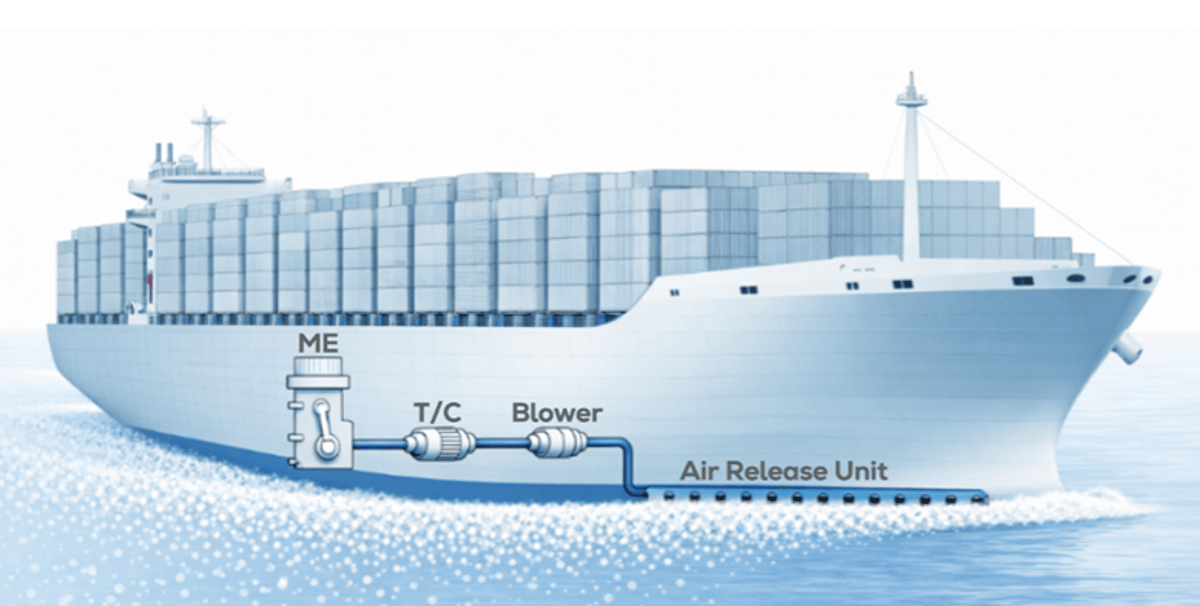
Engine Scavenge Air Boosts Hull Lubrication Fuel Savings
Why It Matters
Eliminating compressor electricity cuts operating costs and emissions, accelerating adoption of air‑lubrication technology across high‑fuel‑consumption vessels.
Key Takeaways
- •ESAL uses engine scavenging air, removing need for electric compressors
- •Estimated net fuel savings reach about 3.5% per voyage
- •System targets large container ships and LNG carriers initially
- •Integration requires per‑project evaluation due to draft‑dependent pressure needs
- •Availability slated for Q4 2026, with retrofit and new‑build options
Pulse Analysis
Air lubrication has emerged as a promising method to reduce hull friction, yet traditional systems rely on separate compressors that add electrical load and complexity. Everllence’s ESAL flips this model by harvesting the high‑pressure scavenging air already produced by two‑stroke marine engines. This integration not only streamlines the air‑distribution network but also leverages existing turbo‑charger capacity, delivering a cleaner power chain that aligns with the maritime industry’s push toward greener operations.
From a technical standpoint, ESAL’s engine‑centric design offers several efficiencies. By feeding the hull‑mounted air outlets directly from the engine’s scavenging loop, the solution sidesteps the energy losses associated with external compressors and extensive piping. Continuous monitoring by the engine control system ensures that airflow remains within safe limits, preserving engine performance while maintaining the required hydrostatic pressure for various vessel drafts. The projected 3.5% fuel savings translates into millions of dollars annually for large carriers, and the reduction in CO₂ emissions supports increasingly stringent IMO regulations.
The market impact could be significant. Targeting large container vessels and LNG carriers—segments that have already shown strong uptake of air‑lubrication—positions Everllence to capture early adopters seeking cost‑effective emissions cuts. The per‑project evaluation model acknowledges that draft depth and hull form affect pressure needs, ensuring tailored installations. With a Q4 2026 launch, the technology arrives as shipowners plan new‑builds and retrofits for the next decade, potentially reshaping the competitive landscape among air‑lubrication system manufacturers and reinforcing the industry’s transition to lower‑carbon propulsion solutions.
Engine Scavenge Air Boosts Hull Lubrication Fuel Savings
Comments
Want to join the conversation?
Loading comments...