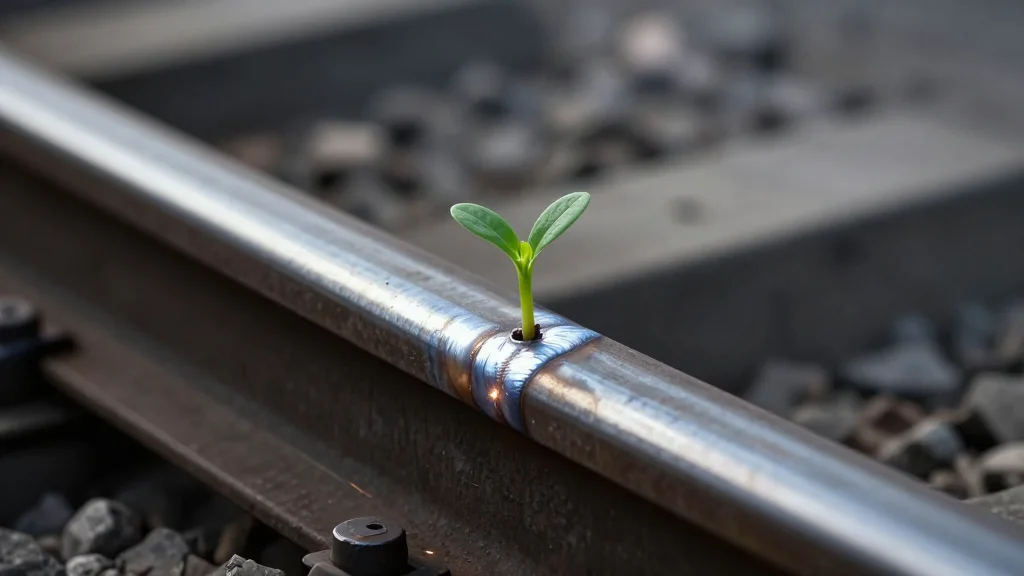
Engineering a More Sustainable Future
Why It Matters
By extending rail asset life and slashing fuel and material consumption, Holland’s tools lower operating costs and help rail operators meet tightening carbon‑reduction targets. The approach demonstrates how automation can turn sustainability into a measurable competitive advantage.
Key Takeaways
- •HAMR® repairs last over a year, cutting rework frequency.
- •Intelliweld® GCR restores side‑worn rails, avoiding full rail replacement.
- •Hybrid Welder® reduces fuel use with battery‑powered welding head.
- •Short plug flash‑butt welding needs two machines and four workers.
- •Holland’s technologies cut material waste, energy use, and downtime.
Pulse Analysis
Rail operators face mounting pressure to reduce carbon emissions while maintaining high‑capacity service. Traditional maintenance practices—frequent rail replacement and fuel‑intensive welding—contribute significantly to a network’s environmental footprint. As governments tighten emissions standards and investors prioritize ESG metrics, the industry is seeking technologies that deliver durability without compromising sustainability. Automation, energy‑efficient equipment, and in‑situ repair methods are emerging as the cornerstone of a greener rail future.
Holland’s suite of solutions directly addresses these challenges. The Automated Manganese Repair (HAMR®) uses robotic welding to rebuild rail frogs and crossing diamonds, achieving repairs that endure for more than a year and dramatically lowering rework cycles. Intelliweld® Gauge Corner Restoration (GCR) restores side‑worn grooved rails on‑site, eliminating the need for full rail removal and preserving valuable steel. The Hybrid Welder® pairs a conventional MobileWelder® with a battery‑powered head, cutting fuel consumption and emissions while maintaining weld quality. Finally, short‑plug flash‑butt welding requires only two machines and a four‑person crew, slashing labor hours, material waste, and track‑outage time.
The business impact is clear: reduced material purchases, lower fuel bills, and fewer service interruptions translate into tangible cost savings. Rail companies that adopt Holland’s technologies can improve asset utilization, extend service intervals, and meet ESG commitments, giving them a competitive edge in a market where sustainability is increasingly tied to profitability. As the rail sector modernizes, automated, low‑energy welding platforms are likely to become standard, positioning Holland as a key supplier in the transition toward a more sustainable transportation infrastructure.
Engineering a More Sustainable Future
Comments
Want to join the conversation?
Loading comments...