Engineering the Future of the South Coast – A Multi-Agency Framework for Highway 101, Santa Barbara County
Why It Matters
The project delivers a modern, high‑capacity corridor that boosts regional mobility while reducing community noise, setting a benchmark for collaborative infrastructure delivery. Its funding framework provides a replicable template for large‑scale projects facing fragmented financing.
Key Takeaways
- •$700M Highway 101 widening completed via multi‑agency funding model
- •CRCP pavement eliminates joint noise, extends service life to 50 years
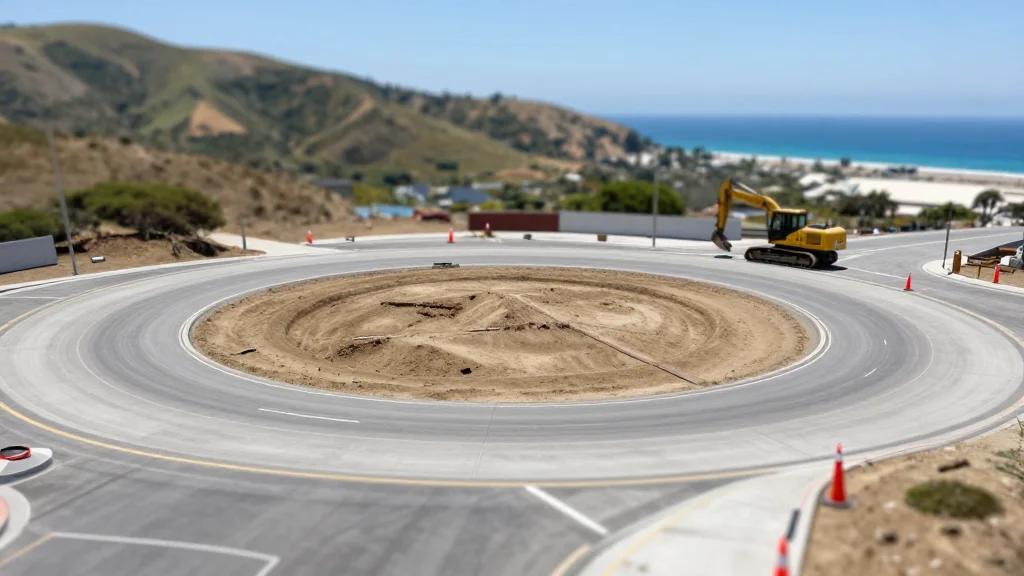
- •Right‑hand ramp realignment and teardrop roundabout boost LOS and safety
- •Two‑Lane Guarantee maintains 100% capacity for 45,000+ ADT during construction
- •Collaborative governance aligns state, regional, municipal goals for coastal corridor
Pulse Analysis
The Santa Barbara County Highway 101 expansion illustrates how a fragmented coastal corridor can be transformed through a unified governance structure. By bringing together Caltrans, the Santa Barbara County Association of Governments, the county, and two cities, the project aligned divergent policy objectives and pooled resources, enabling a seamless delivery that would have stalled under a single‑agency approach. This collaborative model not only accelerated timelines but also created a decision‑making framework that balances state‑level standards with local community priorities, a blueprint increasingly relevant for infrastructure projects across the United States.
From an engineering perspective, the North Segment’s redesign tackles long‑standing safety and environmental concerns. The shift to right‑hand on‑ and off‑ramps eliminates hazardous weaving, while the teardrop roundabout eases the transition from high‑speed freeway traffic to urban streets, improving Level of Service and reducing collision risk. The adoption of Continuously Reinforced Concrete Pavement (CRCP) further distinguishes the project: the joint‑free surface cuts the characteristic “thump‑thump” tire noise, enhancing livability for adjacent neighborhoods, and promises a 40‑ to 50‑year service life that minimizes future maintenance disruptions.
Financially, the $700 million venture leverages a “Local‑Match” strategy, coupling $128 million from Measure A’s local sales‑tax seed with $295 million from Senate Bill 1, $265 million state gas tax funds, and $12 million federal grants. This layered funding reduces reliance on any single source and spreads risk, delivering a cost‑effective solution for a high‑traffic corridor that serves over 45,000 vehicles daily. The project’s life‑cycle savings, combined with its noise mitigation and safety upgrades, are expected to spur economic growth, attract tourism, and set a precedent for future multi‑agency infrastructure initiatives.
Engineering the Future of the South Coast – A Multi-Agency Framework for Highway 101, Santa Barbara County
Comments
Want to join the conversation?
Loading comments...