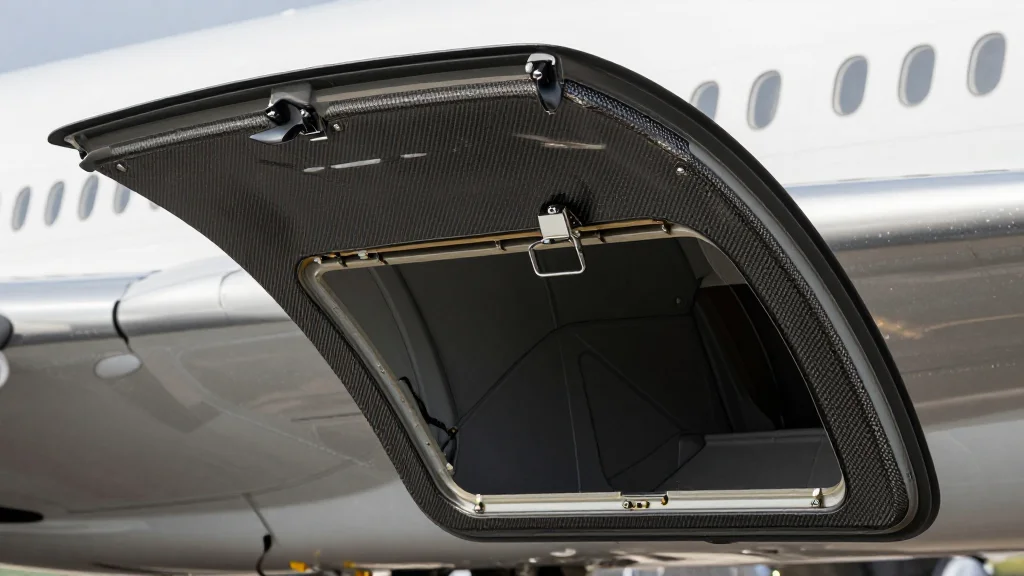
Engineering the World’s Largest Cargo Door: Inside the A350F
Companies Mentioned
Airbus Defence and Space
AIR

Rolls‑Royce
Why It Matters
The door’s size and lightweight design dramatically speed up loading of oversized cargo, boosting airline productivity and lowering operating costs. Its carbon‑fiber construction and SAF compatibility help the industry meet tightening emissions regulations.
Key Takeaways
- •4.5 m width, 4.3 m opening – largest commercial cargo door.
- •Composite construction cuts empty weight by ~35 tonnes.
- •Electric latch opens door in one minute, safe to 40 knots wind.
- •A350F payload 111 tonnes, range 4,700 nm, 20% fuel savings.
- •Meets ICAO 2027 CO₂ standards; operates with up to 50% SAF.
Pulse Analysis
The A350F’s main‑deck cargo door represents a leap in aerospace engineering, marrying large‑scale carbon‑fibre construction with precision manufacturing. By replacing traditional hydraulic mechanisms with a 100% electric latch, Airbus reduces both weight and maintenance complexity while delivering a door‑cycle time of just 60 seconds. This innovation not only meets the structural demands of a 4‑bay, quarter‑fuselage opening but also tolerates extreme temperature swings, reinforcing the aircraft’s overall durability.
From an operational standpoint, the door’s unprecedented aperture transforms freight handling. Ultra‑large items—such as turbofan engines or high‑density server racks—can be loaded in minutes rather than the hour‑long processes typical of older freighters. Combined with a 111‑tonne payload capacity and a 4,700‑nautical‑mile range, airlines can consolidate shipments, reduce flight legs, and achieve up to 20% lower fuel consumption. The electric latch’s wind‑resistant design further minimizes ground‑time delays, directly translating to higher aircraft utilization and lower per‑tonne costs.
The market response underscores the strategic value of these capabilities. With 100 firm orders secured, carriers see the A350F as a catalyst for a more efficient, low‑carbon supply chain. Its compliance with ICAO’s 2027 CO₂ standards and ability to run on up to 50% sustainable aviation fuel position it at the forefront of the industry’s decarbonisation agenda. Competitors will need to match both the payload efficiency and environmental credentials to stay relevant in a freight market that increasingly prioritizes speed, capacity, and sustainability.
Engineering the world’s largest cargo door: Inside the A350F
Comments
Want to join the conversation?
Loading comments...