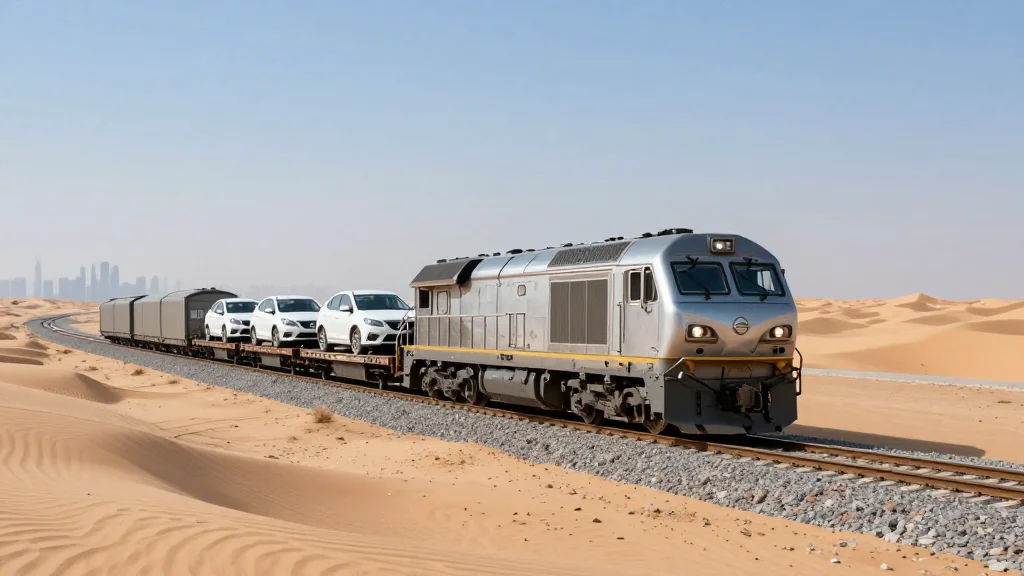
Etihad Rail Ships Nissan Cars by Train, UAE Marks First Finished‑Vehicle Rail Load

Companies Mentioned
Why It Matters
The first rail shipment of finished cars demonstrates that the UAE can diversify its freight mix beyond road transport, a critical step for a nation grappling with rapid urbanization and congestion. By proving that high‑value, time‑sensitive cargo can move efficiently by rail, the project paves the way for broader adoption of low‑carbon logistics, directly supporting the UAE’s Net Zero by 2050 target. Moreover, the initiative strengthens the country’s position as a logistics hub linking Asia, the Middle East, and Europe, offering shippers a more sustainable and reliable alternative. If the model scales, automotive manufacturers and distributors could lower transportation costs, improve delivery reliability, and reduce exposure to road‑related disruptions. The ripple effect may encourage other industries to explore rail, accelerating the overall decarbonization of the UAE’s freight sector.
Key Takeaways
- •Etihad Rail completed the UAE's first rail shipment of finished Nissan vehicles.
- •Cars were moved from eastern ports to Abu Dhabi’s Industrial City (ICAD).
- •Al Masaood Automobiles coordinated the shipment, highlighting supply‑chain benefits.
- •Rail transport can cut CO₂ emissions by up to 80% per ton‑kilometer versus trucks.
- •The project supports the UAE’s Net Zero by 2050 strategy and could reshape regional logistics.
Pulse Analysis
Etihad Rail’s successful car shipment is more than a symbolic first; it signals a turning point for freight modal shift in the Gulf. Historically, the UAE’s logistics have been dominated by road, a model that has strained infrastructure and contributed disproportionately to emissions. By introducing rail for finished vehicles, the country is testing a high‑margin, high‑visibility use case that can quickly demonstrate cost and environmental benefits.
The automotive sector is uniquely suited to rail because of the predictable, high‑value nature of its cargo. Unlike bulk commodities, cars require careful handling, secure loading, and precise timing—requirements that rail can meet with the right terminal investments. If Al Masaood and other distributors see measurable improvements in delivery windows and cost savings, they will likely lobby for expanded rail services, prompting the government to accelerate terminal upgrades and digital integration.
From a competitive standpoint, the UAE could differentiate itself from neighboring logistics hubs that remain truck‑centric. A robust, low‑carbon rail network could attract multinational manufacturers seeking greener supply chains, especially as global buyers tighten ESG criteria. The next challenge will be scaling the service without compromising reliability, which will depend on coordinated scheduling, real‑time tracking, and perhaps public‑private financing to expand rail capacity. In the longer term, the success of this pilot could catalyze a broader modal shift across the region, reshaping freight economics and contributing meaningfully to climate goals.
Etihad Rail Ships Nissan Cars by Train, UAE Marks First Finished‑Vehicle Rail Load
Comments
Want to join the conversation?
Loading comments...