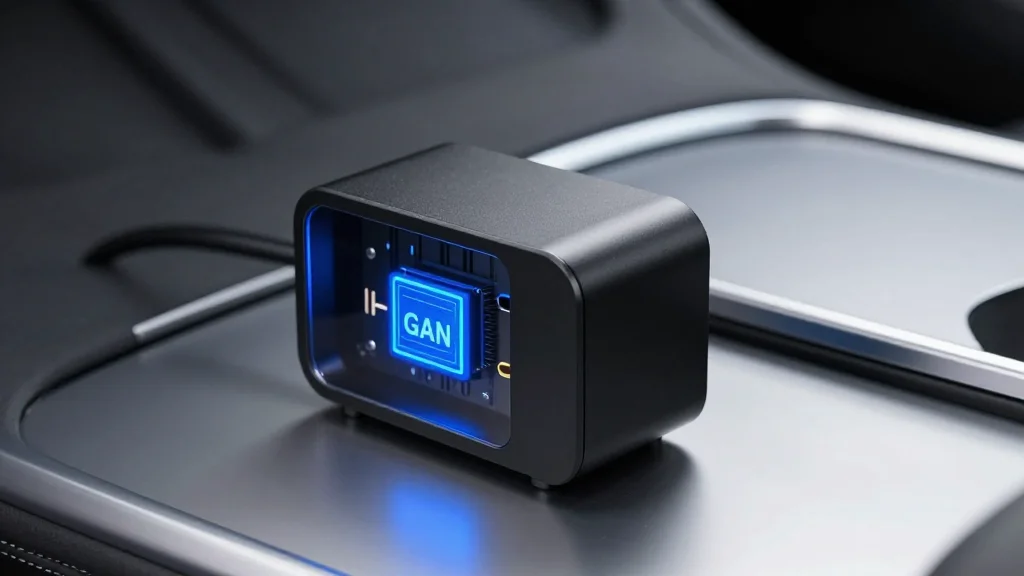
EU Consortium Aims to Fit a 22 kW Bidirectional On-Board Charger in a 4-Liter Package
Companies Mentioned
Why It Matters
A compact, high‑power charger can free vehicle space for batteries or interior features while reducing weight and cost, accelerating EV adoption across automotive and marine sectors.
Key Takeaways
- •22 kW OBC fits in 4‑liter volume, one‑third typical size.
- •Monolithic bidirectional GaN switch halves component count.
- •EU HiPower 5.0 project funded €33.7 M (~$37 M).
- •Consortium includes 2 OEMs, 21 suppliers, firms like Infineon.
- •Targets automotive and marine shipping use cases.
Pulse Analysis
The size of an on‑board charger (OBC) has long been a bottleneck for electric‑vehicle designers, forcing trade‑offs between battery capacity, cabin space and vehicle weight. By squeezing a 22‑kilowatt charger into a 4‑liter package, the Fraunhofer IZM team leverages a monolithic gallium‑nitride (GaN) switch that handles forward and reverse power flow in a single device. This integration slashes the component count, trims parasitic losses, and pushes efficiency above 96 percent, setting a new benchmark for compact high‑power EV architecture.
HiPower 5.0, the EU‑backed initiative driving this breakthrough, pools resources from ten European nations, including two original‑equipment manufacturers and more than twenty tier‑1 and tier‑2 suppliers. With €33.7 million (approximately $37 million) in funding, the consortium can accelerate prototype validation, scale GaN production, and harmonise standards across automotive and marine applications. The involvement of industry heavyweights such as Infineon, Mercedes‑Benz, Valeo and Siemens signals strong commercial confidence and paves the way for a streamlined supply chain that can meet the projected surge in EV demand.
Beyond the immediate technical gains, the compact bidirectional charger could reshape vehicle platform strategies. Automakers may re‑allocate the saved volume to larger battery packs, extending range without enlarging the vehicle footprint, or to new interior features that enhance consumer appeal. In marine shipping, the same technology promises faster shore‑to‑ship power exchange, supporting stricter emissions regulations. As GaN devices become cost‑competitive with silicon, the market is likely to see a wave of next‑generation OBCs that combine high power, small size and bidirectional capability, accelerating the transition to electrified transport across multiple sectors.
EU consortium aims to fit a 22 kW bidirectional on-board charger in a 4-liter package
Comments
Want to join the conversation?
Loading comments...