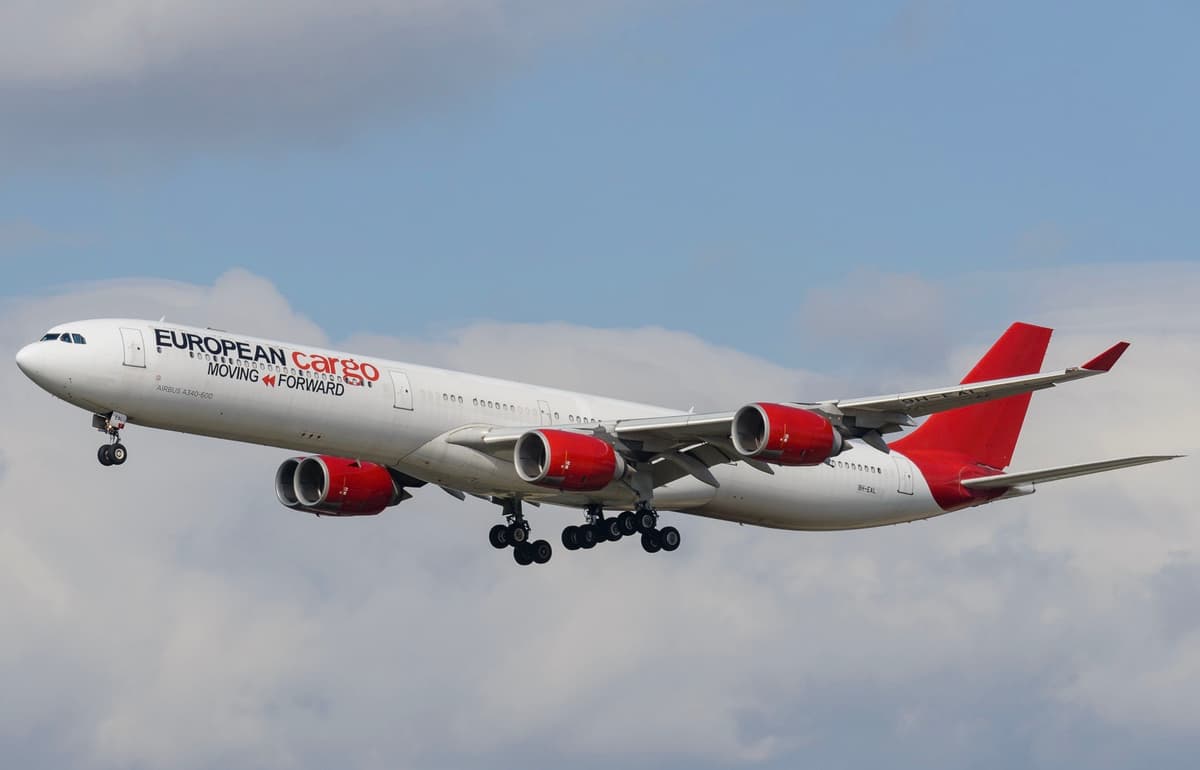
European Cargo Enters Administration
Companies Mentioned
Why It Matters
The collapse removes a key long‑haul cargo player from the UK market, potentially reducing capacity and undermining Bournemouth Airport’s expansion strategy.
Key Takeaways
- •European Cargo entered administration on 3 June 2026, joint administrators appointed
- •Company specialized in converting passenger jets to freighters, operating Airbus A340s
- •Staff notified of redundancies; exact job losses remain unconfirmed
- •Collapse may curtail cargo volume and expansion at Bournemouth Airport
Pulse Analysis
European Cargo Limited, founded in the early 2020s, built its reputation by converting retired passenger aircraft into dedicated freighters and by operating a small fleet of Airbus A340-600 cargo conversions out of Bournemouth Airport. The business model capitalized on the surplus of wide‑body jets after the pandemic‑induced downturn in passenger travel, offering airlines a cost‑effective way to add long‑haul capacity without purchasing new builds. During the height of Covid‑19, the carrier gained public visibility by ferrying personal protective equipment to the UK, reinforcing its strategic importance to the national supply chain.
European Cargo’s entry into administration removes one of the few UK‑based long‑haul freighters, creating an immediate capacity gap on routes that previously relied on its A340 service. Bournemouth Airport, which has positioned itself as a regional cargo hub, now faces uncertainty about runway utilization, ancillary services, and revenue streams tied to the airline’s operations. Competitors such as DHL, Emirates SkyCargo, and emerging conversion firms may seek to fill the void, but scaling up requires aircraft, crew, and regulatory approvals that cannot be rushed, potentially leaving a short‑term shortfall in cargo tonnage.
The collapse underscores the financial fragility of conversion‑focused carriers that depend on volatile freight rates and limited economies of scale. While the surplus of retired wide‑body jets presents an attractive asset pool, the high conversion cost, certification hurdles, and competition from purpose‑built freighters keep profit margins thin. Industry analysts expect a consolidation wave, with larger integrators acquiring conversion assets or partnering with niche operators to diversify their networks. For the UK, policymakers may need to reassess incentives for cargo infrastructure at secondary airports to preserve capacity and safeguard supply‑chain resilience.
European Cargo enters administration
Comments
Want to join the conversation?
Loading comments...