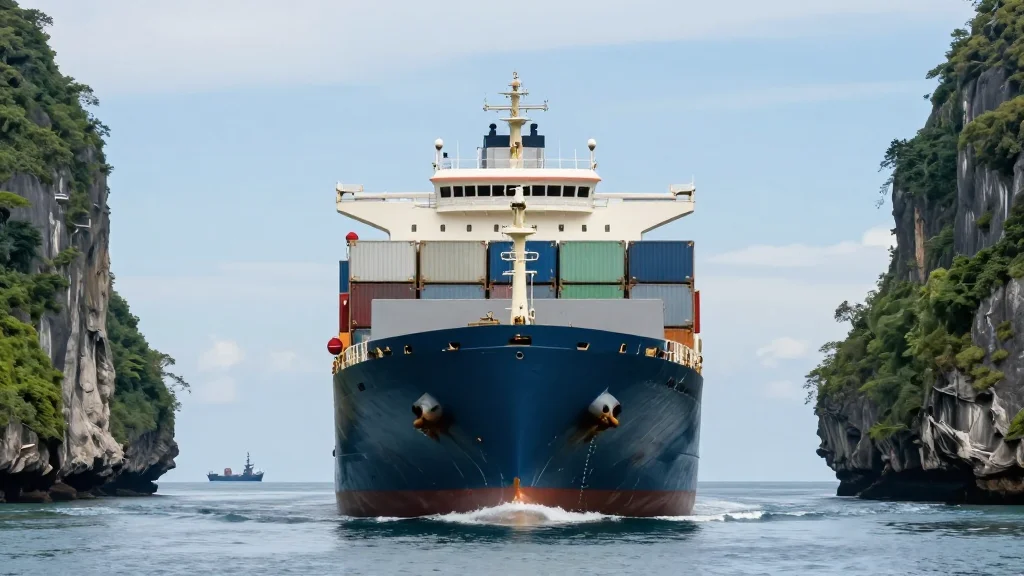
Explainer-Hormuz Crisis Throws Spotlight on World's Largest 'Chokepoint' - the Malacca Strait
Why It Matters
Any disruption would reverberate through global supply chains, lift energy prices and strain China’s crude imports, highlighting the strategic necessity of securing key maritime chokepoints.
Key Takeaways
- •Malacca Strait moves 23.2 million barrels of oil daily in 2025.
- •It carries 22% of global maritime trade, outpacing Hormuz.
- •Narrowest point only 1.7 miles wide, limiting large vessel drafts.
- •Piracy attacks hit 104 incidents last year, now declining.
- •Indonesia, Singapore, Malaysia, Thailand conduct joint patrols to ensure openness.
Pulse Analysis
The Strait of Malacca remains the linchpin of worldwide maritime logistics, funneling nearly a quarter of all oil shipments and a fifth of total trade between Asia, the Middle East and Europe. Its 900‑kilometre corridor outpaces the Strait of Hormuz in volume, moving an estimated 23.2 million barrels of crude per day in the first half of 2025. This concentration of flow makes the strait a vital artery for energy‑hungry economies such as China, Japan and South Korea, and any interruption could trigger sharp price spikes in global oil markets.
Security concerns compound the strait’s economic importance. At its narrowest, the channel narrows to just 1.7 miles, while depths of 25‑27 metres restrict the largest vessels, creating a natural bottleneck prone to collisions and groundings. Piracy remains a lingering threat, with 104 documented attacks last year, though incidents have eased in early 2024. Additionally, the waterway is increasingly used for illicit ship‑to‑ship oil transfers, raising enforcement challenges. In response, Indonesia, Singapore, Malaysia and Thailand have stepped up joint patrols and information sharing to preserve free passage and mitigate environmental risks.
Geopolitically, the strait’s stability is a barometer for broader regional tensions. The recent Hormuz crisis reminded policymakers that any conflict in the South China Sea or Taiwan Strait could spill over, jeopardizing this critical route. While some leaders floated the idea of tolls to monetize the passage, consensus among littoral states is to keep it toll‑free and open, reinforcing the principle of unimpeded navigation. Diversifying routes—such as the longer Indonesian archipelago detour—offers a safety valve but adds cost and time, underscoring why sustained multilateral cooperation is essential for global trade continuity.
Explainer-Hormuz crisis throws spotlight on world's largest 'chokepoint' - the Malacca Strait
Comments
Want to join the conversation?
Loading comments...