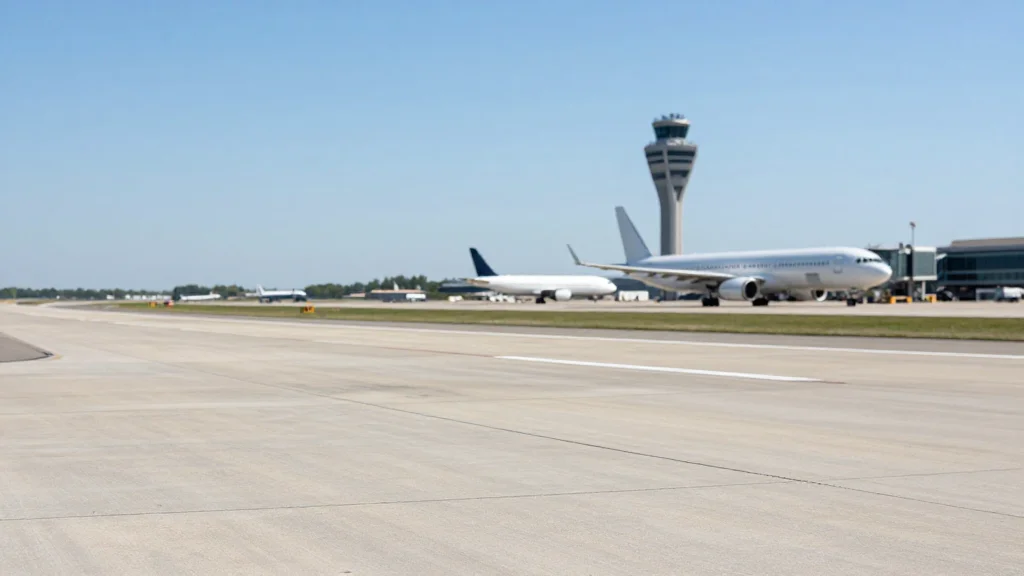
FAA Caps Chicago O'Hare Flights at 2,708 Daily to Curb Delays

Companies Mentioned
Why It Matters
Limiting O'Hare’s daily flights directly addresses a chronic bottleneck that has eroded on‑time performance at the nation’s busiest hub. By curbing over‑capacity, the FAA hopes to restore confidence in air travel after a year of government shutdown‑related staffing shortages and record‑high delay rates. The decision also sends a signal to airlines that the regulator will intervene when schedule growth outpaces infrastructure, potentially reshaping capacity planning across the U.S. network. For passengers, the cap could mean higher ticket prices and fewer connection options, but it may also translate into shorter wait times at security checkpoints and more reliable arrival and departure windows. The move therefore balances short‑term inconvenience against longer‑term system resilience, a calculus that will influence airline strategies, airport investment priorities, and federal transportation policy for years to come.
Key Takeaways
- •FAA limits O'Hare to 2,708 flights per day, a reduction of ~372 flights from the planned 3,080 peak schedule.
- •The cap runs from May 17 to Oct. 24, 2026, targeting summer travel peaks.
- •Transportation Secretary Sean Duffy and FAA Administrator Bryan Bedford cite safety and delay reduction as primary reasons.
- •Airlines United and American must adjust schedules; both issued statements acknowledging the FAA order.
- •Experts warn the cut will force airlines into "fancy footwork" to keep customers satisfied amid controller shortages.
Pulse Analysis
The FAA’s intervention at O'Hare marks a rare instance of top‑down capacity control at a major U.S. hub. Historically, the agency has relied on market forces to balance supply and demand, but the confluence of a post‑shutdown staffing crunch, construction‑induced gate constraints, and an aggressive 14.9% schedule increase forced a more hands‑on approach. By anchoring the daily flight ceiling at 2,708, the FAA is essentially applying a hard cap that mirrors the successful remediation at Newark Liberty, where telecom fixes and overcapacity reductions yielded measurable on‑time gains. If O'Hare can replicate that outcome, the regulator may set a precedent for similar caps at other congested airports such as Atlanta or Denver.
From an airline perspective, the cap compresses a valuable asset—slot inventory—into a tighter window, potentially driving up the value of each slot and encouraging carriers to prioritize high‑yield routes. United and American, locked in a historic rivalry, may resort to strategic alliances, code‑shares, or even accelerated merger talks to preserve market share while navigating the reduced capacity. Meanwhile, passengers could see fare elasticity in action: fewer seats may push airlines to raise prices, especially on premium cabins, while also prompting ancillary revenue pushes such as higher baggage fees. The net effect could be a short‑term revenue boost for carriers but a longer‑term risk of eroding consumer goodwill if the promised reliability does not materialize.
Looking ahead, the success of the O'Hare cap will hinge on the FAA’s ability to synchronize the flight limit with its broader modernization agenda—namely, expanding controller staffing, streamlining airspace, and enhancing collaborative decision‑making. If those initiatives deliver the promised safety and efficiency gains, the cap could become a template for proactive capacity management rather than a reactive band‑aid. Conversely, if delays persist or passenger dissatisfaction spikes, the FAA may face pressure to lift the restriction, potentially reigniting the over‑capacity cycle that sparked the intervention in the first place.
FAA caps Chicago O'Hare flights at 2,708 daily to curb delays
Comments
Want to join the conversation?
Loading comments...