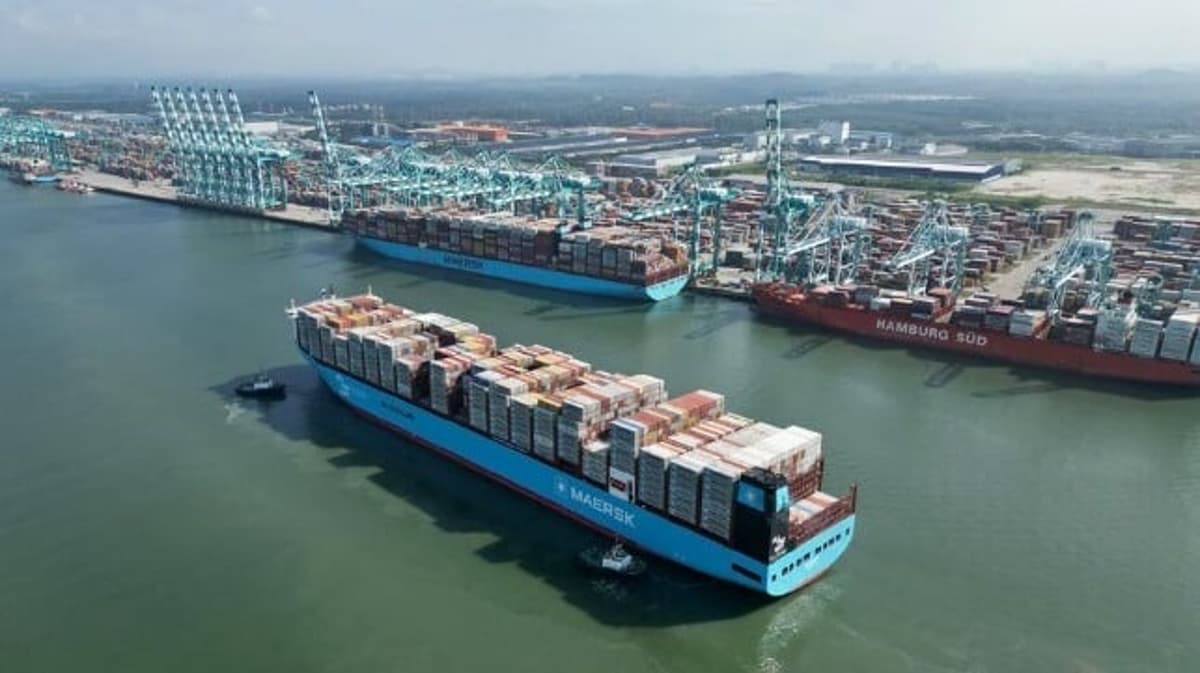
Falling Freight Rates Drive Maersk to Q1 Loss in Shipping Segment
Companies Mentioned
Why It Matters
The swing to loss highlights how volatile fuel prices and oversupply can erode profitability even in a high‑volume quarter, signaling tighter margins for the entire container‑shipping industry. Maersk’s response—fleet renewal and diversified logistics—illustrates the strategic shifts carriers must make to stay resilient.
Key Takeaways
- •Maersk shipping segment posted $192 million loss in Q1
- •Freight rates dropped 14% despite 9% volume growth
- •Bunker fuel costs rose ~66%, adding $500 million monthly expense
- •Utilization hit 96% while six vessels stuck in Persian Gulf
- •Maersk ordered eight 18,600‑TEU ships for 2029‑2030 delivery
Pulse Analysis
The container‑shipping market entered 2024 with a classic supply‑demand mismatch. An influx of new vessels, combined with lingering pandemic‑era capacity, has pushed freight rates down 14% in the first quarter, even as global trade volumes modestly increased. Maersk, the sector’s largest publicly traded carrier, serves as a bellwether; its Q1 earnings loss underscores how quickly oversupply can translate into margin pressure for operators that rely on rate‑driven profitability.
Fuel costs have become the second‑largest headwind for shippers. The conflict in the Middle East has driven bunker prices to nearly $1,000 per metric ton—a two‑thirds surge that adds roughly $500 million to Maersk’s monthly outlay. While the company has attempted to pass some of this expense onto customers, the steep price hike erodes net margins and forces carriers to tighten cost controls across the board. The situation illustrates the broader vulnerability of the industry to geopolitical shocks that affect energy markets.
In response, Maersk is leaning on a long‑term fleet‑renewal strategy and its diversified logistics platform. The firm placed an order for eight 18,600‑TEU vessels slated for delivery by 2030, aiming to modernize its fleet and improve fuel efficiency. Meanwhile, utilization climbed to 96% and its logistics arm offset shipping losses, keeping group EBIT positive. Analysts view these moves as essential for navigating a market where rate volatility and fuel price spikes are likely to persist.
Falling Freight Rates Drive Maersk to Q1 Loss in Shipping Segment
Comments
Want to join the conversation?
Loading comments...