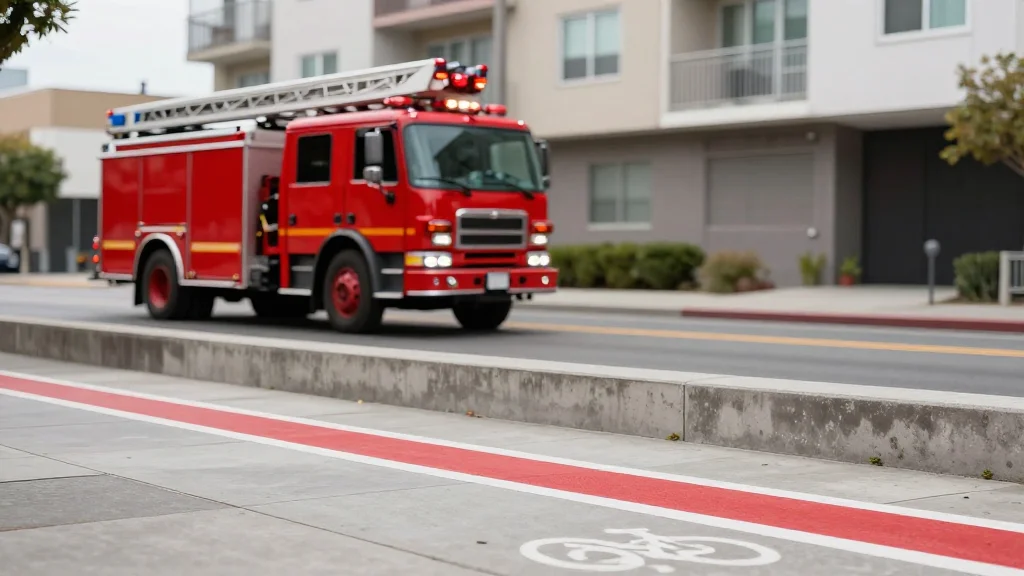
FDNY Firefighters Clash with NYC DOT Over Astoria Bike Lanes, Calling Agency ‘Like the KGB’

Why It Matters
The clash highlights a broader dilemma for cities trying to expand active‑transport infrastructure while preserving emergency‑response capabilities. If fire trucks cannot reach upper‑floor windows, response times could increase dramatically, endangering lives and property. The dispute also underscores the importance of transparent inter‑agency coordination; failure to involve frontline responders can erode public trust and trigger costly legal challenges. As more municipalities adopt protected bike lanes, the Astoria case may become a reference point for how to reconcile safety standards with progressive mobility plans. Beyond immediate safety concerns, the protest signals political friction between labor unions, elected officials, and city agencies. Union opposition can delay or reshape projects, influencing budget allocations and timelines for future bike‑lane rollouts across New York and other dense urban areas. The outcome may affect how quickly other districts adopt similar designs, potentially slowing the city’s broader climate and congestion‑reduction goals.
Key Takeaways
- •Around 20 FDNY firefighters protested the DOT's 31st Street bike‑lane redesign in Astoria.
- •Firefighters argue the median will keep ladders from reaching third‑floor windows, endangering residents.
- •DOT claims the plan cleared all required FDNY consultations and received official sign‑off.
- •Queens Supreme Court previously ruled a similar redesign was “arbitrarily and capriciously” approved.
- •Community board approved the plan despite protests; city is appealing the earlier court decision.
Pulse Analysis
The Astoria bike‑lane showdown is a microcosm of the growing friction between progressive transportation policy and entrenched public‑safety institutions. Historically, New York’s street redesigns have been championed by the DOT and mayoral office as a means to cut emissions and improve livability. However, the FDNY’s resistance illustrates that without rigorous, documented safety assessments, even well‑intentioned projects can encounter formidable pushback. The union’s vivid language—comparing the DOT to the KGB—reflects deep mistrust that could spill over into other infrastructure initiatives, especially as the city pursues its Vision Zero and climate‑action targets.
From a market perspective, the dispute may delay the rollout of protected bike lanes, affecting contractors, equipment suppliers, and technology firms that specialize in lane‑painting and traffic‑signal integration. Delays also increase legal costs for the city, potentially diverting funds from other transit improvements. Moreover, the episode could embolden other labor groups to demand more stringent safety reviews, prompting a shift toward more collaborative planning models that integrate fire‑department input early in the design phase.
Looking ahead, the city’s appeal of the 2023 court ruling will be closely watched. A reversal could set a precedent that streamlines future bike‑lane projects, but it also risks alienating frontline responders and community stakeholders. For policymakers, the lesson is clear: robust, transparent inter‑agency coordination is not just a procedural checkbox—it is a prerequisite for sustainable, safe urban mobility.
FDNY Firefighters Clash with NYC DOT Over Astoria Bike Lanes, Calling Agency ‘Like the KGB’
Comments
Want to join the conversation?
Loading comments...