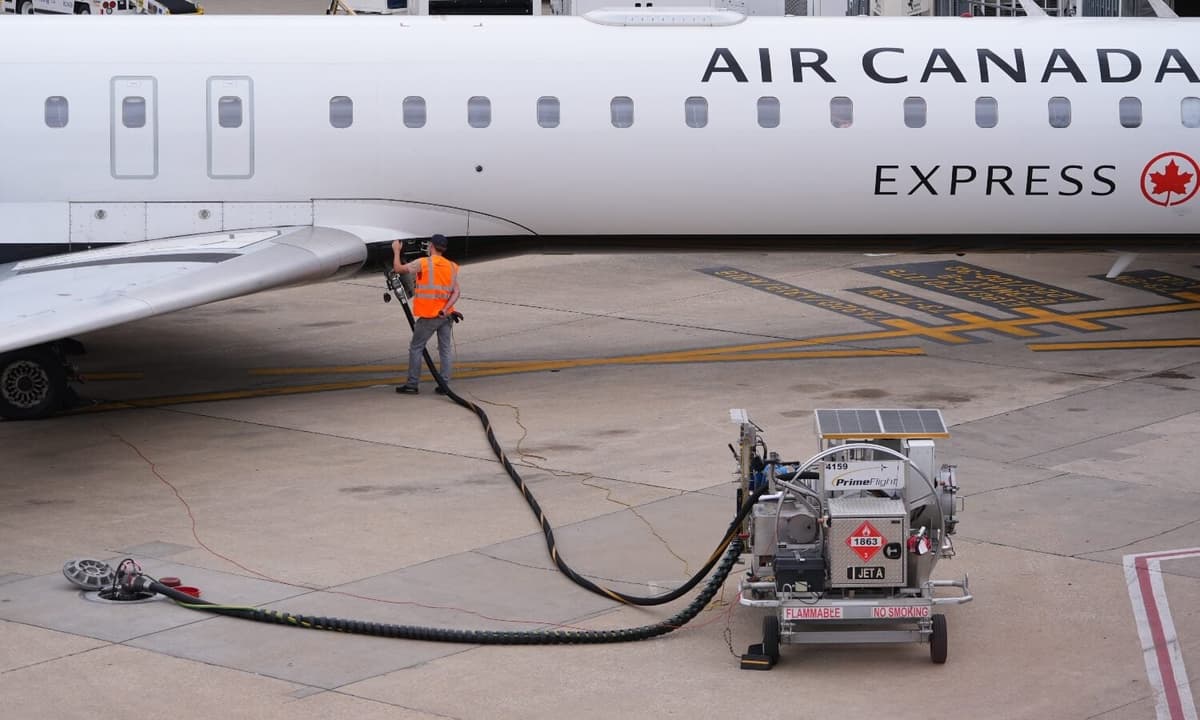
Fewer Flights, Higher Fares This Summer
Why It Matters
Higher fares and reduced flight options pressure consumer budgets and airline margins, while the fuel price shock forces carriers to rethink network strategies across North America and worldwide.
Key Takeaways
- •Jet fuel prices doubled since Iran conflict, driving $18‑$44 ticket surcharges.
- •Air Canada raised first‑bag fee to $33 USD and cut summer routes.
- •Domestic refineries supply 80% of Canada’s jet fuel; prices track world market.
- •European airlines cancel hundreds of flights as Middle‑East fuel supply tightens.
- •Consumer demand stays steady despite higher costs, per Stifel survey.
Pulse Analysis
The sudden spike in jet fuel costs stems from geopolitical turbulence in the Middle East, where the Iran‑Israel war and a temporary blockade of the Strait of Hormuz have choked oil flows. Jet fuel, which tracks global crude prices, has risen roughly 100% since the conflict began, forcing airlines to pass the expense onto passengers. In Canada, carriers have responded with $18‑$44 (USD) fuel surcharges per ticket and a first‑checked‑bag fee increase from $26 to $33 USD, eroding the price advantage that domestic refineries once offered.
Air Canada, the nation’s flagship carrier, has taken the most aggressive stance, trimming its summer schedule by suspending flights to New York’s JFK, Salt Lake City, Fort McMurray‑Vancouver and other routes until October. WestJet, while not yet cutting routes, says it is monitoring the situation and may adjust capacity if fuel pressures persist. Across the Atlantic, Lufthansa and KLM have announced fleet reductions and hundreds of flight cancellations, underscoring that the fuel shock is a global phenomenon. Canadian airlines benefit from eight domestic refineries that produce over 80% of the country’s jet fuel, yet they remain vulnerable to world‑price benchmarks.
For travelers, the immediate impact is higher ticket prices and fewer flight options, but demand appears resilient. A Stifel consumer survey shows that most Canadians still plan to travel, accepting the added cost. In the longer term, airlines may continue to consolidate routes, prioritize higher‑yield markets, and explore larger aircraft to spread fuel costs. Passengers can mitigate expenses by booking early, leveraging travel credit‑card rewards, and staying flexible with dates and destinations as the market adjusts to sustained fuel price volatility.
Fewer flights, higher fares this summer
Comments
Want to join the conversation?
Loading comments...