Finance Agreed for Second Bosphorus Rail Link
•February 25, 2026
0
Companies Mentioned


Why It Matters
The financing demonstrates strong international confidence in Turkey’s rail expansion, promising to boost logistics capacity and regional connectivity. The new link will relieve congestion on the Marmaray corridor and enhance freight and passenger flows between Europe and Asia.
Key Takeaways
- •$6.75 bn financing secured from six multilateral lenders.
- •New 126 km double‑track line will link two Istanbul airports.
- •Project includes 44 tunnels (59.1 km) and 42 bridges (22.4 km).
- •Expected annual traffic: 33 million passengers, 30 million tonnes freight.
- •Will alleviate capacity pressure on Marmaray corridor.
Pulse Analysis
Turkey has positioned rail infrastructure at the core of its economic diversification strategy, and the latest financing agreement underscores that ambition. The $6.75 billion package, sourced from the World Bank, AIIB, ADB, Islamic Development Bank, EBRD and the OPEC Fund, marks the largest externally‑financed rail venture in the country’s history. By locking in multilateral capital, the government reduces reliance on domestic funding and signals policy stability to investors. This financial backing arrives as Istanbul seeks to cement its role as a trans‑Eurasian hub, linking freight corridors from the Middle East to Europe.
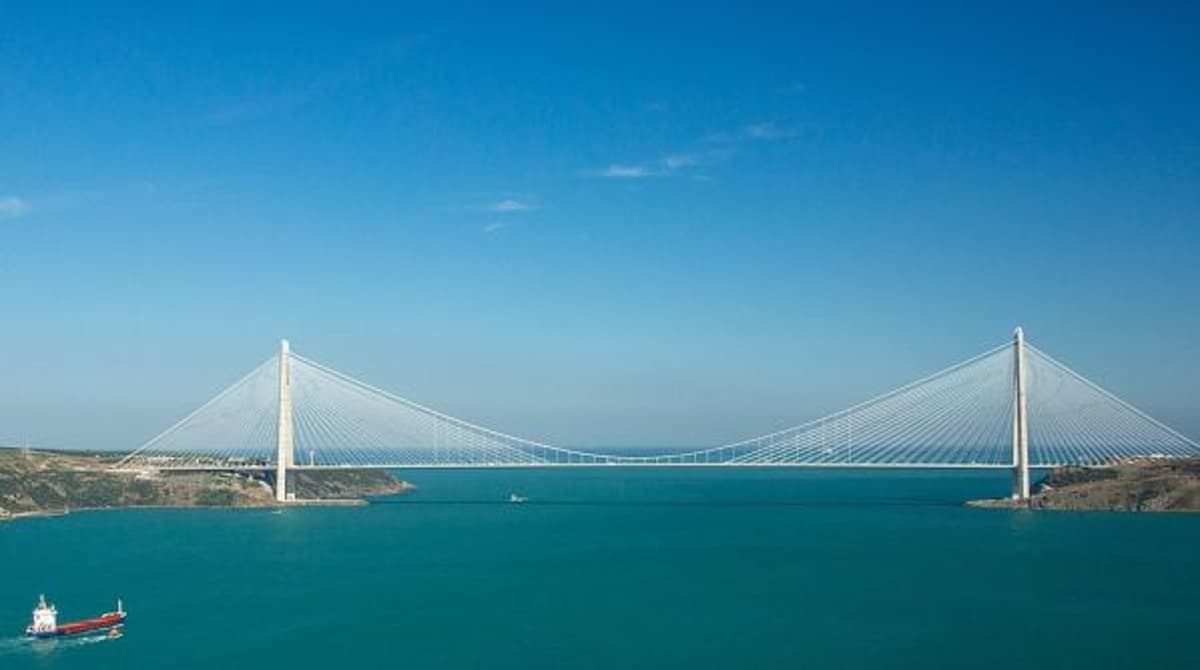
The Northern Railway Crossing Project will deliver a 126‑kilometre, double‑track, electrified line that threads through the Yavuz Sultan Selim Bridge, the country’s longest suspension bridge. Engineering complexity is high, with 44 tunnels totaling 59.1 km and 42 bridges spanning 22.4 km, reflecting a commitment to high‑speed, high‑capacity operations. Once operational, the line will directly join Istanbul Airport and Sabiha Gökçen Airport, creating the first rail connection between the city’s two international gateways. Projected traffic of 33 million passengers and 30 million tonnes of freight per year will substantially relieve the Marmaray system, which is already operating near capacity.
The new Bosphorus link is poised to reshape regional logistics by shortening transit times for both cargo and travelers across the strait. Enhanced rail capacity will attract freight operators seeking alternatives to congested road corridors, potentially shifting a significant share of Turkey’s inland freight to rail. Moreover, the project strengthens Turkey’s bargaining power in the emerging Belt and Road network, offering a reliable overland route that complements maritime channels. As neighboring economies upgrade their own rail corridors, Istanbul’s upgraded connectivity could become a decisive factor in attracting multinational supply‑chain investments.
Finance agreed for second Bosphorus rail link
0
Comments
Want to join the conversation?
Loading comments...