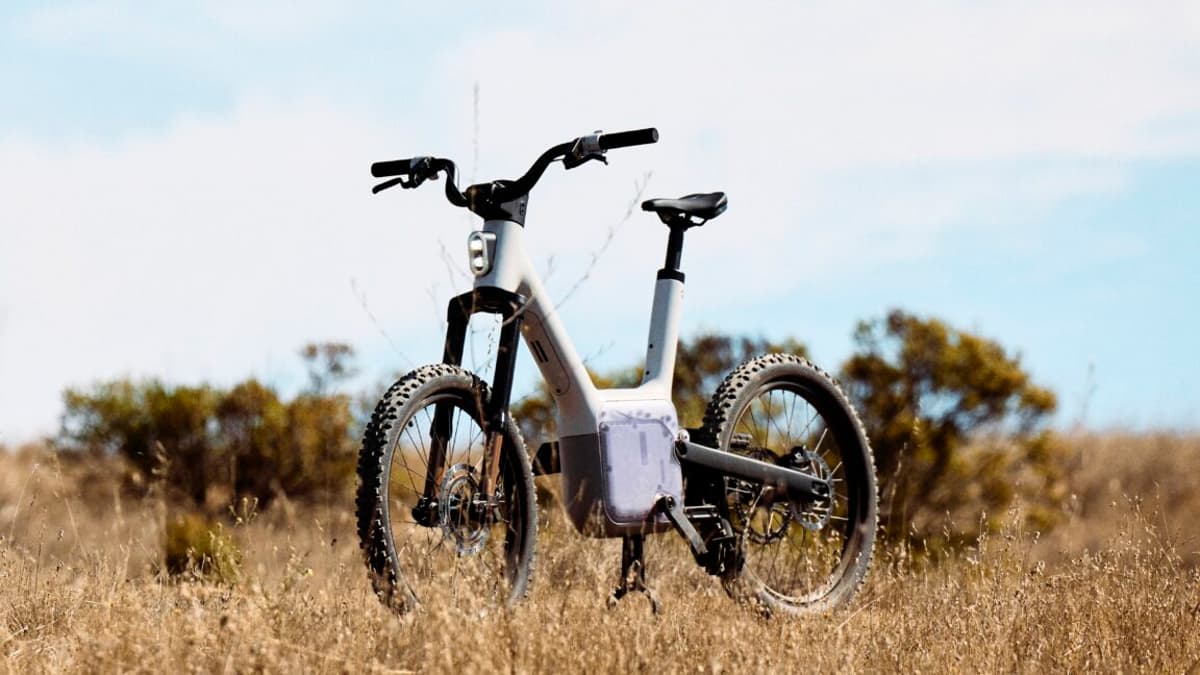
First Look: Also's Upcoming E-Bike Disconnects the Pedals and Wheels
Companies Mentioned

Why It Matters
The software‑first architecture could redefine e‑bike performance and personalization, prompting the industry to move beyond incremental hardware tweaks toward fully programmable two‑wheel mobility.
Key Takeaways
- •TM‑B uses a generator to convert pedaling into motor power
- •Software controls crank resistance, mimicking a traditional bike feel
- •Central magnesium motor/battery unit is custom‑designed in‑house
- •Seats swap in under a minute, enabling multiple configurations
Pulse Analysis
The startup Also is preparing to launch the TM‑B, an e‑bike that severs the mechanical link between the rider’s pedals and the rear wheel. Instead of a conventional mid‑drive motor, the bike’s cranks drive a generator; the electricity produced, supplemented by a battery, powers a separate motor that propels the bike. The experience is dictated entirely by software that modulates crank resistance and motor output, allowing the bike to feel like a regular bicycle under most conditions and shift to a more powerful mode on demand. The hardware—cast‑magnesium motor/battery module, belt drive and rear suspension—is largely built in‑house, with final assembly in Taiwan.
By placing software at the core of the riding experience, Also is challenging the incremental evolution that dominates the e‑bike sector. Riders can select from ten assist levels, store preset seat configurations, and benefit from instantaneous torque adjustments that act like an automatic transmission. This level of programmability promises a more inclusive product, lowering the effort barrier for casual cyclists while delivering performance for enthusiasts. If the UI complexity can be tamed, the model could set a new benchmark for customizable, software‑defined two‑wheel mobility.
The TM‑B also illustrates the growing convergence between electric‑vehicle and bicycle engineering, borrowing battery cells from Rivian and adopting automotive‑grade testing rigs. However, the bike must overcome the “uncanny‑valley” of feel; early reviewers noted a learning curve with the bright, feature‑rich display. Manufacturing in Taiwan using proprietary tooling gives Also control over quality but adds scaling risk. Should the company refine its interface and ramp production, the software‑first approach could spur competitors to rethink e‑bike architecture, accelerating a shift toward modular, data‑driven personal transport.
First look: Also's upcoming e-bike disconnects the pedals and wheels
Comments
Want to join the conversation?
Loading comments...