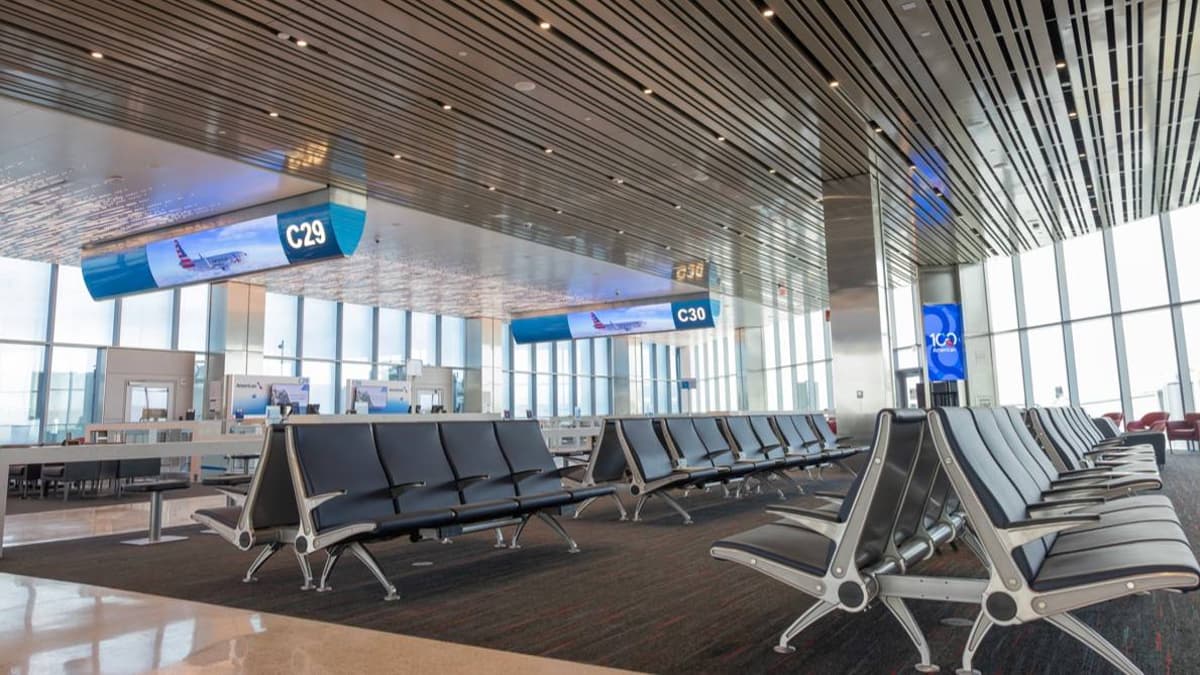
First Look: Inside American Airlines’ $3 Billion, 9 Gate Expansion At Dallas-Fort Worth
Companies Mentioned
Why It Matters
The new gates boost operational efficiency and passenger experience while showcasing modular building methods that reduce airport downtime. The sustainability upgrades align American Airlines with industry pressure to lower carbon emissions, strengthening its competitive position at a hub where it controls 80% of traffic.
Key Takeaways
- •AA unveiled nine electronic boarding gates at DFW Terminal C.
- •Modular construction moved sections overnight, minimizing airport disruption.
- •Phase one brings Terminal C to 32 gates, over 1M sq ft.
- •eCUP replaces steam with 100% renewable energy for hot water.
- •AA holds 80% market share, ~200 daily departures from DFW.
Pulse Analysis
American Airlines’ DFW Terminal C expansion illustrates how legacy carriers are leveraging modular construction to accelerate large‑scale upgrades without sacrificing flight schedules. By fabricating gate modules off‑site and rolling them onto the airfield in two‑week windows, AA reduced on‑site labor and avoided prolonged runway closures, a model other hub airports are watching closely. The approach not only cuts project timelines but also lowers costs, offering a blueprint for airlines seeking to modernize infrastructure amid tight operational constraints.
The nine newly installed electronic boarding gates represent a shift toward fully digital passenger processing. Paperless boarding reduces staffing needs, speeds up gate turnaround, and provides real‑time data for airlines to fine‑tune scheduling. As airlines grapple with labor shortages and rising passenger expectations, such technology becomes a differentiator that can improve on‑time performance and boost customer satisfaction, especially at high‑traffic hubs like DFW where American commands 80% of the market.
Sustainability is woven into the expansion, with the electric central utility plant (eCUP) delivering 100% renewable energy for hot‑water needs, complemented by smart lighting, dynamic glass, and waste‑reducing paperless gates. These measures support AA’s broader net‑zero carbon ambition and respond to increasing regulatory and consumer pressure for greener travel. By integrating eco‑friendly systems into a major hub, American not only reduces its carbon footprint but also sets a precedent for other airlines and airports aiming to meet future environmental standards.
First Look: Inside American Airlines’ $3 Billion, 9 Gate Expansion At Dallas-Fort Worth
Comments
Want to join the conversation?
Loading comments...