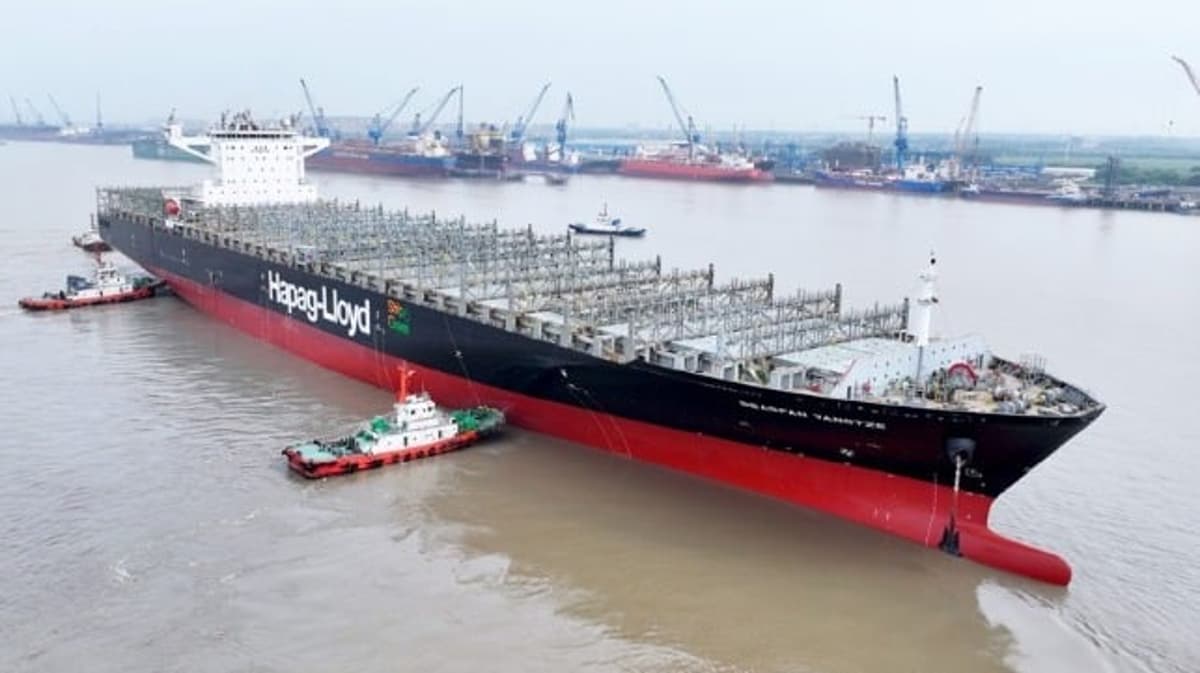
First Seaspan-Hapag Boxship Completes Dual-Fuel Methanol Conversion
Companies Mentioned
Why It Matters
Methanol retrofits promise lower emissions and higher fuel efficiency for ultra‑large containerships, giving operators a pathway to meet tightening environmental standards while managing operating costs. The successful early completion signals that large‑scale fuel swaps are technically feasible, encouraging further investment despite market hesitancy.
Key Takeaways
- •First dual-fuel methanol conversion for Seaspan completed ahead of schedule
- •Project invests $120 million to convert five 10,100 TEU boxships
- •Methanol tanks reduce container capacity by up to 2 percent
- •EEDI improvements demonstrate efficiency gains from methanol retrofit
- •Global methanol fleet under 100, with 200 more ordered by 2030
Pulse Analysis
The Seaspan Yangtze conversion marks a tangible milestone in the maritime sector’s quest for cleaner propulsion. By swapping a conventional MAN S90 engine for a dual‑fuel system, the vessel now runs on methanol—a lower‑carbon alternative that can be produced from renewable sources. The retrofit, carried out by COSCO Shipping Heavy Industry, involved extensive modifications to the main and auxiliary engines, new fuel piping, and upgraded control systems, delivering a noticeable boost in the Energy Efficiency Design Index. Although the added fuel tanks shave roughly 2 percent of cargo space, the efficiency gains and potential fuel‑cost savings are compelling for operators of 10,000‑plus TEU ships.
Industry momentum for methanol is mixed. Pioneers such as Maersk and CMA CGM have announced similar projects, yet overall adoption has slowed due to concerns over methanol supply chains, bunkering infrastructure, and evolving environmental regulations. DNV’s Alternative Fuel Insight database lists just over 100 methanol‑capable vessels in service today, but orders for more than 200 ships slated for delivery by 2030 suggest a latent demand. The technology’s flexibility—easily adaptable to ethanol or other low‑carbon fuels—adds strategic value for carriers hedging against future policy shifts.
For ship owners, the financial calculus hinges on the balance between upfront conversion costs and long‑term operational benefits. The $120 million investment across five vessels translates to roughly $24 million per ship, a figure that can be offset by lower fuel expenses and potential carbon‑pricing incentives. Moreover, early‑completion projects like the Seaspan Yangtze demonstrate that downtime can be minimized, preserving revenue streams. As regulators tighten emissions targets and customers prioritize sustainability, methanol‑enabled containerships could become a competitive differentiator, positioning early adopters to capture market share in an increasingly green‑focused logistics landscape.
First Seaspan-Hapag Boxship Completes Dual-Fuel Methanol Conversion
Comments
Want to join the conversation?
Loading comments...