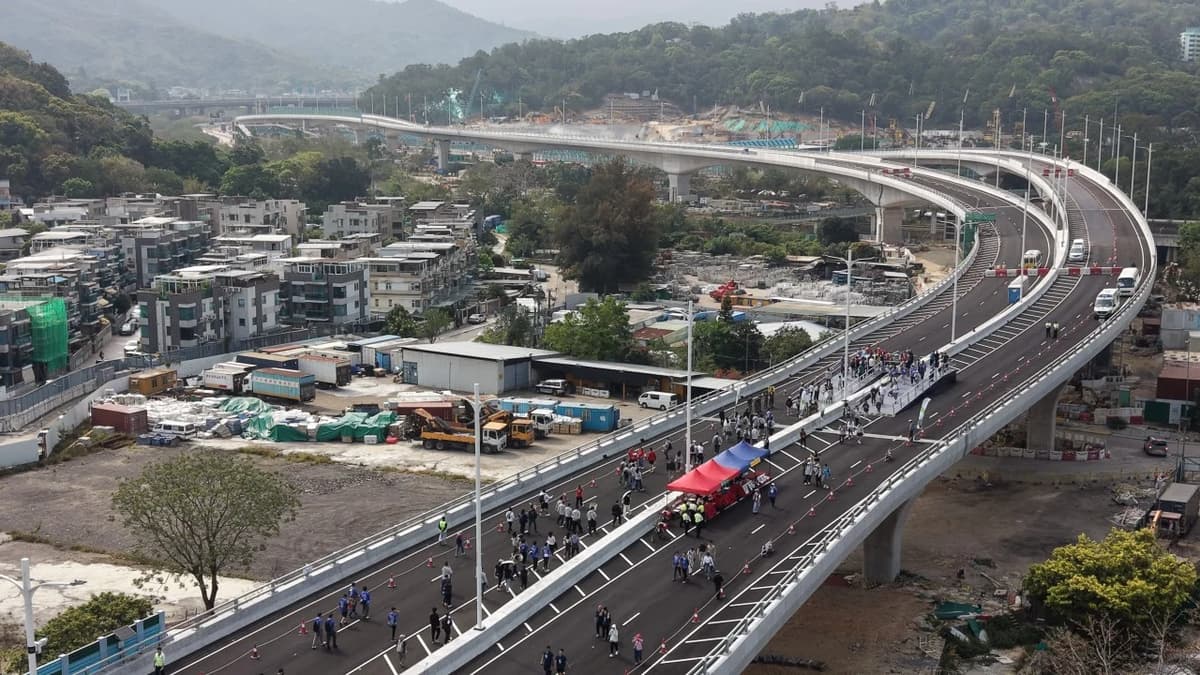
First Section of Fanling Bypass to Open Soon. So How Will Hongkongers Benefit?
Why It Matters
By improving north‑south connectivity, the bypass removes a bottleneck that could hinder the Northern Metropolis’s housing and employment targets, boosting Hong Kong’s overall transport efficiency.
Key Takeaways
- •4 km Fanling Bypass opens, shaving 10 minutes off peak travel
- •First major transport project finished under Northern Metropolis plan
- •Bypass construction cost HK$6.84 billion (~US$880 million)
- •Horizontal bridge rotation method cut rail‑line disruption time
- •World’s first footbridge uses ultra‑high‑strength S960 steel
Pulse Analysis
The Northern Metropolis initiative, unveiled in 2021, aims to transform 30,000 hectares along Hong Kong’s border with Shenzhen into a dual engine of housing and economic growth. With a target of accommodating 95,000 new residents and creating over 14,000 jobs, the plan hinges on robust transport links that can sustain higher population density while preserving the region’s existing urban‑rural balance. Infrastructure projects like the Fanling Bypass are therefore critical to unlocking the megaproject’s long‑term viability and attracting private investment to the New Development Area.
The newly commissioned eastern section of the Fanling Bypass provides a four‑kilometre, dual‑lane corridor that bypasses congested town‑centre roads in Fanling and Sheung Shui. Government estimates suggest a ten‑minute reduction in peak‑hour travel, translating into smoother freight movement and shorter commutes for thousands of motorists. At a combined contract value of HK$6.84 billion (about US$880 million), the project also demonstrates the fiscal commitment required to modernise Hong Kong’s peripheral road network and alleviate pressure on existing arteries such as Fanling Highway.
Beyond its functional benefits, the bypass showcases construction innovations that could set new standards for future Hong Kong projects. The horizontal bridge rotation method, employed by a China Railway Construction Corporation joint venture, allowed a major bridge to be assembled off‑site and swung into place overnight, dramatically reducing exposure to live railway tracks. Additionally, the Lung Yeuk Tau pedestrian bridge became the world’s first to use ultra‑high‑strength S960 steel, cutting material weight while enhancing durability. These techniques not only lower project timelines and labor risks but also signal Hong Kong’s readiness to adopt cutting‑edge engineering solutions as it expands its urban footprint.
First section of Fanling Bypass to open soon. So how will Hongkongers benefit?
Comments
Want to join the conversation?
Loading comments...