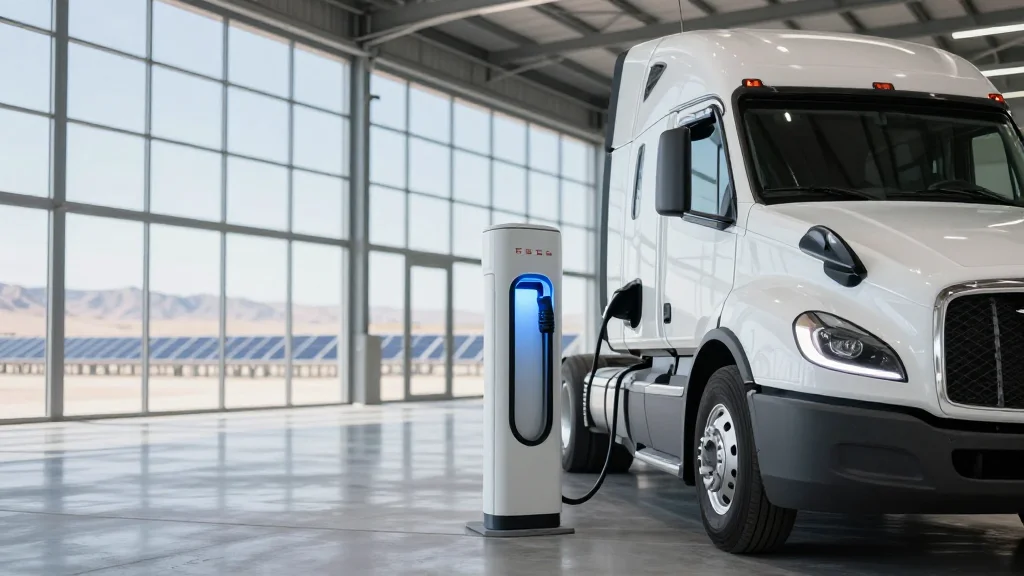
First Tesla Semi Rolls Off High-Volume Production Line

Why It Matters
The Semi’s mass‑production debut positions Tesla to disrupt the $200 billion Class 8 trucking market with a lower‑priced, high‑performance electric option, while its charging ecosystem addresses a key barrier to fleet adoption.
Key Takeaways
- •Tesla's first Semi left Gigafactory Nevada's high‑volume line.
- •Production capacity targets 50,000 units annually, ramping gradually.
- •Long‑Range model offers 500‑mile range at $290,000 price.
- •800‑kW tri‑motor delivers 1,072 hp and 1.2‑MW Megacharger.
- •66 Megacharger sites planned across 15 U.S. states.
Pulse Analysis
Tesla’s Semi has finally moved from prototype to production after a seven‑year gestation, a timeline that reflects both the technical challenges of scaling Class 8 electric trucks and the company’s strategic patience. Early pilot units were hand‑built for a handful of customers, but the new Sparks facility adjacent to Gigafactory Nevada integrates a purpose‑built assembly line, enabling Tesla to target a 50,000‑truck annual capacity. This shift signals the company’s confidence that it can meet the logistical demands of freight operators while leveraging its battery expertise to keep prices competitive.
Pricing the Long‑Range Semi at roughly $290,000 makes it the most affordable battery‑electric tractor in its segment, undercutting rivals that often exceed $350,000. Coupled with an 800‑kW tri‑motor delivering 1,072 horsepower, the vehicle promises performance on par with diesel counterparts while offering lower operating costs. Analysts project deliveries of 5,000‑15,000 units by 2026, a range that, if realized, could accelerate the broader transition to zero‑emission freight and pressure incumbent manufacturers to accelerate their own electric programs.
Equally critical is Tesla’s expanding Megacharger network, which now includes 66 sites across 15 states and the first station in Ontario, California. These 1.2‑MW chargers can restore 60% of range in about 30 minutes, aligning with mandatory driver rest periods and mitigating range‑anxiety for long‑haul routes. By integrating high‑speed charging into existing logistics hubs, Tesla not only enhances the Semi’s practicality but also creates a new revenue stream, reinforcing its ecosystem approach and setting a benchmark for infrastructure‑driven adoption in the commercial trucking sector.
First Tesla Semi Rolls Off High-Volume Production Line
Comments
Want to join the conversation?
Loading comments...