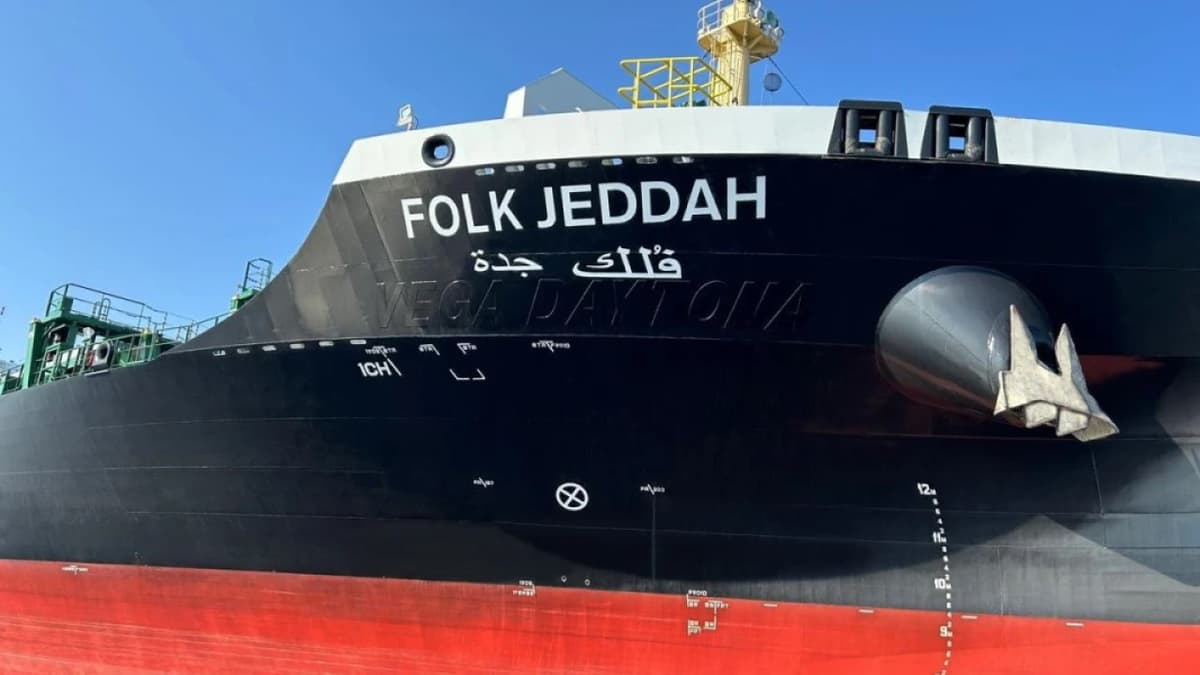
Folk Maritime Eyes 30% Growth Despite Middle East Upheaval
Companies Mentioned
Why It Matters
The firm’s ability to sustain strong growth amid geopolitical turmoil highlights the resilience of regional carriers and signals shifting supply‑chain strategies toward near‑shoring in the Middle East.
Key Takeaways
- •Folk Maritime targets 30‑35% revenue growth in 2024 despite disruptions
- •Redirected vessels from Gulf to Red Sea routes via Jeddah, Oman, India
- •Bunker fuel costs tripled after Strait of Hormuz closure, raising operating expenses
- •Tight second‑hand container market limits fleet expansion until 2027
- •Regional near‑shoring demand positions Folk Maritime as key feeder operator
Pulse Analysis
The closure of the Strait of Hormuz and the broader Red Sea crisis have forced container majors to reroute ships around Africa, creating a vacuum for regional operators. With Gulf ports inaccessible, cargo that once moved through Saudi Arabia’s inland network now relies on alternative corridors through Jeddah, Oman and India. This disruption has amplified congestion at Red Sea ports and driven bunker fuel prices to triple pre‑crisis levels, squeezing margins across the maritime sector.
Folk Maritime has turned adversity into a strategic advantage by redeploying its two vessels to serve the new India‑Oman‑Jeddah trade lane. The shift allowed the carrier to capture stranded local cargo, albeit at higher operating costs due to inflated bunker rates and longer berthing times. Simultaneously, a global shortage of second‑hand containers has stalled the company’s fleet‑building ambitions, pushing new‑build acquisitions into 2027. Nevertheless, the firm remains confident, projecting a 30‑35% growth trajectory by optimizing existing assets and maintaining a lean operational model.
Looking ahead, the industry’s pivot toward near‑shoring and "friend‑shoring"—sourcing goods from politically stable allies—creates a fertile market for regional feeders like Folk Maritime. If the Red Sea reopens, larger carriers will likely revert to the shorter Asia‑Europe route, but regional players will retain relevance by offering tailored services that major lines cannot easily automate. Folk Maritime’s focus on agility, localized service, and strategic positioning could therefore set a template for other emerging carriers navigating geopolitical volatility.
Folk Maritime eyes 30% growth despite Middle East upheaval
Comments
Want to join the conversation?
Loading comments...