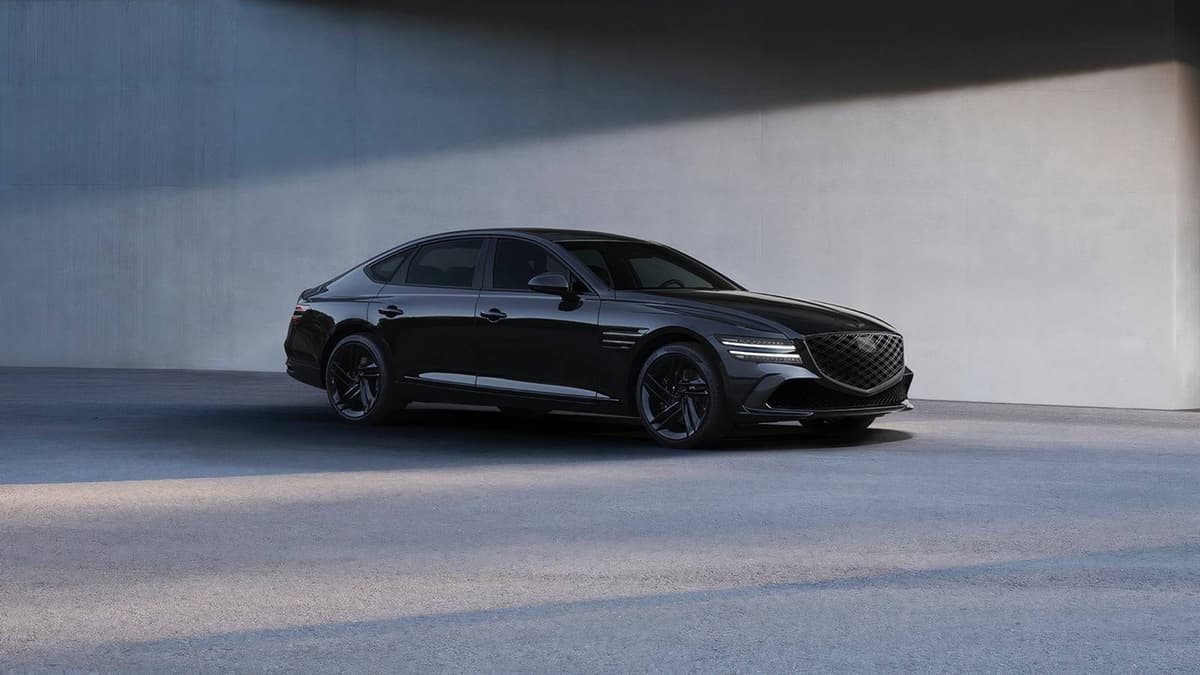
Forget the BMW 5 Series—This Korean Sedan Wins on Quality and Value
Why It Matters
The G80 forces luxury automakers to reconsider pricing and warranty strategies, potentially reshaping buyer expectations in the midsize sedan segment. Its success signals that reliability and total‑ownership cost can outweigh brand legacy in premium markets.
Key Takeaways
- •Genesis G80 base price under $55,000, undercuts German rivals
- •10‑year/100,000‑mile warranty doubles typical luxury coverage
- •J.D. Power reliability score 88, matching Lexus ES benchmark
- •Projected 5‑year repair cost $2,554, about $2k less than BMW
- •27‑inch OLED display merges digital cluster and infotainment seamlessly
Pulse Analysis
The midsize luxury sedan market has entered a price‑inflation phase, with German flagships such as the BMW 5 Series and Mercedes‑Benz E‑Class routinely topping $70,000 after options. While these brands still command prestige, their incremental features—premium paint, advanced suspensions, and bespoke trims—often add more cost than measurable performance or comfort gains. This dynamic has left a segment of buyers seeking the same refinement without the “luxury tax” attached to legacy badges, creating an opening for challengers that can deliver comparable quality at a lower total cost.
Genesis leverages that opening with the G80, a vehicle that blends Korean engineering discipline with a minimalist pricing philosophy. The sedan’s 2.5‑liter four‑cylinder delivers 300 horsepower, paired with an eight‑speed automatic and all‑wheel drive, all while starting under $55,000. Its cabin showcases a 27‑inch OLED screen that unifies the digital instrument cluster and infotainment, high‑grade open‑pore wood trim, and noise‑insulating glass that rivals its German counterparts. Crucially, the G80’s 88‑point J.D. Power reliability rating and a projected five‑year repair bill of $2,554—roughly $2,000 less than the BMW 5 Series—underscore a tangible ownership advantage, amplified by a 10‑year/100,000‑mile powertrain warranty that dwarfs the typical four‑year coverage offered by its rivals.
The broader implication is a potential shift in how luxury is defined. As consumers become more data‑savvy, they weigh warranty length, maintenance forecasts, and real‑world quality scores alongside brand heritage. If Genesis continues to out‑perform on these metrics, German manufacturers may be compelled to re‑evaluate their pricing structures, streamline optional packages, or extend warranty terms to retain market share. In a segment where perception has long eclipsed substance, the G80 demonstrates that a disciplined value proposition can reset the conversation, nudging the industry toward a more transparent, cost‑focused definition of luxury.
Forget the BMW 5 Series—this Korean sedan wins on quality and value
Comments
Want to join the conversation?
Loading comments...