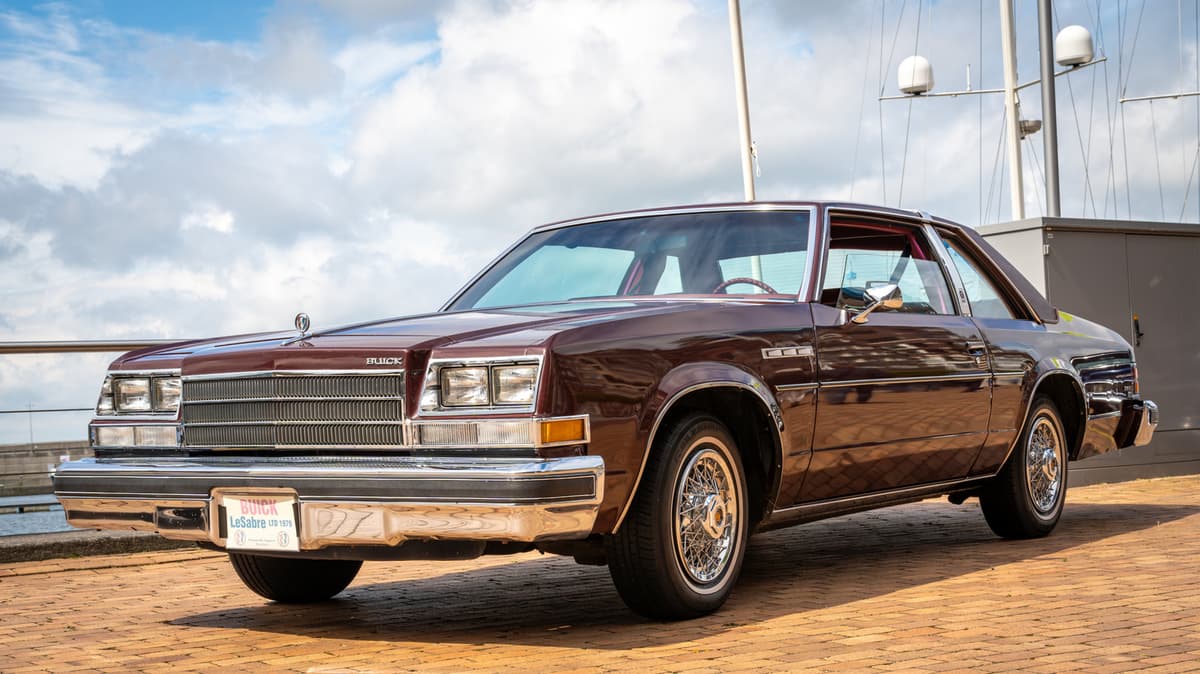
Four Turbocharged Production Cars Existed In 1978, And Two Of Them Were Buicks

Companies Mentioned
Why It Matters
Buick’s 1978 turbo V6 demonstrated that forced induction could boost power and efficiency in a midsize American sedan, paving the way for today’s widespread turbo adoption. The models illustrate how early experimentation shaped current engine downsizing trends across the industry.
Key Takeaways
- •Buick’s 1978 turbo V6 delivered up to 175 hp, 265 lb‑ft torque.
- •Turbo Buicks achieved 25 mpg highway, beating comparable V8s.
- •Only four turbocharged production cars existed in 1978 worldwide.
- •Earlier U.S. turbo models included 1962 Oldsmobile F‑85 Jetfire.
- •Buick’s “Sport” branding downplayed turbo to ease consumer acceptance.
Pulse Analysis
The late 1970s were a turning point for automotive engineering, as the oil crises forced manufacturers to seek efficiency without sacrificing performance. Turbocharging, once a niche technology for European sports cars, began to appear in mainstream models, offering a path to higher specific output while keeping displacement modest. Early adopters like Saab and Porsche captured headlines, but American automakers quietly experimented, laying groundwork for the power‑train strategies that dominate today.
Buick’s foray into turbocharging culminated in the 1978 Regal and LeSabre Sport Coupes, which paired a re‑engineered 231‑ci V6 with an AiResearch TB03 unit. The resulting engine produced 150 hp with a two‑barrel carburetor and 175 hp with a four‑barrel setup, generating 245‑265 lb‑ft of torque—figures that outperformed the brand’s 350 ci V8 while delivering 25 mpg on the highway. Complementary upgrades such as firmer springs, upgraded stabilizer bars, and Firestone tires created a “Rallye” handling package, and the TH350 Turbo‑Hydra‑Matic ensured smooth power delivery. Though 0‑60 times hovered around 11 seconds, the combination of power and fuel economy was impressive for a 3,500‑lb sedan of the era.
The legacy of Buick’s turbo V6 resonates in today’s market, where downsized, turbocharged engines are standard across nearly every segment. By proving that a six‑cylinder could outperform larger V8s in both output and efficiency, Buick helped shift industry perception toward forced induction as a viable solution for emissions and fuel‑cost challenges. Modern consumers benefit from this early experimentation, enjoying vehicles that deliver sports‑car performance with everyday practicality, a direct descendant of the quiet innovation showcased by the 1978 turbo Buicks.
Four Turbocharged Production Cars Existed In 1978, And Two Of Them Were Buicks
Comments
Want to join the conversation?
Loading comments...