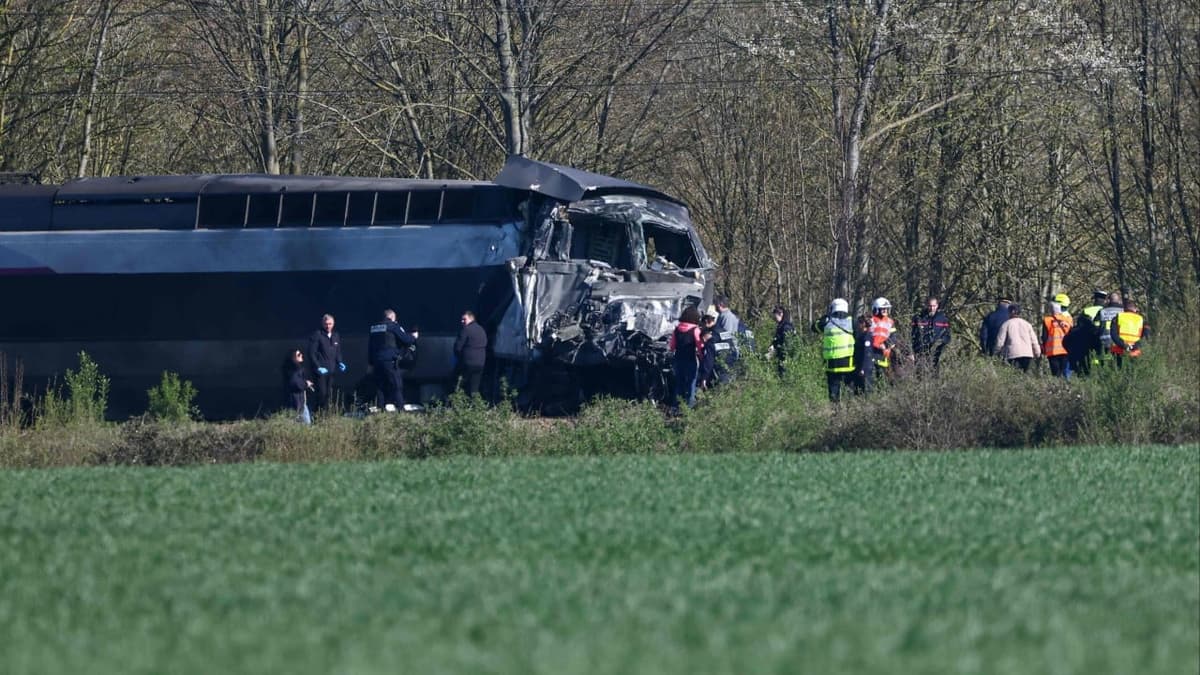
France High-Speed Rail Slams Into Truck, Killing Train Driver
Why It Matters
The incident highlights the vulnerability of high‑speed rail to level‑crossing failures, prompting scrutiny of safety measures across France’s 15,000 crossings and potential regulatory reforms. It also underscores the human and operational costs when infrastructure safeguards lapse.
Key Takeaways
- •TGV collided with military truck at level crossing
- •Driver killed, two seriously injured, 14 minor injuries
- •Train traveling 160 km/h stopped after several hundred meters
- •France logged 89 level‑crossing accidents in 2024, 20 fatal
- •Incident highlights safety risks for France’s 15,000 crossings
Pulse Analysis
France’s high‑speed rail network, anchored by the iconic TGV, has long been a benchmark for speed and reliability. The recent collision in Bully‑les‑Mines, however, exposed a critical weak point: level crossings where road and rail intersect. While the TGV was en route at roughly 160 km/h, a truck laden with a heavy military vehicle breached the crossing, sending the train’s nose careening forward before emergency brakes finally halted it. The loss of an experienced driver and multiple passenger injuries reverberated through the industry, reminding operators that even world‑class rail systems are only as safe as the points where they intersect with road traffic.
Level‑crossing safety has become a focal point for French authorities after 89 incidents were logged in 2024, 20 of them fatal. With approximately 15,000 crossings nationwide, many are still manually operated or lack modern detection technology. Past accidents, such as the 2015 high‑speed derailment and the 2025 soldier deaths near Arras, illustrate a pattern where human error or outdated infrastructure can trigger severe outcomes. Policymakers are now weighing investments in automated barriers, real‑time monitoring, and stricter enforcement to reduce the probability of vehicles forcing their way onto tracks.
For SNCF, the immediate impact includes a week‑long service suspension on the affected line, extensive emergency response deployment, and a potential rise in insurance and legal costs. Longer‑term, the crash may accelerate the rollout of advanced crossing protection systems and influence European rail safety standards. Stakeholders—from freight operators to passenger advocacy groups—are watching closely, as any shift in French rail safety protocols could set precedents for the broader EU network, where high‑speed corridors are expanding rapidly.
France high-speed rail slams into truck, killing train driver
Comments
Want to join the conversation?
Loading comments...