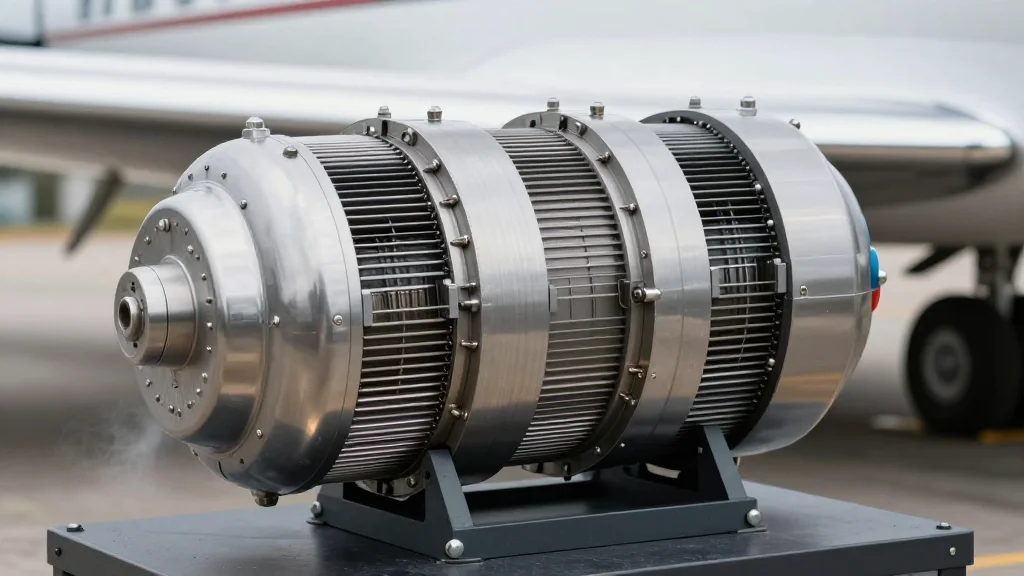
Fraunhofer IISB Develops 750 kW Hairpin Winding Traction Motor for Hybrid-Electric Regional Aircraft, Achieving 8 kW/Kg
Why It Matters
The breakthrough demonstrates that high‑power, lightweight electric propulsion is viable for regional aviation, accelerating the shift toward zero‑emission flight. By meeting stringent aerospace standards, the motor positions Europe to compete in the emerging hybrid‑electric aircraft market.
Key Takeaways
- •750 kW motor reaches 8 kW/kg power density at 94 kg
- •Hairpin windings and oil‑spray cooling boost current density and thermal management
- •Four independent 4×3‑phase sections improve fault tolerance and reliability
- •Motor supports Project AMBER’s 2 MW hydrogen‑fuel‑cell hybrid propulsion goal
- •Enables up to 30% CO₂ reduction for future regional aircraft
Pulse Analysis
Hybrid‑electric propulsion is rapidly moving from concept to certification, but aircraft designers still wrestle with the weight‑to‑power trade‑off. Traditional electric motors struggle to deliver the megawatt‑scale output required for regional jets without adding prohibitive mass. Fraunhofer IISB’s 750 kW motor breaks that barrier by reaching an 8 kW/kg power density, a figure that rivals the best turbine‑derived power‑to‑weight ratios while staying under 100 kg. This achievement underscores how advances in magnetic materials and winding technology are reshaping the feasibility of electric thrust in commercial aviation.
The motor’s performance hinges on three engineering choices. First, the use of NO15 0.15 mm thin‑lamination electrical steel slashes eddy‑current losses at the 21,000 rpm operating speed. Second, a 4×3‑phase hairpin winding architecture packs higher current density into the stator slots and provides superior thermal contact, which the direct oil‑spray cooling system exploits to keep the rotor at 65 °C coolant temperature. Finally, splitting the stator into four electrically isolated sections not only improves fault tolerance—any single‑section failure leaves the remaining three operational—but also simplifies inverter integration, a critical factor for parallel‑hybrid designs.
Beyond the technical merits, the motor is a cornerstone of the EU’s Project AMBER, a collaborative effort to field a 2 MW hydrogen fuel‑cell hybrid system for regional aircraft. By delivering a lightweight, high‑power electric component that complies with aerospace standards, Fraunhofer IISB helps the consortium target a 30% reduction in CO₂ emissions compared with 2020‑era fleets. The development signals to manufacturers and investors that Europe can produce competitive hybrid‑electric propulsion hardware, potentially accelerating certification timelines and encouraging airlines to adopt greener regional routes sooner.
Fraunhofer IISB develops 750 kW hairpin winding traction motor for hybrid-electric regional aircraft, achieving 8 kW/kg
Comments
Want to join the conversation?
Loading comments...