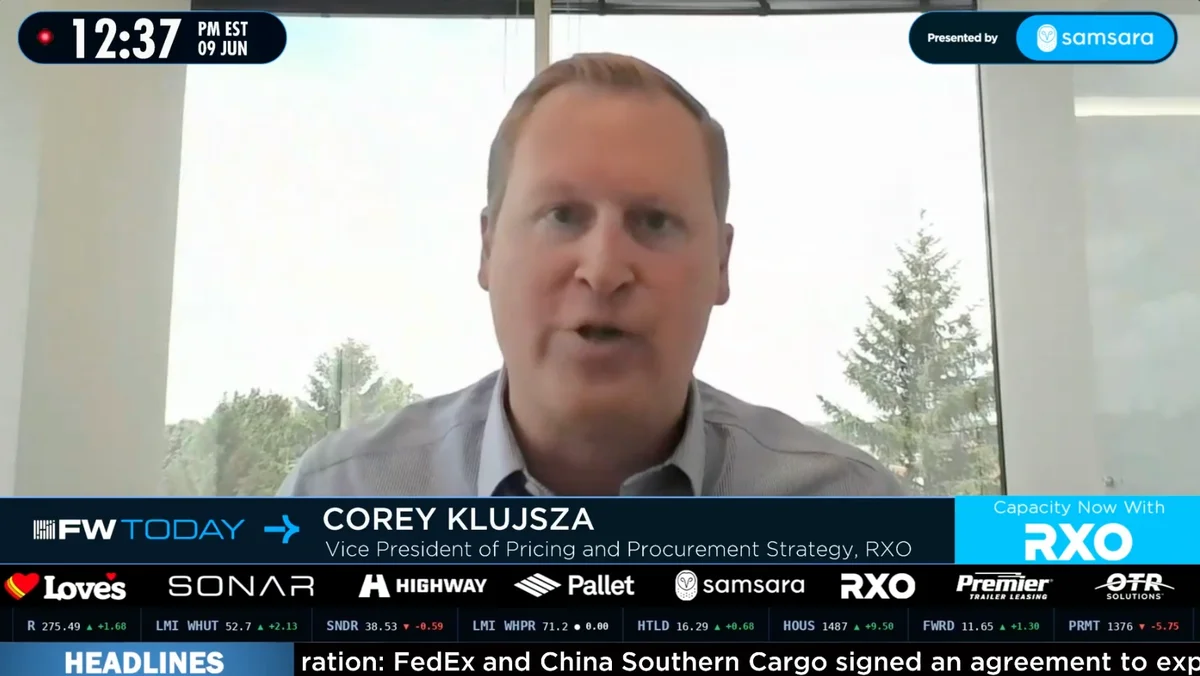
FreightWaves Today: Weekly Diesel Fuel Average Continues to Fall
Companies Mentioned

Why It Matters
Intelligent trailers lower operational risk and set the stage for autonomous trucks, while lower diesel prices tighten carrier margins and boost spot brokerage as contract networks weaken.
Key Takeaways
- •Smart trailers embed sensors for tire pressure, brakes, doors.
- •AI‑driven cameras optimize volumetric cube utilization in dry vans.
- •Diesel fell to $5.21/gal, third‑lowest since Iran‑Iraq war.
- •Diesel demand stays inelastic as carriers must meet schedules.
- •Spot brokerage spikes as carriers reject contracts, acting as 911.
Pulse Analysis
The logistics sector is witnessing a rapid upgrade of dry‑van trailers from simple transport units to sophisticated data hubs. Advanced sensors now track tire pressure, brake wear and door activity, while AI‑enabled cameras assess volumetric cube utilization in real time. This sensor‑rich environment not only improves safety and theft prevention but also creates the digital backbone needed for future autonomous trucking, turning smart trailers from a premium add‑on into an operational necessity.
Meanwhile, the U.S. diesel benchmark fell 14 cents to $5.21 per gallon, marking the third‑lowest average since the 1980‑1988 Iran‑Iraq conflict. Although gasoline prices often trigger demand destruction among retail buyers, diesel demand remains largely inelastic because commercial carriers must keep essential goods moving regardless of fuel cost fluctuations. The price dip offers a modest relief to carrier operating expenses, yet the overall cost structure stays pressured by high fixed costs and capacity constraints.
The contraction of contract routing compliance is reshaping freight brokerage dynamics. RXO’s observation of rising spot demand underscores how carriers are increasingly walking away from pre‑negotiated loads, prompting shippers to turn to spot brokers for emergency coverage. This “911”‑style service is accelerating the growth of the spot market, which now serves as a critical buffer against capacity shortfalls. As the trend continues, logistics firms will need to balance the efficiency of contract networks with the flexibility of spot solutions to maintain service reliability and cost competitiveness.
FreightWaves Today: Weekly diesel fuel average continues to fall
Comments
Want to join the conversation?
Loading comments...