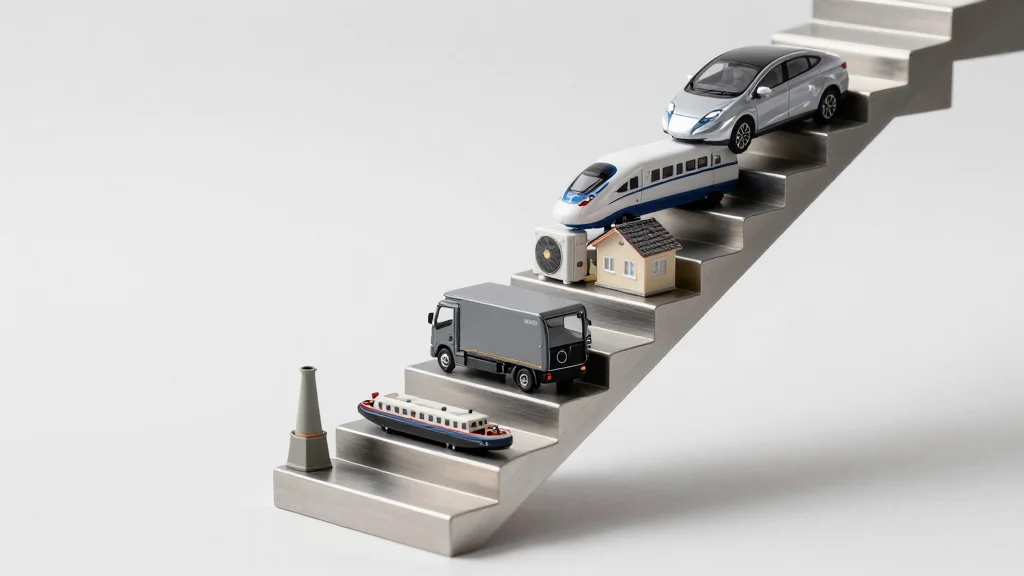
From Cars to Coastal Shipping, We Can Electrify Almost Everything, According to Electrification Staircase
Why It Matters
Electrification offers the most cost‑effective route to cut emissions and shield economies from volatile oil and gas markets, making it a strategic priority for policymakers and investors. The Staircase provides a pragmatic roadmap for allocating capital to the highest‑impact opportunities.
Key Takeaways
- •Electrification Staircase ranks technologies by near‑term feasibility.
- •Cars, trains, EVs, and home heating are ready for electrification now.
- •Regional trucks, cooking, and retrofitted heating sit in the second tier.
- •River shipping and cement calcination remain speculative beyond 2030.
- •Australia leverages abundant wind/solar to accelerate appliance and EV electrification.
Pulse Analysis
The Electrification Staircase builds on the earlier Hydrogen Ladder, shifting the conversation from speculative fuel‑cell hype to a pragmatic, time‑based hierarchy of electric solutions. By categorising technologies into immediate, near‑term and distant horizons, the authors give investors, regulators and corporate strategists a clear lens through which to assess where to commit resources. The model’s strength lies in its simplicity—each step reflects both technological readiness and the availability of clean electricity, a critical factor as nations scramble to meet net‑zero pledges.
In the short‑run, sectors such as passenger vehicles, rail, trams and new‑construction heating are already cost‑competitive when paired with renewable power. This translates into immediate savings on fuel expenditures and a rapid reduction in carbon intensity. Australia exemplifies this momentum: abundant wind and solar capacity, combined with aggressive policies to phase out residential gas, are driving a surge in rooftop solar, battery storage, and electric vehicle adoption. The country’s focus on green iron and steel further illustrates how electrification can unlock new industrial pathways while curbing reliance on imported fossil fuels.
Longer‑term challenges remain for heavy‑duty applications like cement calcination, river and coastal shipping, and medium‑range aviation, where electric technologies are still in prototype stages or face prohibitive capital costs. Policymakers must therefore balance incentives for early‑adopter sectors with sustained R&D funding for the harder‑to‑electrify industries. The Staircase’s staged approach encourages a disciplined rollout, ensuring that each step builds on the previous one, ultimately accelerating the transition to a fully electrified, low‑carbon economy.
From cars to coastal shipping, we can electrify almost everything, according to Electrification Staircase
Comments
Want to join the conversation?
Loading comments...