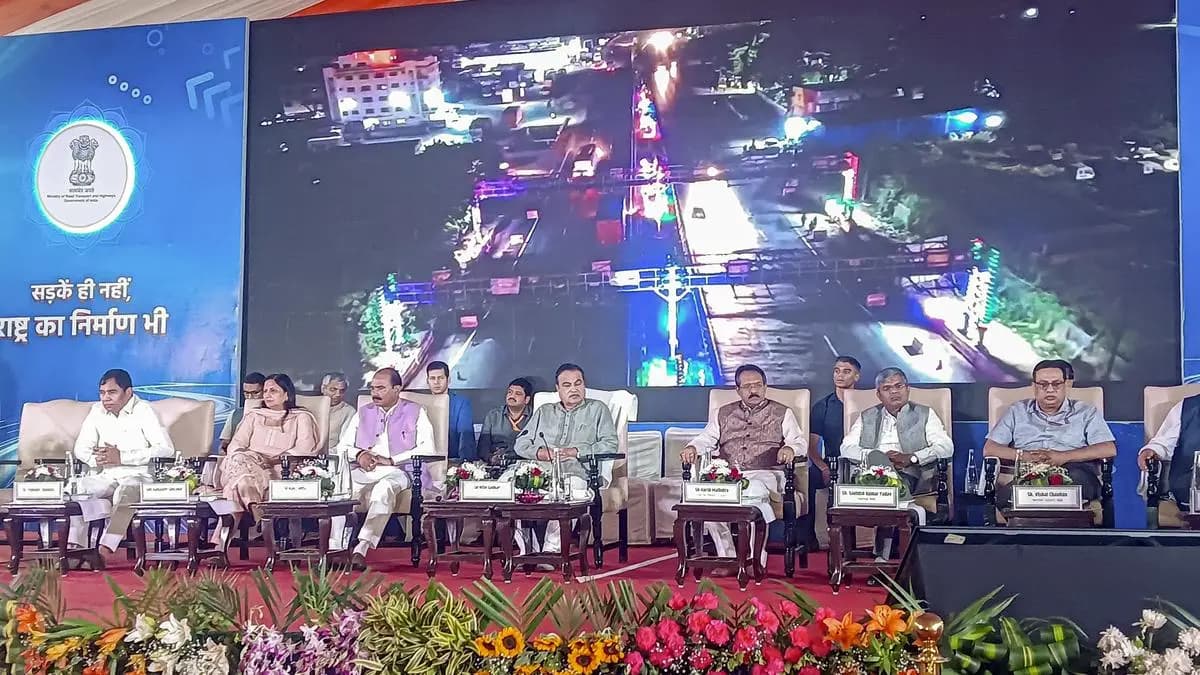
Gadkari Inaugurates Barrier Less Mundka-Bakkarwala Toll Plaza on UER-II
Why It Matters
Barrier‑less tolling accelerates traffic flow on congested highways, directly cutting fuel costs and emissions while enhancing the efficiency of India's expanding road network.
Key Takeaways
- •Mundka‑Bakkarwala becomes India's second barrier‑less MLFF toll plaza
- •NHAI plans 17 MLFF plazas operational by Sep 2026 across nine states
- •Phase 2 will add over 108 MLFF plazas by March 2027
- •ANPR and FASTag enable nonstop toll collection, cutting travel time
- •Expected fuel savings and reduced congestion improve driver experience
Pulse Analysis
The introduction of Multi‑Lane Free Flow (MLFF) tolling at the Mundka‑Bakkarwala plaza reflects a broader shift toward intelligent transportation infrastructure in India. By leveraging Automatic Number Plate Recognition (ANPR) and FASTag, the system eliminates the need for vehicles to stop, streamlining revenue collection and reducing wear on toll‑gate equipment. Early adopters have reported up to a 30% reduction in vehicle idle time, translating into measurable fuel savings and lower emissions—key metrics for a country grappling with urban air quality challenges.
National Highway Authority of India (NHAI) has mapped an aggressive rollout schedule, targeting 17 barrier‑less plazas across nine states by September 2026. This geographic spread—covering economic hubs from Gujarat to Tamil Nadu—ensures that freight corridors and commuter routes alike benefit from smoother traffic flow. Phase 2, slated for completion by March 2027, will add more than 108 additional plazas, positioning India among the few nations with nationwide, non‑stop tolling capabilities. The rapid deployment underscores the government's commitment to modernizing legacy highway assets and aligning with global best practices.
Beyond immediate operational gains, MLFF technology promises strategic advantages for logistics and supply‑chain efficiency. Faster toll processing reduces turnaround times for trucks, enhancing delivery reliability and lowering inventory costs for businesses. Moreover, the data generated by ANPR and FASTag can feed into real‑time traffic management platforms, enabling predictive congestion mitigation. While implementation costs and system integration pose challenges, the long‑term payoff includes a more resilient transport network, reduced carbon footprint, and a template for future smart‑city initiatives across India.
Gadkari inaugurates barrier less Mundka-Bakkarwala toll plaza on UER-II
Comments
Want to join the conversation?
Loading comments...