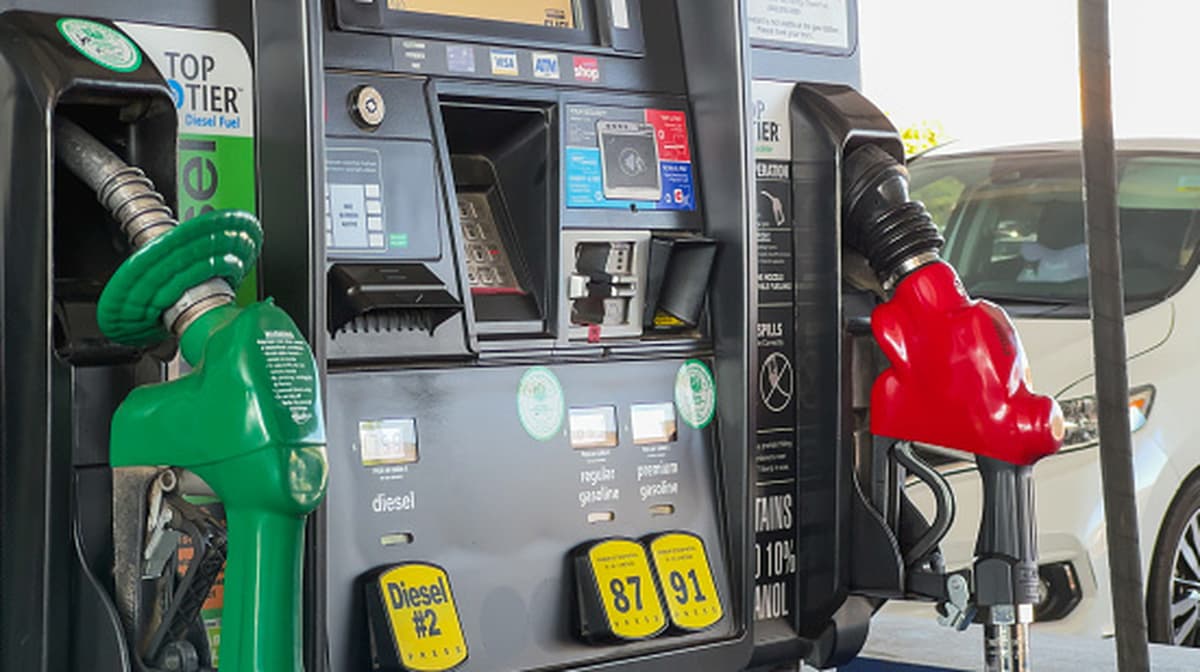
Gas Or Diesel? This Engine Can Run On Both At The Same Time
Why It Matters
The higher efficiency could cut fuel consumption and operating costs for drivers still reliant on fossil fuels, while providing a transitional bridge as electric‑vehicle adoption expands. Success would also force automakers to broaden power‑train strategies amid tightening emissions rules.
Key Takeaways
- •RCCI engine blends gasoline and diesel for up to 60% efficiency
- •Lab tests show double the conversion rate of typical gasoline engines
- •Dual‑fuel system could cut emissions while improving torque
- •Requires two fuel pumps, adding logistical complexity
- •Researchers anticipate years before commercial deployment
Pulse Analysis
Fuel prices in 2026 have surged past $4 per gallon for gasoline and $5 for diesel, squeezing consumer budgets and prompting a renewed search for efficiency gains beyond electric vehicles. While EVs promise zero‑tailpipe emissions, their adoption is hampered by charging infrastructure gaps and higher upfront costs. In this climate, the automotive sector is revisiting advanced internal‑combustion concepts, and the University of Wisconsin‑Madison’s RCCI engine stands out as a laboratory breakthrough that could deliver immediate mileage improvements for conventional drivers.
The RCCI approach layers a small diesel injection onto a gasoline‑rich mixture, creating a controlled combustion event that extracts more energy from each fuel molecule. Laboratory results indicate a thermal efficiency of roughly 60%, nearly double that of typical gasoline engines and a notable jump over diesel’s 45‑50% range. This dual‑fuel strategy also reduces soot and nitrogen‑oxide emissions because the diesel acts as a high‑energy igniter rather than the primary fuel. However, practical hurdles remain: vehicles would need separate gasoline and diesel tanks or a hybrid pump system, and service stations would have to stock both fuels, adding logistical complexity and potential cost.
If the technology matures, it could reshape the power‑train landscape by offering a high‑efficiency, lower‑emission bridge for fleets and consumers reluctant to switch fully to electric. Automakers might integrate RCCI modules alongside hybrid or plug‑in systems, diversifying their portfolios as regulators tighten CO₂ standards. Though commercial rollout is likely years away, the concept underscores that internal‑combustion innovation still has relevance, especially for markets where charging infrastructure lags or where heavy‑duty performance remains a priority.
Gas Or Diesel? This Engine Can Run On Both At The Same Time
Comments
Want to join the conversation?
Loading comments...