GEESE and ATM: Wake Energy Retrieval Collaboration Achieves New Milestones
•February 25, 2026
0
Companies Mentioned


Why It Matters
Successful validation of wake‑energy retrieval paves the way for measurable fuel and emissions reductions across commercial aviation, offering airlines a new lever for cost and sustainability targets.
Key Takeaways
- •75% of pairings reached rendezvous on schedule
- •PAT enables real‑time flight path coordination without aircraft modifications
- •Potential fuel savings up to 5% per long‑haul flight
- •GEESE 2 expands partners to North America and additional airlines
- •Four‑step process integrates seamlessly with existing ATM procedures
Pulse Analysis
The aviation sector is under mounting pressure to cut emissions while preserving profitability. Wake Energy Retrieval (WER), the practice of flying aircraft in tight formation to harvest the uplift from leading vortices, promises fuel reductions of up to five percent on long‑haul routes. This translates into several tonnes of CO₂ saved per flight and a measurable cost advantage for carriers. The European Union’s SESAR Joint Undertaking has positioned the GEESE programme as the regulatory and research backbone for scaling WER across the continent, aligning environmental goals with operational feasibility.
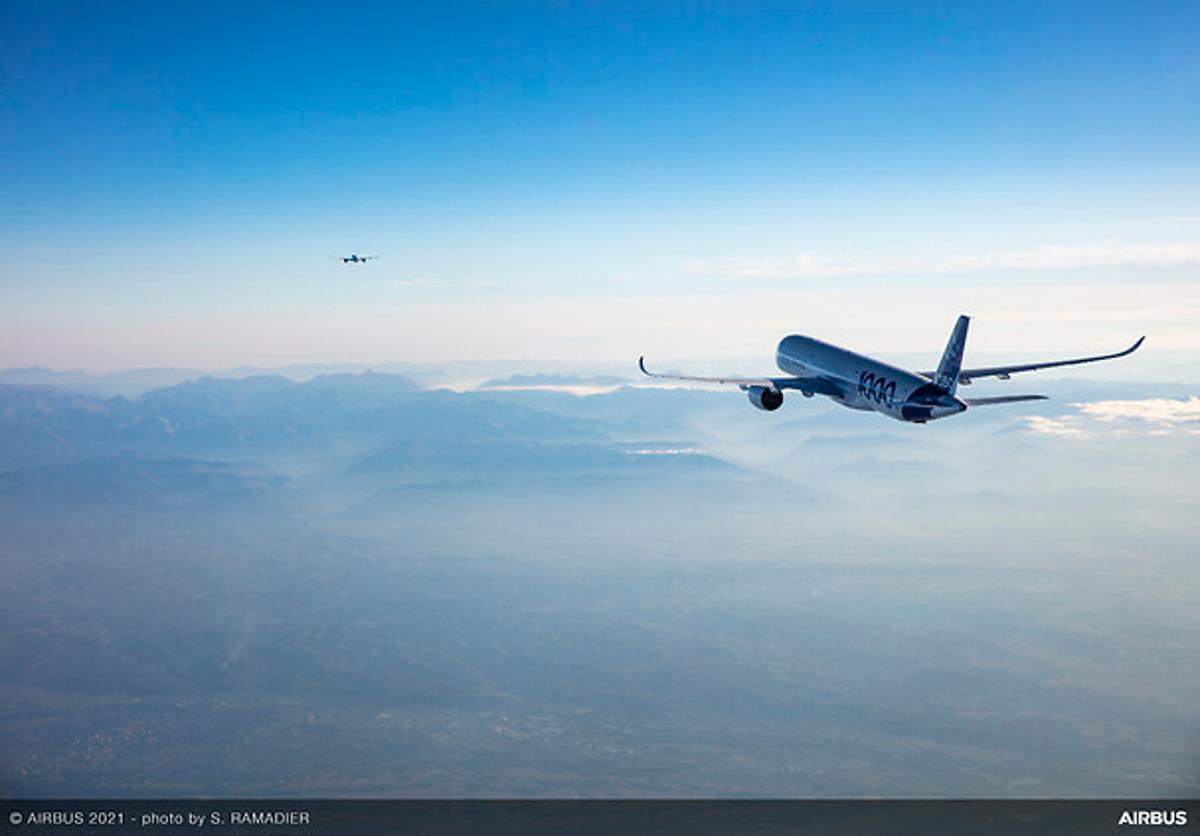
The recent GEESE trials, conducted by Airbus with Air France, Delta, Virgin Atlantic and others, proved that two independent A350s can be guided to a precise rendez‑vous point while respecting vertical separation and ATC constraints. Central to this achievement is the Pairing Assistance Tool (PAT), a digital platform that calculates meeting coordinates, generates secondary flight plans and synchronises the follower’s Flight Management System. By leveraging existing avionics, the solution avoids costly retrofits, allowing airlines to test the concept on current fleets. The four‑step workflow—digital coordination, feasibility assessment, route adjustment and handshake—demonstrates a clear path for integrating WER into the ATM ecosystem.
Looking ahead, the GEESE 2 phase widens the testbed to include new airspaces, additional carriers such as Lufthansa, SWISS and NavCanada, and further refines crew procedures. Continued validation of PAT within live ATM environments will smooth the transition from simulated pairings to actual thrust‑saving cruise segments. If the projected 5 % fuel benefit materialises at scale, the industry could shave millions of tonnes of CO₂ annually and improve airline margins. Stakeholders—from aircraft manufacturers to air navigation service providers—are therefore incentivised to accelerate certification and operational rollout of WER.
GEESE and ATM: Wake Energy Retrieval collaboration achieves new milestones
0
Comments
Want to join the conversation?
Loading comments...