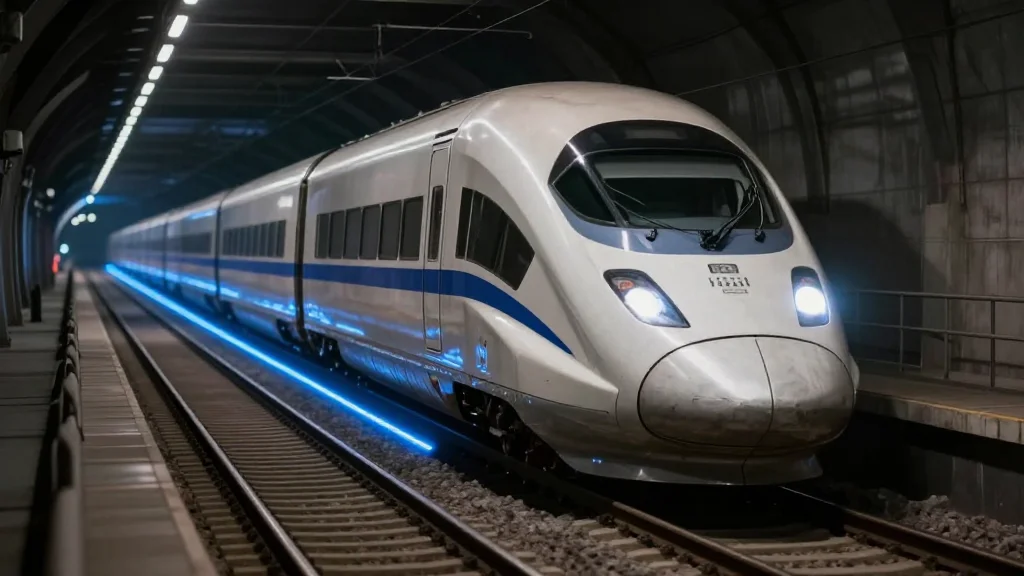
Germany Sets up ERTMS Coordination Office
Why It Matters
Centralising ERTMS implementation removes bottlenecks, enabling faster capacity gains and reliability improvements for Germany’s rail network, a critical step for meeting EU interoperability goals and future demand.
Key Takeaways
- •Germany creates ERTMS Coordination Office to speed digital signalling rollout
- •Office will centralize funding and retrofitting decisions for trackside and onboard systems
- •Steering committee includes federal states, rail operators, and infrastructure manager DB InfraGO
- •ERTMS aims to increase network capacity and improve train punctuality
- •Office structure review set for June 30, 2027 to assess progress
Pulse Analysis
The European Rail Traffic Management System (ERTMS) is the continent’s unified signalling and train‑control framework, designed to replace a patchwork of national systems. While many EU members have already reached advanced deployment stages, Germany has lagged, risking interoperability gaps and reduced cross‑border efficiency. By establishing a dedicated coordination office, the German government signals a decisive shift from incremental pilots to a nation‑wide, standards‑driven rollout, aligning the country with the EU’s Digital Single Market for transport.
The new ERTMS Coordination Office operates under a steering committee that brings together federal ministries, state governments, major rail operators, freight groups and DB InfraGO, the infrastructure manager. This multi‑stakeholder governance model is intended to streamline decision‑making, pool funding sources, and prioritize retrofitting of both trackside equipment and onboard ETCS units. With a clear mandate and a review checkpoint set for mid‑2027, the office aims to eliminate the fragmented procurement processes that have slowed progress, ensuring that investments are targeted where capacity gains are most needed.
If successful, the coordinated rollout will unlock tighter headways, allowing more trains to run on existing lines without costly new track. Improved real‑time communication between trains and control centres should also boost punctuality, a key metric for both passenger satisfaction and freight reliability. For the broader European rail market, Germany’s acceleration could raise the competitive bar, prompting neighboring networks to fast‑track their own digital upgrades and reinforcing the EU’s goal of a seamless, high‑capacity rail corridor across the continent.
Germany sets up ERTMS Coordination Office
Comments
Want to join the conversation?
Loading comments...