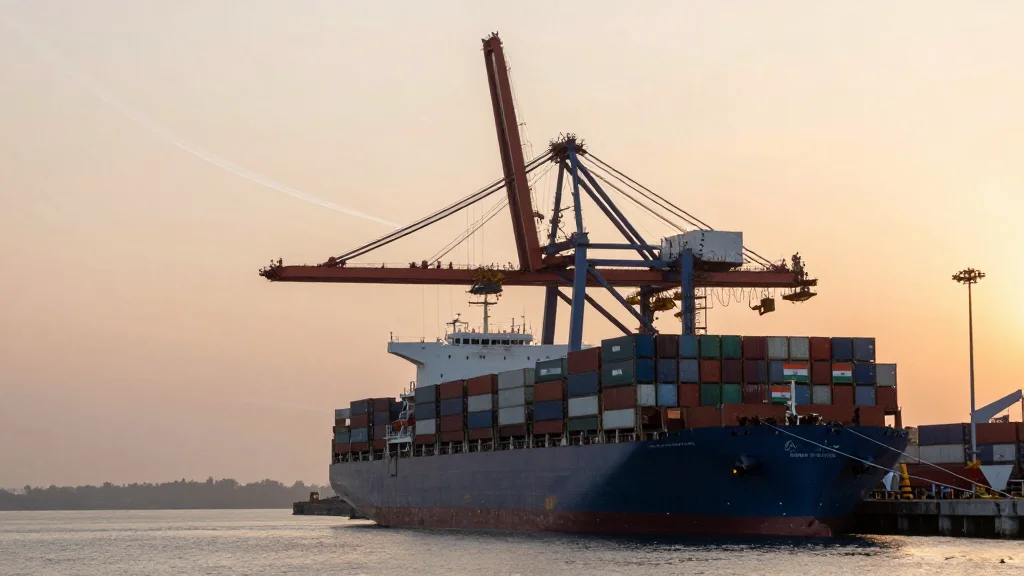
Global Upgrade for Major Ports
Companies Mentioned
Why It Matters
Corporatised ports can close efficiency gaps, attract private capital and position India’s maritime gateway as a competitive hub in global supply chains.
Key Takeaways
- •95% of India’s trade volume moves through sea routes
- •Corporatisation provides commercial autonomy without full privatisation
- •Kamarajar Port’s reform boosted operations and investment
- •Ports can now access capital markets for deep‑water upgrades
Pulse Analysis
India’s maritime sector handles roughly 95% of the nation’s trade volume, making port efficiency a linchpin for economic growth. The legacy Major Port Trusts Act of 1963, while ensuring public accountability, has struggled to keep pace with the technology‑driven, capital‑intensive demands of modern logistics. By adopting the Major Port Authorities Act of 2021, the government is granting ports corporate‑style governance that blends public ownership with commercial flexibility, a model already proving its worth at Kamarajar Port where investment inflows and operational metrics have improved markedly.
The shift to corporatisation is more than an administrative tweak; it is a strategic response to global competition. Ports worldwide—from Rotterdam’s public‑corporate hybrid to Singapore’s PSA International—demonstrate that semi‑autonomous structures can deliver world‑class efficiency while serving national interests. For India, this means faster tariff setting, quicker infrastructure roll‑outs such as deep‑water berths and automated terminals, and the ability to raise funds directly from capital markets. These capabilities are essential to meet the ambitious targets of initiatives like Sagarmala, the National Logistics Policy, and PM Gati Shakti, which envision ports as integrated multimodal logistics hubs.
A successful transition also hinges on the workforce. Recognising employees as partners through reskilling programs, performance‑linked incentives and transparent career pathways ensures that the human capital can operate advanced digital systems and automation tools. By aligning staff interests with corporate goals, ports can sustain the momentum of reform and avoid the pitfalls of bureaucratic inertia. Ultimately, corporatised ports are poised to drive higher service quality, attract foreign investment, and reinforce India’s stature as a pivotal node in the global maritime network.
Global upgrade for major ports
Comments
Want to join the conversation?
Loading comments...