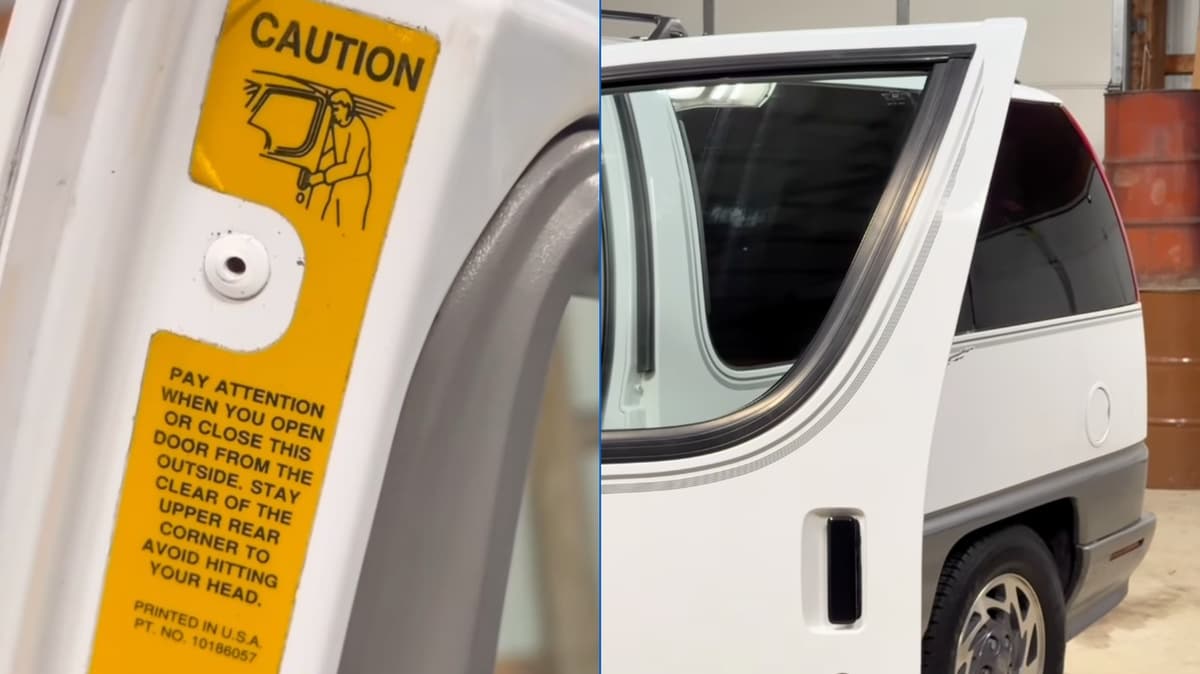
GM Used A Sticker To 'Fix' Minivan Doors That Whacked Peoples' Heads

Companies Mentioned
Why It Matters
The incident spotlights the trade‑off between bold styling and occupant safety, prompting manufacturers to prioritize ergonomic door designs and avoid reliance on warnings alone.
Key Takeaways
- •GM Dustbuster vans' front doors could strike occupants at face level
- •GM issued part 10186057, a yellow sticker warning of door hazard
- •Door design stemmed from wedge‑shaped styling and high roofline
- •Safety warning highlighted broader industry focus on occupant protection
- •Incident spurred later minivan redesigns with safer door geometry
Pulse Analysis
The 1990s saw General Motors push the envelope with its Dustbuster‑style minivans, a trio of models that traded conventional proportions for a dramatic wedge silhouette. While the design turned heads, it also raised the upper edge of the front doors to roughly head height, a configuration that caught unsuspecting passengers off‑guard. This ergonomic oversight became a recurring complaint among families loading children and groceries, illustrating how aesthetic ambition can clash with practical safety considerations.
In response, GM opted for a low‑cost mitigation: part 10186057, a conspicuous yellow sticker affixed to the door interior warning users of the potential impact. Although the label serves as a reminder, it does not address the root cause—door geometry that places the handle and opening arc within the occupant’s line of sight. Regulators and consumer advocates have increasingly scrutinized such stopgap measures, arguing that manufacturers should embed safety into the design phase rather than rely on post‑sale warnings. The episode also reflects broader industry trends where vehicle interiors are evaluated for child‑friendliness and ease of ingress.
The backlash against the Dustbuster door design accelerated a shift toward more ergonomic minivan architectures in the early 2000s. Subsequent models from both GM and its competitors adopted higher belt‑line doors, recessed handles, and wider opening arcs to reduce head‑impact risk. Today, computer‑aided design tools and crash‑simulation software enable engineers to predict and eliminate such hazards before production. The legacy of the sticker‑only fix serves as a cautionary tale: lasting consumer trust hinges on integrating safety into the core aesthetic, not merely plastering warnings on the surface.
GM Used A Sticker To 'Fix' Minivan Doors That Whacked Peoples' Heads
Comments
Want to join the conversation?
Loading comments...