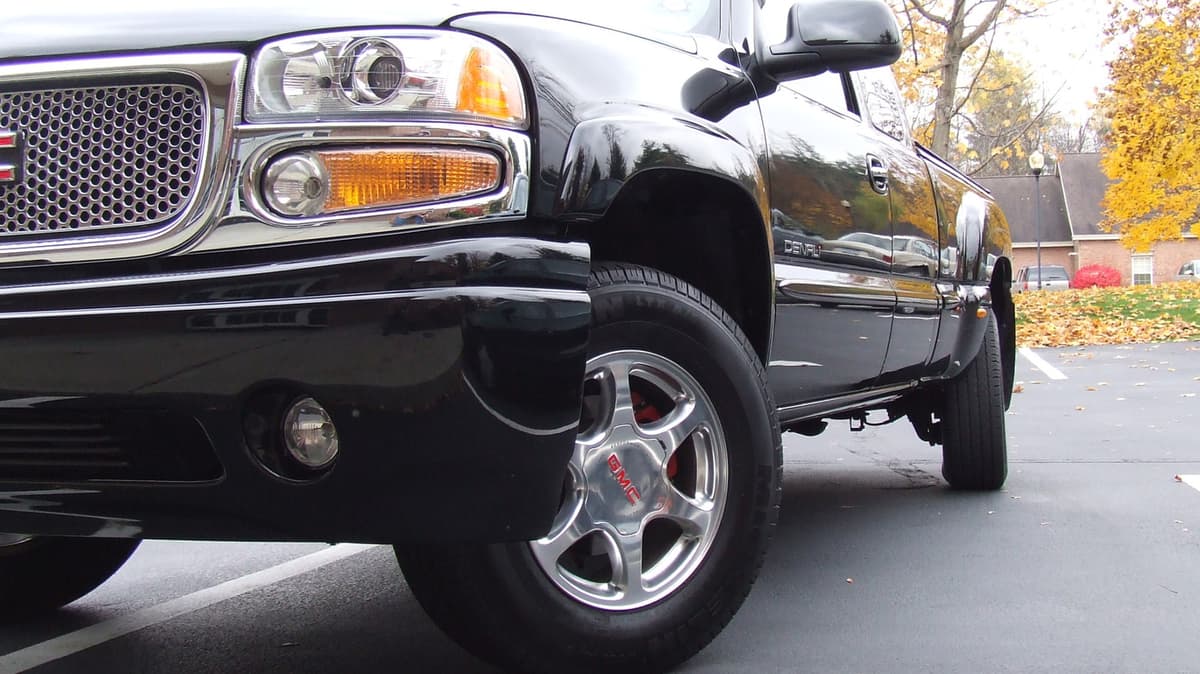
GM's Rare Quadrasteer System For Pickup Trucks Was Innovative (And A Massive Failure)

Companies Mentioned
Why It Matters
Quadrasteer illustrates how premium pricing and added weight can derail innovative automotive features, offering a cautionary tale for automakers rolling out advanced steering systems in electric trucks.
Key Takeaways
- •Quadrasteer reduced turning radius to 37.4 ft, versus 43‑52 ft
- •Initial price $7,000; later dropped to $1,995 by 2004
- •Only 5,502 Quadrasteer trucks sold in 2004
- •System added roughly 350 lb weight and mechanical complexity
- •Rear‑wheel steering returns on 2026 Sierra EV, future uncertain
Pulse Analysis
Four‑wheel steering has a long, uneven history that began in the 1980s with niche sports cars like the Nissan Skyline and Honda Prelude. Those early systems promised tighter low‑speed turns and steadier high‑speed handling, but the benefits were marginal and the price tags steep. When GM partnered with Delphi to launch Quadrasteer on its GMT800 pickups, it finally applied the concept to a utility vehicle where maneuverability matters most. The system’s 12‑degree opposite‑steer at under 7 mph cut the Sierra Denali’s turning circle to a class‑leading 37.4 ft, a tangible advantage for urban parking and trailer work.
Despite the engineering win, Quadrasteer’s market performance was hampered by three critical factors. First, the $7,000 option price in 2002 represented a sizable portion of a truck’s total cost, forcing GM to slash the price repeatedly—down to $1,995 by 2004—yet sales never recovered. Second, the added 350 lb of hardware increased fuel consumption and reduced payload capacity, eroding the very utility that pickup buyers value. Third, the system’s complexity raised maintenance concerns, reinforcing the perception of a gimmick rather than a necessity. The result was a meager 5,502 units sold in 2004, prompting GM to abandon Quadrasteer on the subsequent GMT900 platform.
The concept is resurfacing in the 2026 GMC Sierra EV, where electric platforms can better accommodate the weight and power demands of rear‑wheel steering. By limiting the feature to mid‑tier AT4 and top‑of‑line Denali trims, GM aims to balance cost against perceived value, learning from the Quadrasteer misstep. However, delays in the broader EV truck rollout and uncertainty around future investments suggest that the revival may be short‑lived. Industry observers will watch whether modern pricing strategies, lighter components, and the EV’s torque characteristics can finally make four‑wheel steering a mainstream benefit rather than a costly novelty.
GM's Rare Quadrasteer System For Pickup Trucks Was Innovative (And A Massive Failure)
Comments
Want to join the conversation?
Loading comments...