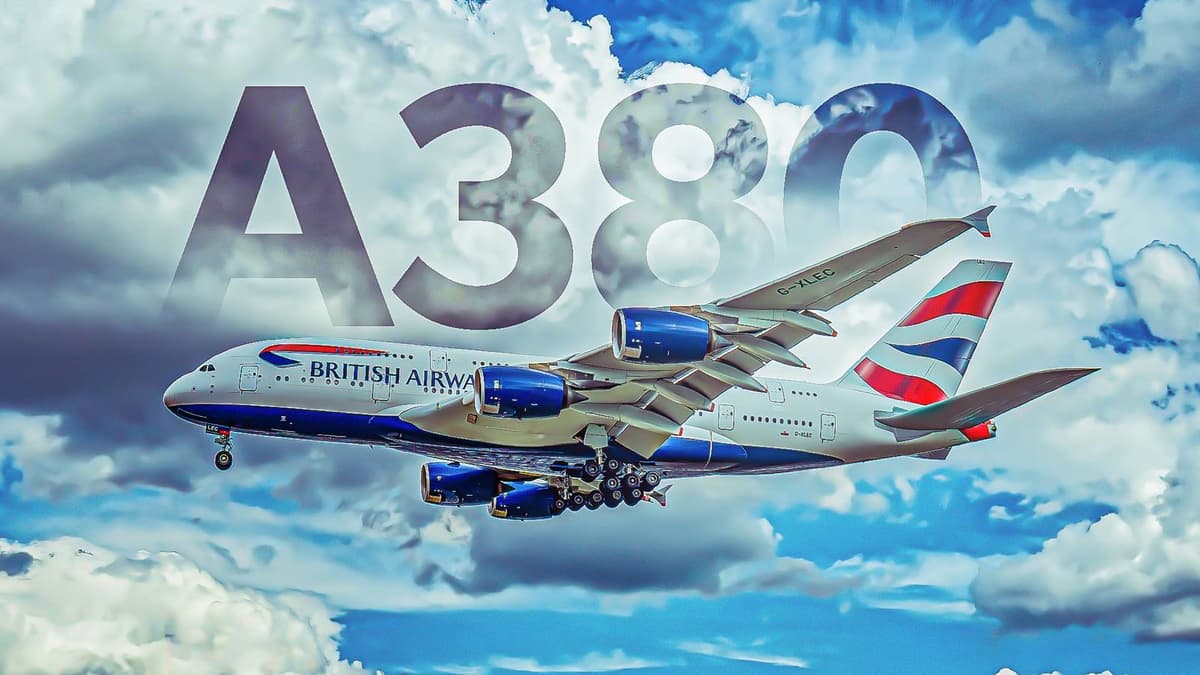
Goodbye, Airbus A380: These 3 US Airports Have Lost Superjumbo Flights
Why It Matters
The loss signals airlines’ pivot to more fuel‑efficient twin‑jets and highlights the operational and demand hurdles U.S. airports face in supporting the A380’s size and cost structure.
Key Takeaways
- •Atlanta lost A380 after Qatar's 2016 gate mishap.
- •Chicago's A380 service ended; BA switched to 777/787.
- •Orlando never secured A380 despite strong Indian community demand.
- •A380 departures reflect airlines favoring more efficient twinjets.
- •US airports face infrastructure and demand challenges for superjumbos.
Pulse Analysis
The Airbus A380’s exit from U.S. hubs underscores a broader industry shift toward fleet simplification and cost control. While the quad‑jet once symbolized prestige and capacity, airlines now prioritize aircraft like the Boeing 777 and 787 that deliver comparable range with lower operating expenses and greater flexibility on fluctuating demand. This transition is especially pronounced in markets where gate infrastructure and passenger loads cannot consistently justify the superjumbo’s size, prompting carriers to re‑evaluate route economics.
At Atlanta’s Hartsfield‑Jackson, a 2016 Qatar Airways A380 landing exposed logistical shortcomings—no dedicated gate forced passengers onto stairs and buses. The incident highlighted the capital-intensive upgrades required for A380 service, which many U.S. airports are reluctant to fund without guaranteed demand. Similarly, Chicago O’Hare’s brief A380 stint, initially a test by Emirates, eventually gave way to British Airways’ regular service, only to be replaced by twin‑jets after the pandemic reshaped capacity needs. The pattern reflects a pragmatic response to evolving passenger volumes and the high fixed costs of operating a double‑deck aircraft.
Orlando International’s experience adds a demographic dimension: strong demand from the Indian community sparked talks of A380 deployment, yet Emirates settled on a 777‑300ER. The decision illustrates how airlines balance market enthusiasm against operational realities such as runway length, gate availability, and turnaround efficiency. As airlines continue to retire or defer A380 routes, U.S. airports may redirect resources toward accommodating next‑generation narrow‑body and twin‑jet fleets, reinforcing a market trend that favors versatility over sheer size.
Goodbye, Airbus A380: These 3 US Airports Have Lost Superjumbo Flights
Comments
Want to join the conversation?
Loading comments...