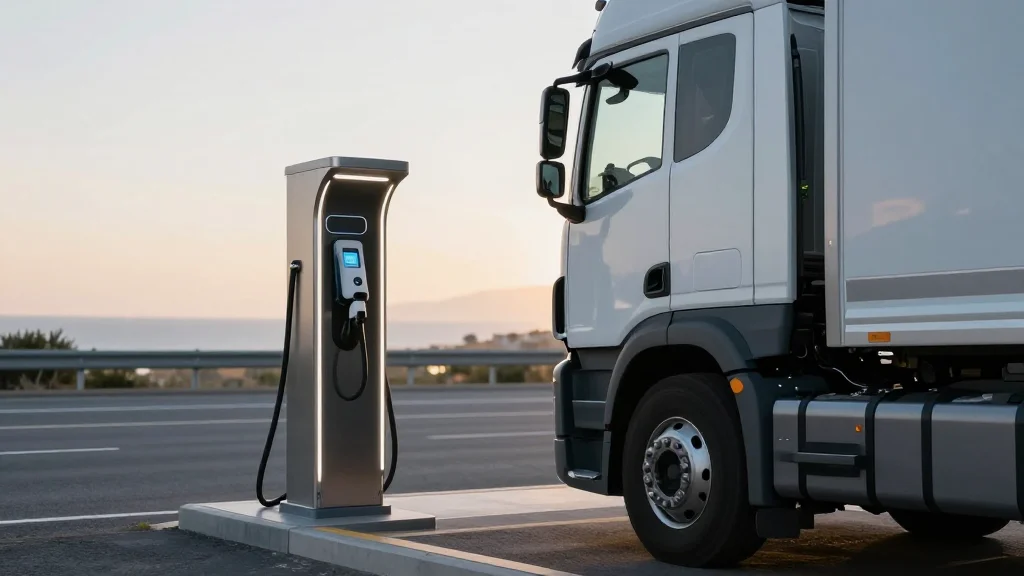
Gotion, Green Power Morocco and Chery Launch 2,000‑km Europe‑Africa Electric Freight Corridor

Why It Matters
The Europe‑Africa electric logistics corridor tackles two pressing challenges: reducing greenhouse‑gas emissions from heavy freight and demonstrating a viable business model for battery‑swap infrastructure in the heavy‑duty segment. By targeting a route that already handles 2,000 trucks daily, the project offers a high‑visibility test case that could accelerate policy support and private investment in similar corridors across the continent. Beyond the immediate environmental benefits, the initiative could reshape supply‑chain dynamics. Faster turnaround times enabled by swapping stations may lower total cost of ownership for shippers, making electric trucks competitive with diesel on both price and performance. If the model proves scalable, it could unlock new markets for manufacturers like Chery and battery producers like Gotion, fostering a regional ecosystem of clean‑transport technology.
Key Takeaways
- •Gotion, Green Power Morocco and Chery sign agreement to build 2,000‑km electric freight corridor from Agadir to Perpignan
- •Initial deployment includes 100 heavy‑duty electric trucks with Gotion battery systems
- •Battery‑swapping stations and smart dispatch platform to be managed by a joint venture
- •Route currently carries about 2,000 diesel trucks daily; projected emissions cut of 30‑40%
- •Full fleet expected in service by end‑2027, with potential €1 billion in related investment
Pulse Analysis
The corridor represents a strategic pivot for the heavy‑duty sector, which has lagged behind passenger EV adoption due to range anxiety and long charging times. By betting on battery‑swap technology, the consortium sidesteps one of the biggest operational barriers: downtime. This approach mirrors early successes in the two‑wheel market, where swapping stations enabled rapid fleet turnover. However, scaling that model to 100‑ton trucks introduces new engineering and regulatory complexities, especially around standardization of battery packs across manufacturers.
From a market perspective, the partnership leverages complementary strengths: Gotion’s expertise in high‑energy‑density cells, Chery’s manufacturing scale, and GPM’s local logistics knowledge. This triangulation reduces the risk of a single‑entity rollout and may attract additional financing from European green‑bond investors seeking tangible emission‑reduction projects. The corridor could also serve as a catalyst for policy harmonization between the EU and African nations, prompting the development of cross‑border standards for electric freight.
Looking ahead, the success of the Agadir‑Perpignan link will likely dictate the pace of similar initiatives across the Mediterranean. If the joint venture meets its uptime and emissions targets, it could unlock a cascade of public‑private partnerships aimed at electrifying other high‑volume routes, such as the Spain‑Morocco Strait or the Italy‑Tunisia corridor. Conversely, any shortfall in performance could reinforce skepticism around battery‑swap viability for heavy trucks, nudging the industry back toward fast‑charging or hydrogen solutions. The next six months—when construction of swapping stations begins—will be the true litmus test for this ambitious low‑carbon freight experiment.
Gotion, Green Power Morocco and Chery Launch 2,000‑km Europe‑Africa Electric Freight Corridor
Comments
Want to join the conversation?
Loading comments...