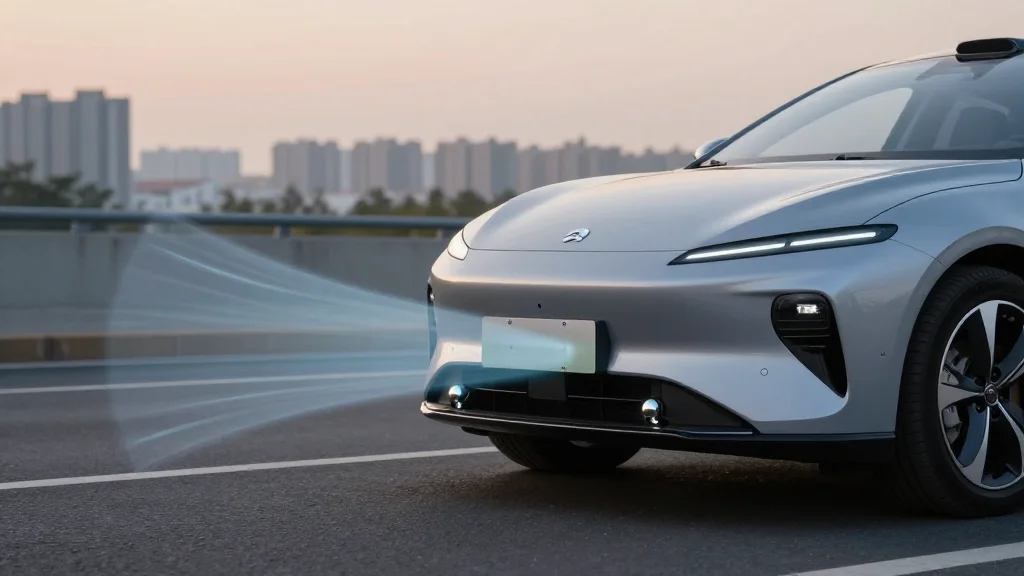
Government Scraps Licensing Rule for Vehicle Safety Technology
Why It Matters
The policy accelerates deployment of advanced driver‑assistance technologies in India, boosting road safety and aligning the market with global automotive standards. It also signals a regulatory push toward intelligent transport ecosystems that could reshape traffic management and mobility services.
Key Takeaways
- •India exempts 5.9 GHz and 77‑81 GHz automotive radars from licensing
- •Rule aligns Indian standards with US and EU vehicle safety regulations
- •Automakers can now use off‑the‑shelf safety radars in Indian cars
- •Telecom regulator starts V2X framework consultation for road‑safety communications
- •Cellular V2X adopted as harmonised standard for future intelligent transport
Pulse Analysis
India’s automotive sector is at a pivotal juncture as the government lifts licensing barriers for critical safety frequencies. By exempting 5.9 GHz and 77‑81 GHz bands—used by radar and short‑range communication modules—from traditional wireless telegraphy licences, the move eliminates a major compliance hurdle for original equipment manufacturers (OEMs). This aligns India’s regulatory environment with the United States and European Union, where similar exemptions have spurred rapid adoption of advanced driver‑assistance systems (ADAS) and autonomous‑vehicle prototypes. For Indian automakers, the ability to source off‑the‑shelf, globally‑standardised radars reduces development costs and shortens time‑to‑market, potentially accelerating the rollout of collision‑avoidance and lane‑keeping technologies across a market of over 30 million new vehicles annually.
The licensing waiver also carries broader economic implications. Suppliers of radar modules and V2X hardware can now target the Indian market without navigating a complex licensing regime, encouraging foreign investment and joint‑venture opportunities. Domestic firms stand to benefit from technology transfer and scale economies, fostering a nascent ecosystem of safety‑focused components. Moreover, the policy supports the Indian government’s road‑safety agenda, which aims to cut the nation’s high traffic‑fatality rate by integrating intelligent transport solutions that can react in real time to hazards.
Looking ahead, the regulator’s consultation on a dedicated V2X framework underscores a strategic shift toward vehicle‑to‑everything communications. By endorsing cellular V2X (C‑V2X) as the harmonised standard and proposing administrative spectrum allocation, India is laying the groundwork for connected‑car services, traffic‑flow optimisation, and smart‑city integration. Successful implementation could unlock new revenue streams for telecom operators, enable real‑time traffic management platforms, and position India as a testbed for next‑generation mobility innovations. Stakeholders across automotive, telecom, and infrastructure sectors should monitor the forthcoming rules, as they will shape investment decisions and competitive dynamics for years to come.
Government scraps licensing rule for vehicle safety technology
Comments
Want to join the conversation?
Loading comments...