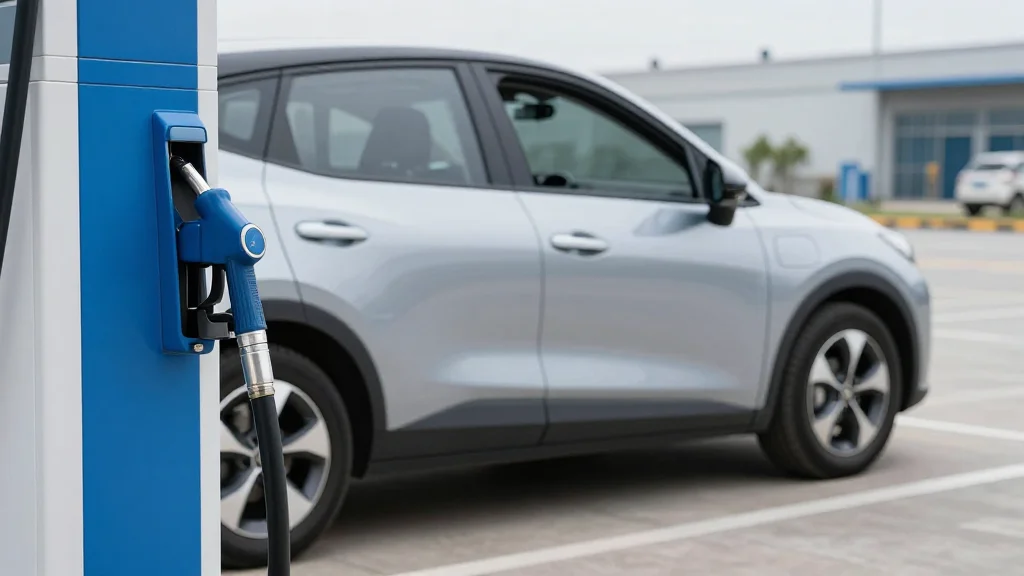
Govt Notifies Approval Norms for Hydrogen-Powered Vehicles Under Central Motor Vehicles Rules
Why It Matters
Regulatory clarity accelerates hydrogen vehicle development, positioning India to meet climate targets and attract investment in clean‑mobility technologies.
Key Takeaways
- •New Rule 125E sets safety standards for hydrogen ICE vehicles
- •AIS 195 and 195T guide type‑approval for compressed hydrogen engines
- •AIS 157 and 157T regulate hydrogen fuel‑cell vehicle approvals
- •ISO 14687 and ISO 16061 define fuel specifications for hydrogen
- •Amendments effective immediately, streamlining market entry for hydrogen cars
Pulse Analysis
India’s push toward a low‑carbon transport sector has intensified the need for clear technical standards, and the latest amendment to the Central Motor Vehicles Rules provides that framework for hydrogen propulsion. By anchoring vehicle type‑approval to internationally recognised AIS and ISO documents, the government aligns domestic requirements with global best practices, reducing the learning curve for manufacturers accustomed to European and Japanese benchmarks. This move also signals policy continuity, reassuring investors that hydrogen projects will operate under predictable, safety‑first regulations.
The new rules distinguish between compressed gaseous hydrogen internal‑combustion engines and hydrogen fuel‑cell powertrains, assigning specific AIS standards—195, 195T for ICEs and 157, 157T for fuel cells—alongside ISO fuel specifications (16061 for ICEs, 14687 for fuel cells). By covering both M/N‑category passenger vehicles and special‑purpose applications, the regulation opens pathways for a broad range of products, from city taxis to fleet trucks. Manufacturers can now design, test, and certify vehicles with a single, unified approval process, potentially shortening time‑to‑market and lowering development costs.
The immediate effect of the amendment is likely to stimulate domestic and foreign investment in hydrogen infrastructure, including refuelling stations and supply chains for high‑purity hydrogen. Auto OEMs may accelerate joint ventures with hydrogen technology firms, while component suppliers can focus on AIS‑compliant safety systems. However, challenges remain in scaling production, securing affordable hydrogen, and building a nationwide distribution network. Continued policy support, such as subsidies or tax incentives, will be crucial to translate regulatory approval into tangible market adoption and to help India meet its 2030 emissions reduction goals.
Govt notifies approval norms for hydrogen-powered vehicles under Central Motor Vehicles Rules
Comments
Want to join the conversation?
Loading comments...