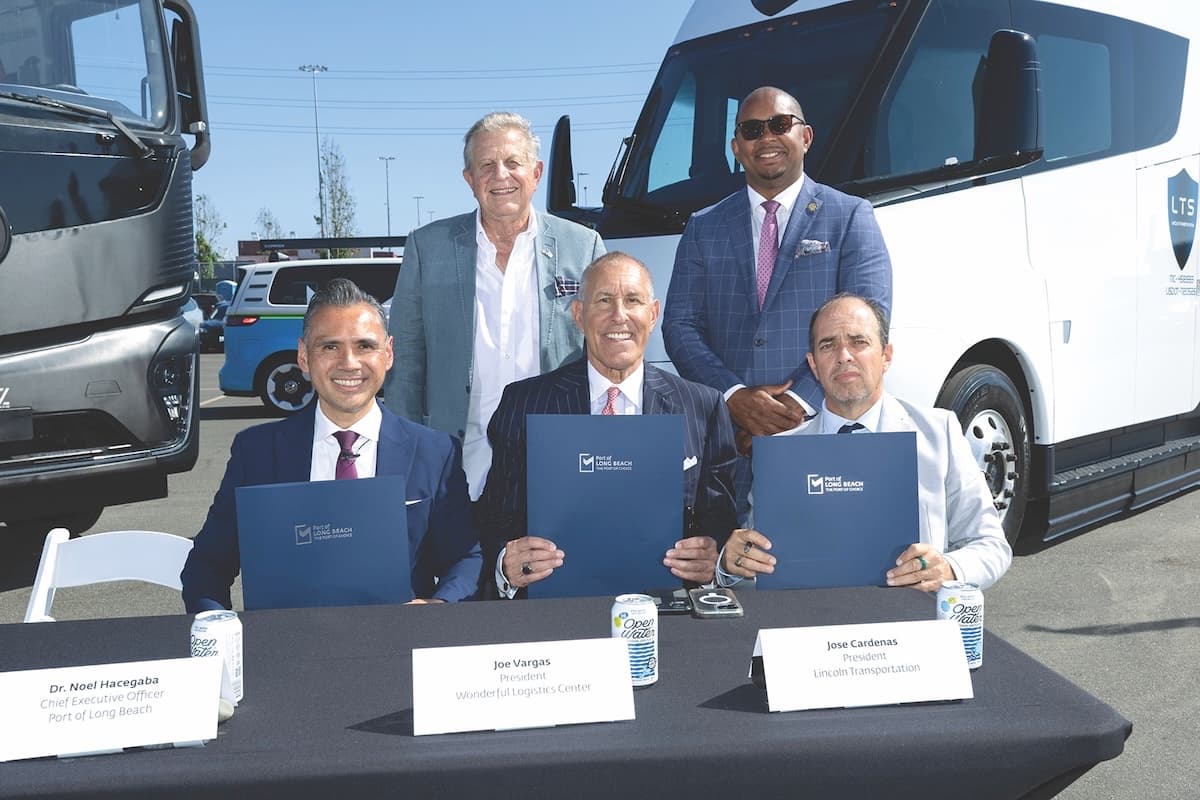
‘Green Truck Corridor’ Is Formed
Why It Matters
The corridor demonstrates a scalable model for decarbonizing one of the nation’s busiest inland freight arteries, accelerating electric‑truck adoption and reducing emissions from agricultural supply chains.
Key Takeaways
- •Lincoln orders 300 Tesla Semi trucks for corridor
- •Port of Long Beach adds 92 charging stations by year‑end
- •150‑mile route links port to Wonderful’s 2,000‑acre hub
- •First U.S. port‑powered zero‑emission trucking corridor
Pulse Analysis
The San Pedro Bay ports move more than 300,000 container units each year between the coast and the Central Valley, a flow that fuels both international trade and California’s massive agricultural output. Converting this high‑volume lane to electric power addresses a critical emissions hotspot, as diesel trucks currently dominate the corridor. By anchoring the initiative at the Port of Long Beach—a hub already equipped with roughly 100 charging stations—the partnership leverages existing infrastructure while signaling a broader shift toward sustainable freight logistics.
Lincoln Transportation Services will deploy a mixed fleet of 300 Tesla Semi trucks and 100 Voltz‑manufactured units, with the first 50‑70 Teslas arriving next month. The trucks will draw power from the port’s expanding charging network, which will grow by an additional 92 stations by year‑end, and from charging points at Wonderful’s Shafter logistics center. This combination of vehicle technology and charging capacity creates a reliable, zero‑emission supply chain for moving walnuts, pistachios and other crops, reducing fuel costs and delivering measurable greenhouse‑gas reductions.
Beyond the immediate route, the Green Truck Corridor serves as a prototype for other high‑traffic inland corridors nationwide. Its success could prompt ports, agribusinesses and logistics firms to replicate the model, spurring investment in electric‑truck manufacturing, battery technology and public‑private financing mechanisms. Policymakers may view the corridor as evidence that targeted incentives and infrastructure commitments can accelerate the transition to clean freight, influencing future regulations and funding priorities across the transportation sector.
‘Green Truck Corridor’ Is Formed
Comments
Want to join the conversation?
Loading comments...