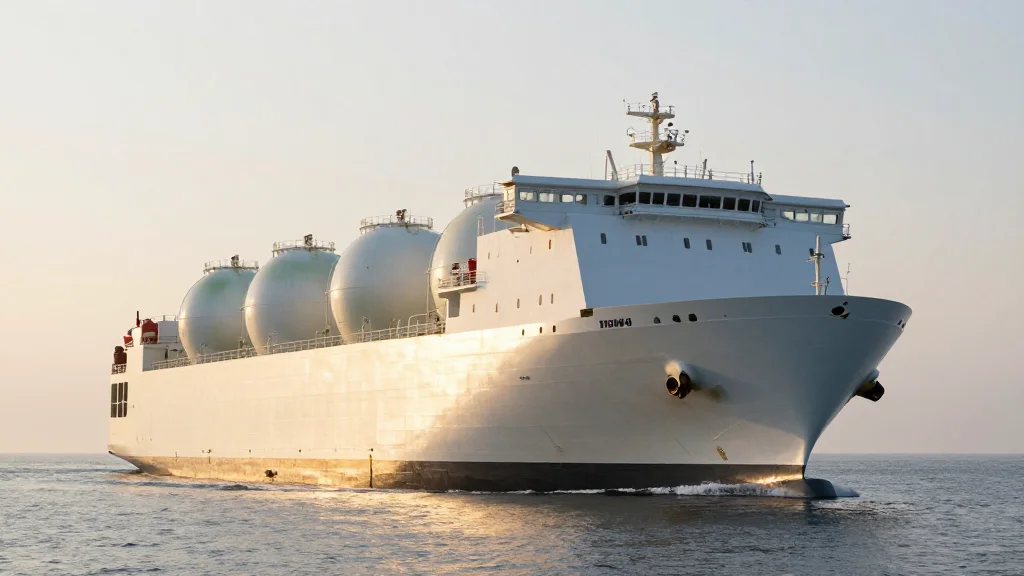
Grimaldi Launches Its Tenth Ammonia‑fuel Car Carrier, the 9,241‑CEU Grande Tokyo

Companies Mentioned
Why It Matters
The Grande Tokyo’s entry into service marks a tangible step toward the maritime industry's long‑awaited transition to zero‑carbon fuels. By scaling ammonia propulsion across a high‑capacity car carrier, Grimaldi demonstrates that alternative fuels can be integrated into existing vessel designs without sacrificing cargo volume, addressing a key barrier to adoption. If the Grande Tokyo delivers on its emissions targets and operational reliability, it could accelerate investment in ammonia production, bunkering infrastructure, and regulatory frameworks, creating a virtuous cycle that lowers costs and expands the market. Conversely, any setbacks could reinforce skepticism about ammonia’s practicality, prompting shippers to explore competing technologies such as battery‑electric or hydrogen fuel cells. The vessel also serves as a benchmark for other carriers weighing the trade‑offs between fuel conversion costs and future compliance with IMO carbon limits. As ports and fuel suppliers align their strategies with the emerging ammonia ecosystem, the ripple effects will influence shipyard orders, financing terms, and the competitive dynamics of global shipping.
Key Takeaways
- •Grimaldi christened the Grande Tokyo, its tenth ammonia‑ready car carrier, with a 9,241‑CEU capacity.
- •Ammonia propulsion can cut CO₂ emissions by up to 90% versus heavy fuel oil.
- •Grimaldi aims to convert its entire RoRo fleet to ammonia by 2030, targeting 30 vessels.
- •Port authorities in Rotterdam, Hamburg, and Singapore are expanding ammonia bunkering facilities.
- •The launch signals broader industry shift, prompting competitors like Maersk and MSC to accelerate alternative‑fuel plans.
Pulse Analysis
Grimaldi’s aggressive rollout of ammonia‑fuelled RoRo ships is more than a branding exercise; it is a strategic hedge against a regulatory environment that is rapidly tightening around carbon emissions. The IMO’s 2023 amendment to the Energy Efficiency Design Index (EEDI) and the upcoming 2030 carbon intensity targets leave little room for carriers that rely solely on traditional bunker fuels. By committing to a fleet‑wide conversion, Grimaldi is front‑loading capital expenditures now to avoid higher compliance costs later, a move that could improve its long‑term EBITDA margins if ammonia prices stabilise.
Historically, the maritime sector has been slow to adopt new propulsion technologies due to the high upfront costs and the need for a global fuel supply chain. Ammonia, however, benefits from existing production infrastructure for fertilizer, and recent policy incentives in Europe and Asia are spurring green‑ammonia projects. Grimaldi’s partnership with shipyards experienced in retrofitting vessels for ammonia suggests that the technical barriers are being overcome faster than many analysts predicted. The key risk remains the availability of truly green ammonia at scale; current production is still dominated by grey ammonia derived from natural gas, which would undercut the emissions benefits.
From a market perspective, the Grande Tokyo could act as a catalyst for financing structures tailored to low‑carbon vessels. Green bonds and sustainability‑linked loans are increasingly tied to measurable emissions reductions, and a demonstrable ammonia‑fuelled ship provides a concrete metric for investors. If Grimaldi can document a verifiable 90% emissions cut, it may unlock cheaper capital, reinforcing the business case for other carriers. In the competitive arena, early adopters like Grimaldi may also capture premium freight contracts from environmentally conscious shippers, creating a virtuous loop of demand for cleaner transport.
Overall, the Grande Tokyo is a litmus test for ammonia’s commercial viability in the high‑throughput RoRo segment. Its performance will inform not only Grimaldi’s fleet strategy but also the broader industry’s investment decisions, port development plans, and policy frameworks. Success could accelerate a paradigm shift toward ammonia as the default low‑carbon fuel for large cargo vessels, while failure would likely redirect focus toward alternative pathways such as hydrogen or battery‑electric solutions.
Grimaldi launches its tenth ammonia‑fuel car carrier, the 9,241‑CEU Grande Tokyo
Comments
Want to join the conversation?
Loading comments...