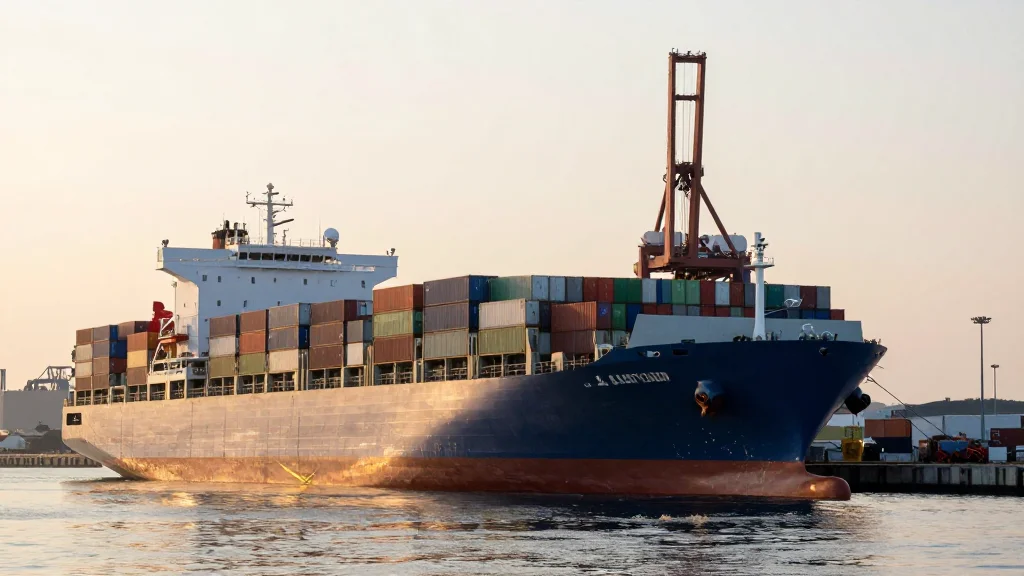
Guangzhou Begins Work on $2 Billion Fifth Development Phase at Nansha Port
Why It Matters
The added capacity positions Nansha to capture a larger share of ultra‑large container ship traffic, strengthening China’s maritime logistics network and influencing global supply‑chain routes. It also intensifies competition among East Asian ports for trans‑Pacific cargoes.
Key Takeaways
- •Fifth phase adds four 21,000‑TEU berths, 2.4‑mile quay.
- •Capacity rises to 35 million TEUs by 2030, +6.7 million TEUs.
- •Investment totals $3 billion across phases, boosting Guangzhou’s trade hub.
- •Larger berths attract ultra‑large container ships, enhancing global connectivity.
- •Project supports China’s Belt‑and‑Road maritime logistics network.
Pulse Analysis
Nansha port, situated at the mouth of the Pearl River, has become Guangzhou’s strategic maritime gateway, handling over 22 million TEUs in 2025—roughly 80% of the city’s total container throughput. The port’s rapid expansion follows three prior phases that collectively invested $1 billion, each aimed at scaling infrastructure to meet surging demand from China’s manufacturing heartland. By extending the quay by 2.4 miles and introducing berths capable of accommodating ships larger than 21,000 TEUs, the fifth phase directly addresses the industry’s shift toward mega‑vessels, which promise lower per‑container costs but require deeper drafts and longer berths.
The $2 billion injection brings Nansha’s projected capacity to 35 million TEUs by 2030, positioning it alongside Shanghai and Shenzhen as a top‑tier Asian hub. This capacity boost is expected to attract additional liner services, especially from carriers seeking alternatives to congested ports in Hong Kong and the increasingly regulated Shanghai corridor. Moreover, the development dovetails with China’s Belt‑and‑Road Initiative, linking maritime routes to inland rail and road networks that feed the vast manufacturing base of the Guangdong‑Guangxi region. For global shippers, the enhanced berth mix—four ultra‑large and fifteen feeder berths—offers greater flexibility in routing and scheduling, potentially reducing dwell times and transit costs.
For the broader logistics ecosystem, Nansha’s upgrade signals a reshaping of trans‑Pacific trade flows. U.S. exporters and importers may see a shift in preferred entry points, as carriers leverage the port’s deeper drafts to service larger vessels directly from the West Coast, bypassing traditional hubs. The expansion also creates opportunities for third‑party logistics providers, terminal operators, and technology firms specializing in port automation and digital twins. As capacity climbs, Nansha is poised to become a critical node in the evolving supply‑chain landscape, influencing freight rates, vessel deployment strategies, and regional economic growth.
Guangzhou begins work on $2 billion fifth development phase at Nansha port
Comments
Want to join the conversation?
Loading comments...